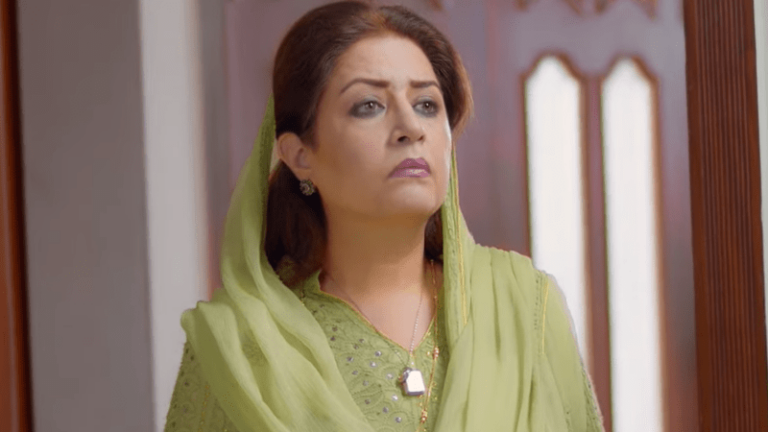


At a time when conversations around online privacy, consent, and victim blaming are louder than ever, Aik Aur Pakeezah brings them uncomfortably close to prime time television. Directed by Kashif Nisar and written by Bee Gul, the drama hits its hardest from the very first premise.
Even its name carries the weight of the story. The lead character is Pakeezah, the word means pure, clean, virtuous. Yet the drama quickly turns that meaning inside out, showing how the same word is used by society to judge, police, and ultimately weaponize her reality.
IN CASE YOU MISSED IT
It begins with Pakeezah and Faraz, two consenting young adults, sharing a meal at a hotel – that’s it. But their neighbor, Yaseen (Muhammad Ali Jan), hell-bent on revenge after Pakeezah slapped him for harassment, twists that innocent moment into a weapon. When he spots them, Pakeezah panics-not because she’s guilty, but because she knows exactly how her conservative neighborhood will react. She pulls Faraz into a room to hide. What follows is not one crime, but a chain of them. First, Yasin stalks and corners them, forcing two people into a position they never chose. Second, he and his men barge in and force them into uncomfortable language and actions. They strip them and film explicit videos under duress. The footage is made public and inevitably goes viral.
She is clearly a victim but she is targeted again – by society and her own family. Her brothers, Akbar (Umer Darr) and Asghar (Davar Mahfooz) beat her and forcibly marry her to Faraz before throwing them out. They are fixated on the wrong question: “Why were you in a hotel at all?” The entire narrative exposes that grotesque misdirection. It doesn’t matter why she was there. Two adults can be in a hotel-that is not a crime. The crime is being stalked, coerced, filmed, violated, and exposed without consent. Pakeezah is forced to constantly explain, “We were not doing anything,” when she shouldn’t have to explain at all. After constant betrayal and trauma, Pakeezah, a law student, eventually decides to fight back. With her father’s connection to a female lawyer (who carries her own battle scars) Pakeezah completes her degree and files a case against Yaseen.
A CIRCLE OF TRUST FOR WOMEN
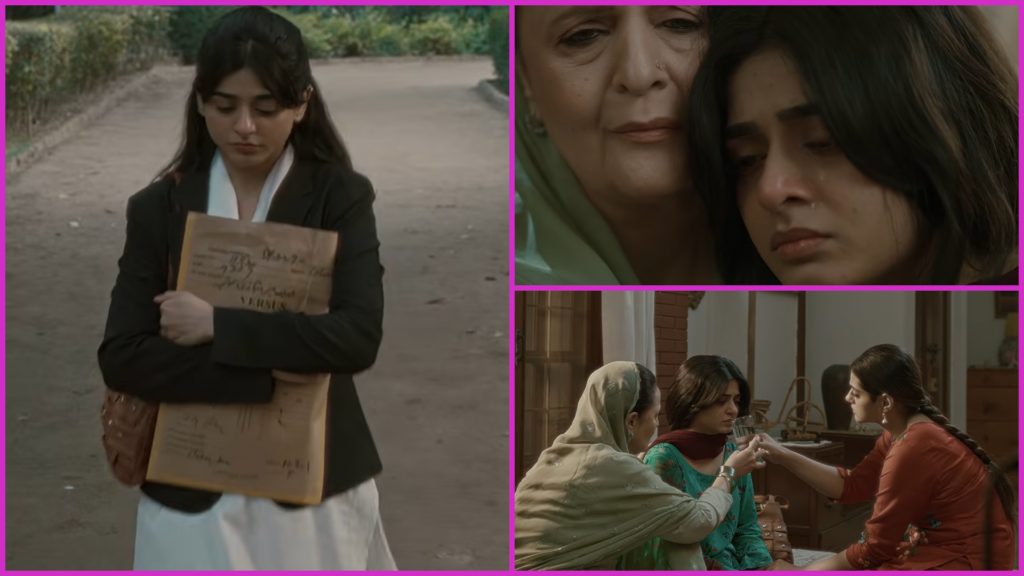
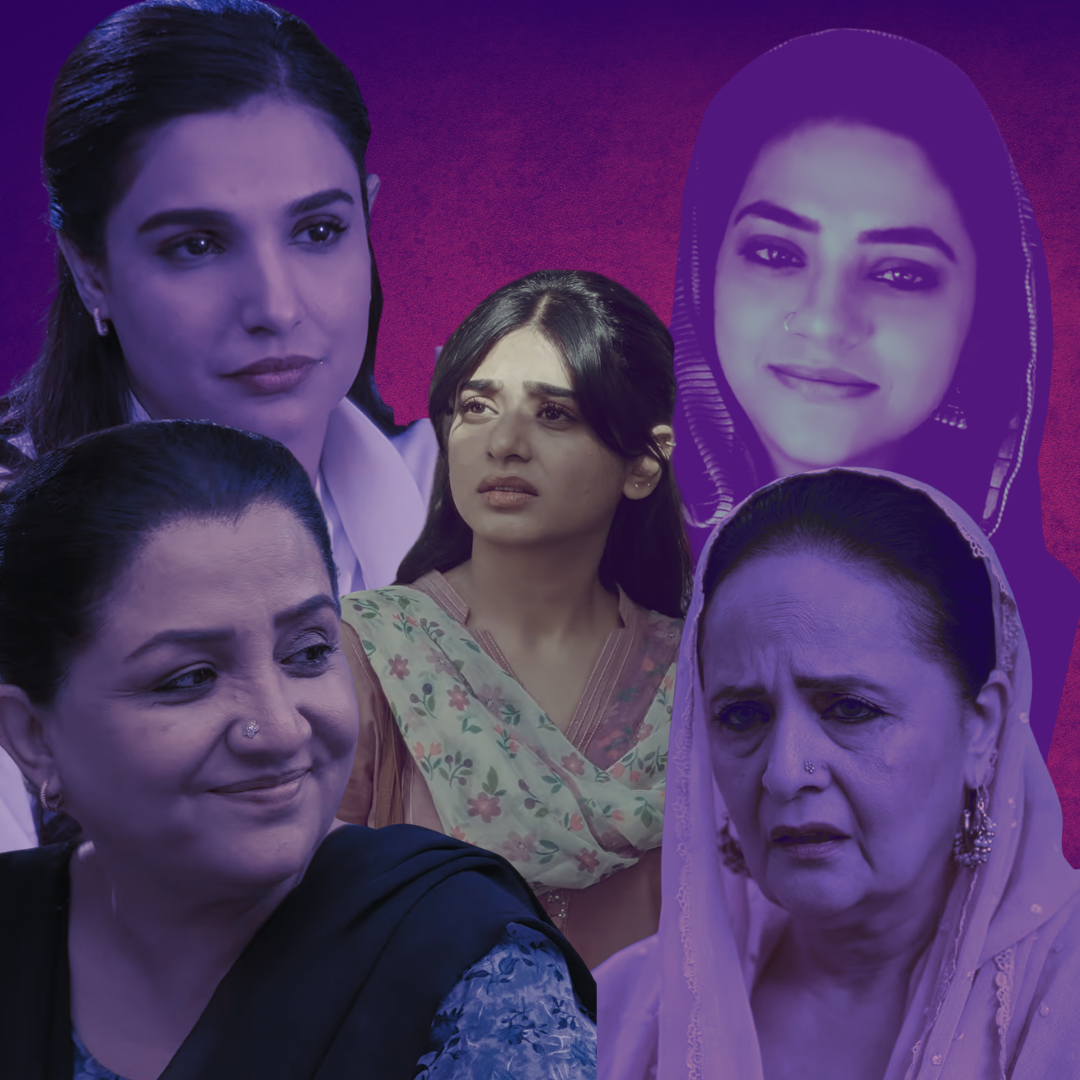
While everyone has already talked about how well-written and important this drama is- and it is- I don’t want this to be another general review echoing what’s been said. I want to focus on a specific aspect that made Aik Aur Pakeezah hit differently: the female characters. Every woman in this story plays a role in showing how solidarity works when women take up their own pain, their own stories and turn them into strength for someone else.
AALIYA: Pakeezah’s mother
Played with remarkable restraint and power by Nadia Afgan, it is where we begin. Aaliya is the emotional core of Aik Aur Pakeeza because we witnessed her unlearn a lifetime of conditioning in real time. She starts where patriarchy put her, the woman who stands outside a room while her son beats Paakezah. Her face is full of pain, but she doesn’t intervene. That is her conditioning. She goes along when Pakeeza is shamed and married off. The fracture comes with Yaseen. He visits Aaliya, and she gives him tea and respect- because in Aaliya’s world, he only “exposed” Pakeezah’s sin. Then he delivers the line that breaks her and rebuilds her.
He says, “Mama aap ki bahaut tareef karti hain. Kehti hain bari naik aurat hai Aaliya.”
Naik- that word our society reserves for the highest pedestal of female piety, purity, virtue. Then comes the knife: “Magar Pakeeza jaisi awaara larki ne iss ke pait se kaisey janam liya?”- “But how did a vulgar, notorious girl like Pakeezah get born from the womb of such a pious woman?”
She spends the entire day repeating the sentence, turning it over in her head until it flips. It stops being an attack on Pakeezah and becomes an indictment of the word naik itself. If naik means blind, silent, complicit- then maybe naik is the problem. If her “pious” upbringing can produce a daughter who is called vulgar for surviving a crime, then her piety was misdirected. That epiphany gives her strength. It changes everything. This realization becomes her first act of rebellion.
She starts going to court, meets with Pakeezah’s lawyer, and the investigation officer.
Aaliya is stepping out of the house and into her daughter’s fight- not with long speeches, but with action. Then we see a domestic shift. We see her cleaning Pakeezah’s room. When her husband (Noor ul Hassan) asks why, she answers like it’s obvious: “When Paakezah comes home, she’ll need her room.”
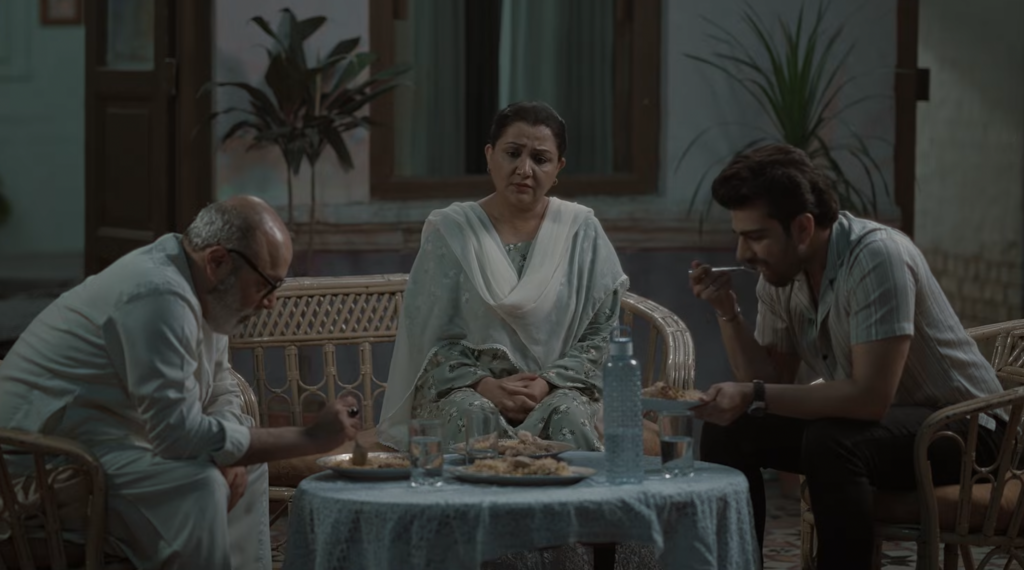
We see Aaliya’s character truly evolving when Yaseen gets arrested and she visits his mother. Her older son Akbar, is furious- “How could you sit with Yaseen’s mother?” but Aaliya is devastatingly clear, stating that she, as a mother, understands what Yaseen’s mother is going through. After all she was also called the mother of a sinner. Nadia Afgan is brilliant in this scene.
The way she mimics the police siren, her voice cracking between sympathy and fury in a single breath. You forget you’re watching an actor. The ultimate test is Akbar himself. Pakeezah tells Aaliya that Akbar fired the shot meant for her. Aaliya says nothing, walks away. And here’s where she shows us the war inside her. She doesn’t collapse into denial or rage- she compartmentalizes, because she must. When she goes to the lawyer and her husband, she tells them, “Akbar shot Pakeezah.”
But in the same breath, almost compulsively, she keeps adding: “He loves his sister a lot.” She repeats it like a prayer, like a defense she knows won’t hold up in court or in her conscience. That contradiction- he loves her, but he tried to kill her- is the exact point where conditioning and truth collide. It surfaces one final morning when Aaliya is watching Akbar sleeping, then leans down, kisses Akbar on the forehead, and strokes his hair. It’s pure, aching maternal love- the last private goodbye before she does the unthinkable. She leaves and tells the lawyer, “It was my own son.” That’s the battle laid bare: she knows she loves him, and she knows he did wrong. She chooses not to let one erase the other. Love remains, but it no longer shields. By the end of the show, we see how her character has evolved. It’s no longer about supporting her children- it’s about calling a spade a spade.
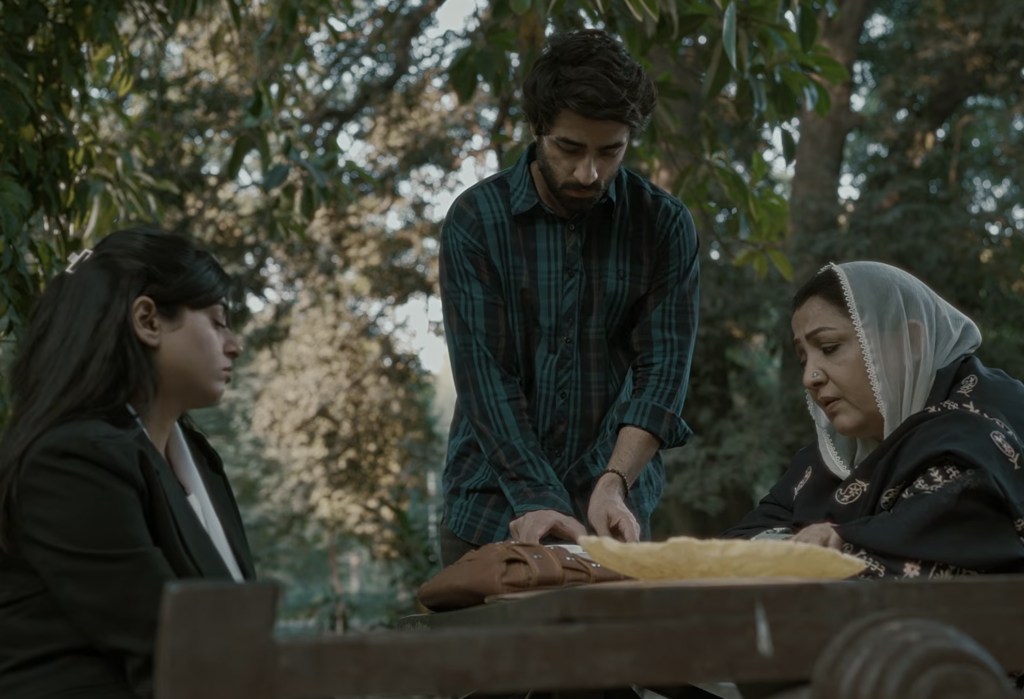
When Pakeezah and Faraz consider pardoning Akbar, Aaliya stops them. “If you forgive Akbar, then you must forgive Yaseen.” For her both committed crimes. They are equal. One destroyed Pakeezah’s life, and the other attempted to end it. Their sins are equal for her mother. She is guided by moral strength, not family loyalty. Her growth wasn’t about switching loyalty from son to daughter. That’s Aaliya’s arc: from enabling patriarchy by silence, to choosing truth over blood.
Nadia Afgan plays every layer- the guilt, the growth, the grief, and that devastating maternal dissonance- without a false note. She makes Aaliya the drama’s real definition of Pakeezah: not untouched by sin, but unwilling to excuse it, in anyone.
SAMAN: Paakezah’s lawyer
On the other hand, Barrister Saman (Amna Ilyas), is women’s empowerment put into practice. She takes Pakeezah’s case with conviction, but her real test is at home. Married to Barrister Zubair (Gohar Rasheed), she learns he abandoned his first wife, Noor Bhari (Namra Shahid).
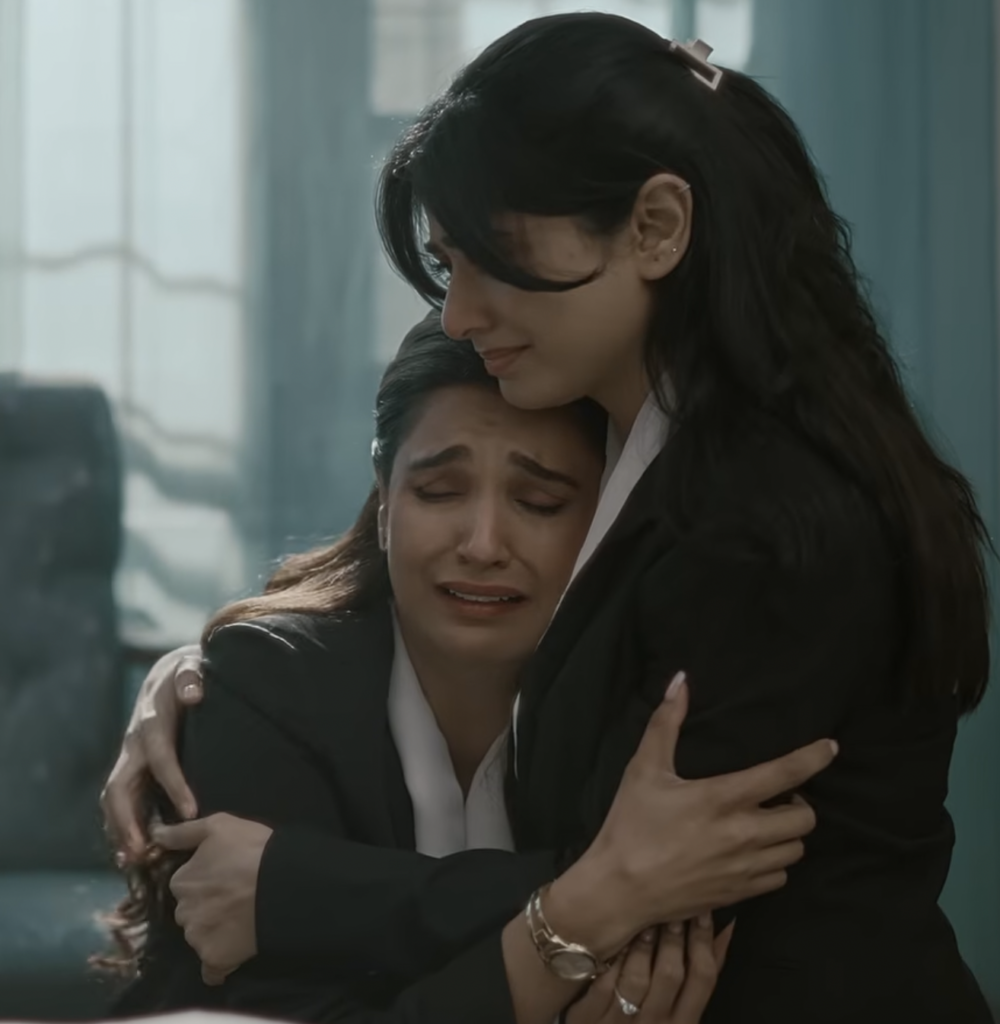
Zubair plays victim, claiming he was forced, but Saman doesn’t flinch – she puts her own husband on trial to get Noor Bhari justice. Her strength is consistency. She won’t bend the law for love or reputation, proving empowerment isn’t what you say, it’s who you’ll hold accountable.
MUMMY: Pakeezah’s guide
Saman’s stepmother, Mummy played by Hina Bayat is a spiritual guide to three young women. She’s not Saman’s biological mother but her father’s second wife- one he hid his whole life. She isn’t polished. She’s from a rougher world and speaks without filter. But she’s real and unshakable. When Saman brings both Noor Bhari and Pakeezah into her home, she accepts them without question. She gives them shelter, food, and a backbone. She doesn’t soften the truth to spare feelings because she believes people need reality more than comfort. Her house is safe not because it’s gentle, but because it’s honest. She adds raw depth to the drama and shows that strength doesn’t always look educated or elite.
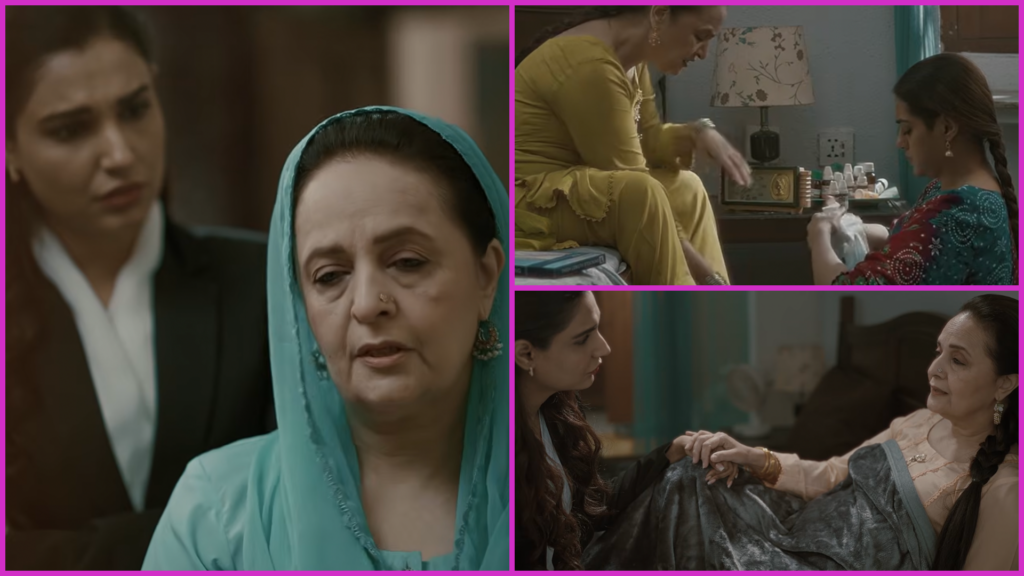
Noor Bhari herself is a compelling contradiction. Coming from a village, she’s unpolished but set on justice, not pity. Yet her conditioning is clear- she’s shocked that Saman would prosecute her own husband for Noor Bhari’s sake. Her strongest scenes are with Pakeezah, where their friendship and mutual support feel earned. The boldest choice was authenticity: Noor Bhari speaks only Saraiki, never Urdu, refusing to dilute herself for the audience. That said, her track does feel slightly unnecessary to Pakeezah’s central fight. Namra Shahid plays Noor Bhari with dignity, but narratively, it’s a well-acted detour.
PAKEEZAH – FINDING HER WAY
And then there’s Pakeezah herself- the lead we’ve said the least about, and that’s intentional. Sehar Khan’s portrayal is courageous but not superhuman. She has vulnerable moments, she breaks down, she wants to give up. That’s not a weakness. A victim of trauma will have those moments. Her power is in choosing to stand despite them.
The drama never pretends she can do it alone. It’s Aaliya, Saman, Saman’s mother, even Noor Bhari- these women surround her, lend her strength, and make her fight possible.
The side characters are more outwardly empowering, and that’s the point. It shows what reality should be: a victim doesn’t win by being superhuman. She wins because people choose to stand with her. Pakeezah’s strength is in enduring; the other women’s strength is in ensuring she doesn’t endure alone.
Overall, Ek Aur Pakeezah is a brilliant, necessary drama. It speaks the truth our society avoids- that dignity isn’t in abandoning victims, but in standing with them. Every actor delivered. The women were exceptional, but the men held equal weight. Especially Asghar.
We watch Asghar turn aggressive after the incident and flee the city out of shame. But seeing Pakeezah endure worse and still fight in court reshapes him. He returns to stand beside her. This shift is the drama’s message to men: manhood isn’t measured by how loudly you defend honor, but how firmly you support the wounded.
Strength is not abandonment; strength is solidarity.
This drama isn’t flawless. Noor Bhari’s and Zubair’s track feels unnecessary beyond serving Saman’s arc and Gohar Rasheed, an actor of real intensity, was underused- Barrister Zubair didn’t do justice to his caliber. Yet those are minor cracks in a vital structure. Aik Aur Pakeezah doesn’t preach. It show us what accountability and allyship can look like – through Aaliya’s unlearning, Saman’s consistency, Mummy’s truth, a sisterhood and a brother’s return.
It’s uncomfortable, honest and overdue. We need more dramas like this.