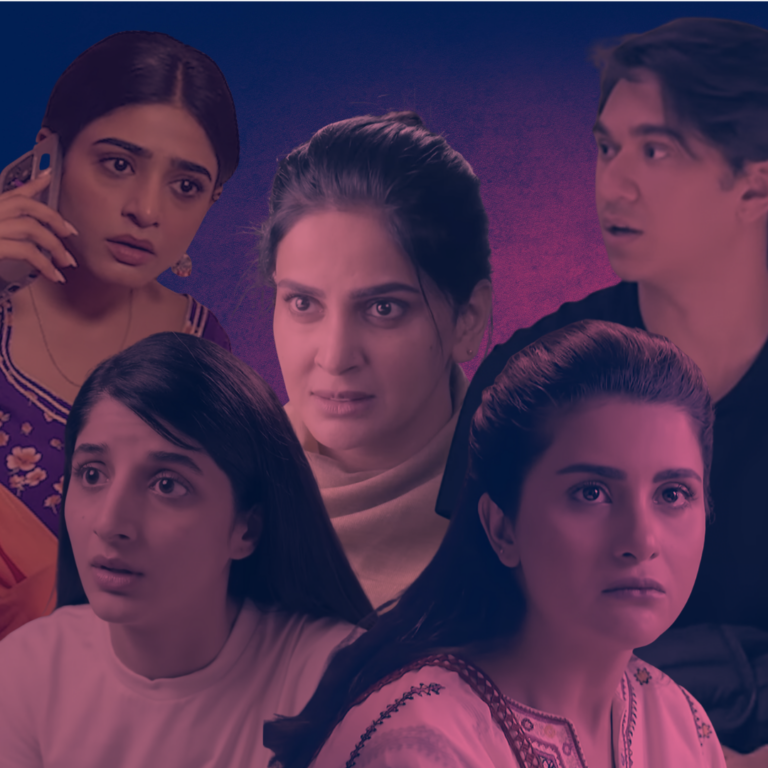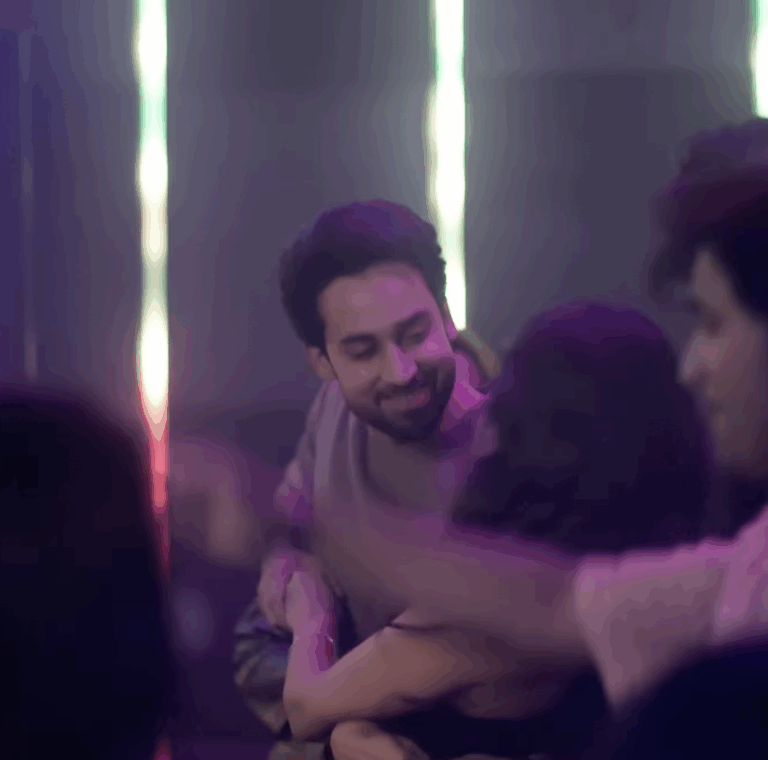
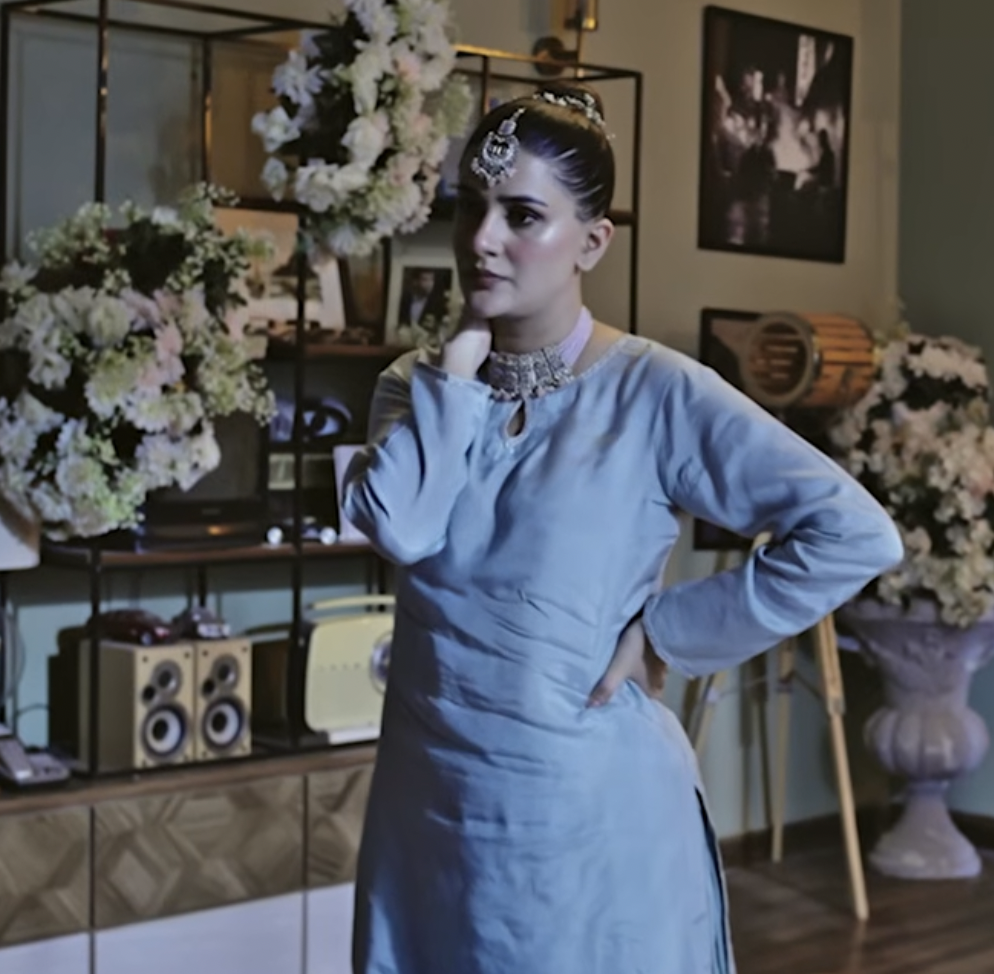


I expected Mehreen Jabbar’s Dr Bahu to examine the marriage market demand for a daughter-in-law who is a medical doctor, but I had no idea the drama would also become an inside look at the insidious way coercive control operates within seemingly “modern” households. Through Dr Sania’s eyes, we see how an autocratic patriarch can quash his son’s ambitions and dismantle his family’s desires in the name of harmony. Elitism and expectation work hand in hand to push Sania to conform to a life of easy comfort with no autonomy.
A Not So Modern Family
The Sehbai family is perfect on paper. Dr Shahnawaz sits at the head of the household and ensures that every member, his oncologist son, eldest doctor bahu, and dermatologist wife, falls in line. Salman (Shuja Asad), the only non-doctor in the family, is the one most regularly belittled. Yet to society, they represent a “dream rishta”: wealthy, educated, refined, and medically pedigreed.
Naturally, they want a daughter-in-law to be a “doctor bahu” so they can add another trophy in the family’s social portfolio.
Patriarch Shahnawaz, played by Shahzad Nawaz, rules with an iron fist; every member is trained to seek approval, and obedience is a virtue. He finally meets his match in Kubra Khan’s strong-willed Dr Sania.
Who Wants A Strong Independent Woman?
What Dr Bahu gets right is the portrayal of performative progressive values. Families that promote education, modernity, and women’s empowerment often reveal a very different politics once the front door closes. In public, they admire working women. In private, they expect service, silence, and adjustment.
The drama understands that patriarchy in elite homes is polished. It is wrapped in suggestions, guilt, emotional withdrawal, and the constant reminder that family peace depends on a woman compromising first.
This is where Sania becomes interesting. She is impulsive, outspoken, occasionally immature, and deeply independent in a house functioning on suppression. Her refusal to blend in creates the show’s central tension. She refuses to be “trained” by her mother-in-law (Saba Hamid), who insists that all women must ultimately capitulate to traditional gender roles. She refuses to be bitter like her husband, who rages at his father and the entire medical field. She refused to be a polite victim like her sister-in-law. She is here to break the cycle.
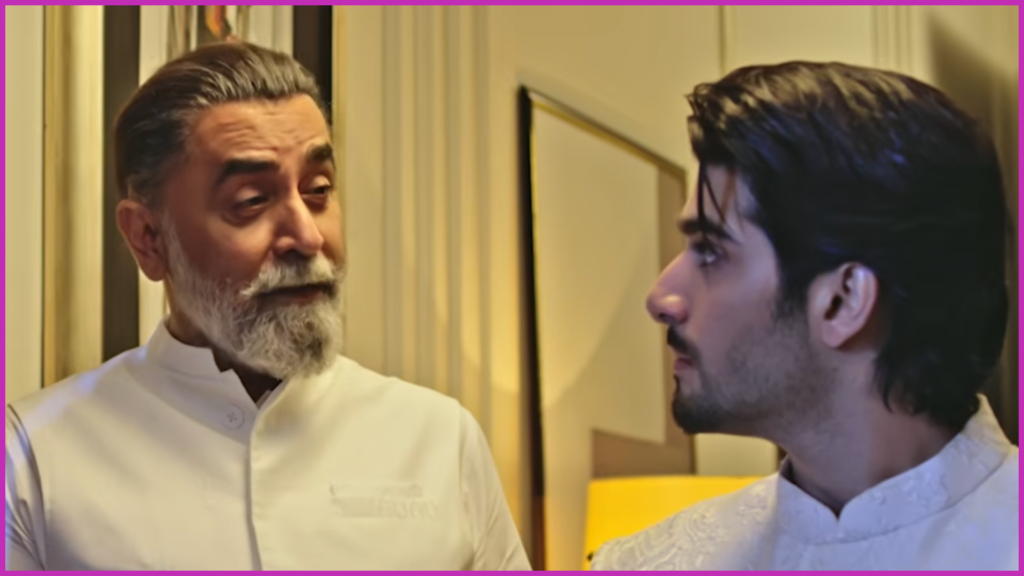
Salman, by contrast, is a man shaped by lifelong diminishment. Played as passive and hesitant, he has spent years surviving under a father who mistakes humiliation for discipline. Initially, Sania even accuses him of being a mama’s boy. His lack of confidence is frustrating, but recognisable. Some sons are not raised to lead. They are raised to comply.
The marriage between Sania and Salman is one of convenience. It is socially engineered, and they enter it carrying family expectations rather than notions of romance and affection. Six episodes in, they are already discussing separation, which says less about incompatibility and more about how little either was prepared for marriage itself.
As the audience we see there is still room for growth. Sania’s impulsiveness may yet become maturity. Her confidence may rub off on Salman. The show is strongest when it allows them to influence each other rather than merely react to the family around them. Salman offers his running shoes to her on their valima, and Sania recognizes his gentle spirit when he visits her phuppo in the hospital; yet they both struggle to let their guard down.
Where Dr Bahu is far less convincing is as a medical drama. Internationally, shows like Grey’s Anatomy, Good Doctor, and The Pitt have thrived because the genre naturally amplifies stakes. Life, death, romance, ambition, ego, ethics, all become sharper inside a hospital. Even Pakistan gave us Dhoop Kinare, still beloved because medicine was treated as both a profession and an emotional world.
In Dr Bahu, medicine often feels incidental.
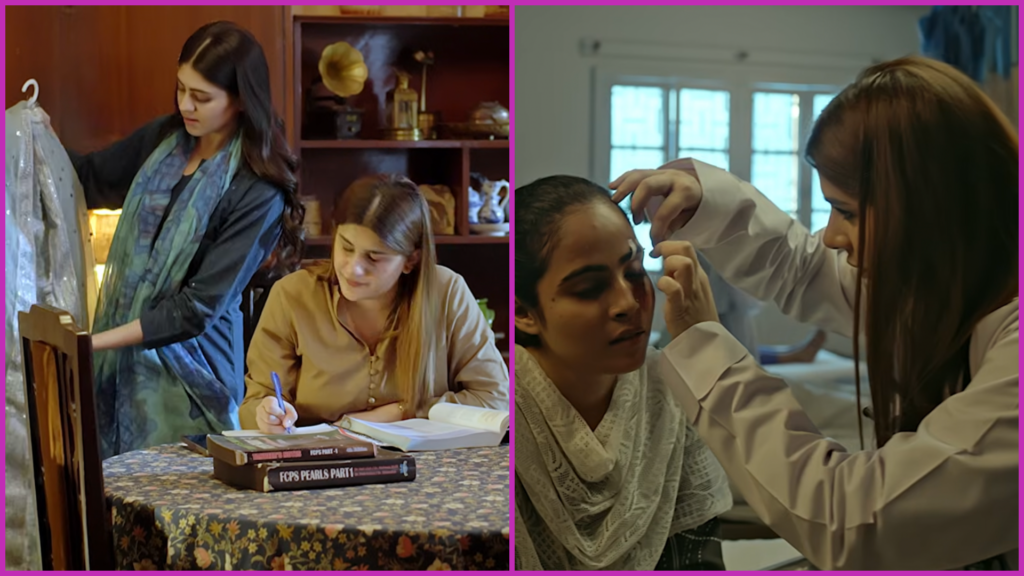
Sania is introduced as an aspiring surgeon, yet the show handles her profession with vagueness. One moment she is treating dogs, another burn patients, another stab cases. Does she have a specialty? Who knows. Who cares. The drama certainly does not seem to. Like her in-laws, it values the title of doctor more than the reality of the work.
That lack of specificity matters because medical dramas rely on systems, urgency, and expertise. Without them, the hospital becomes just another set.
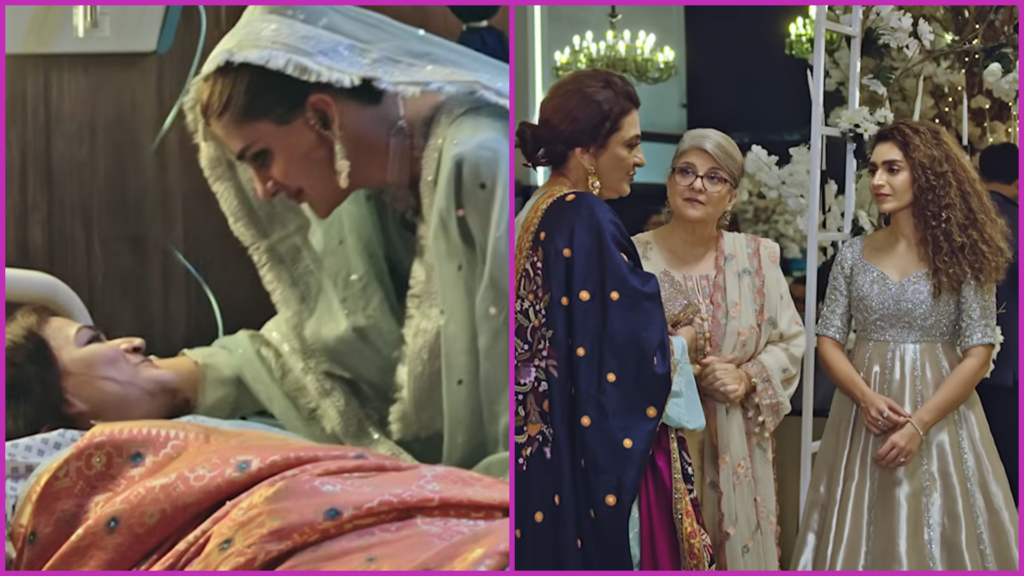
The tonal confusion becomes especially glaring in the inheritance and cancer subplot. Sania’s phuppo is diagnosed with ovarian cancer, while her brother in-law happens to be an oncologist. This could have added emotional depth and genuine stakes. Instead, scenes drift into awkward humour and platitudes. Some subjects cannot be lightened through banter.
The women around Sania offer a more compelling story than the hospital ever does. Hajra Yamin’s Minna is the cautionary tale of what happens when a qualified woman marries into prestige. A doctor on paper, she is reduced to ironing shirts and serving an indifferent husband who sees domestic comfort as entitlement. Their marriage seems to be crumbling, with Faizan weaponising infertility against Minna and presenting his occasional support as generosity. Misogyny is normal for him – it’s his father’s modus operandi.
Meanwhile, Sania’s own support system feels fragile. Her phuppo faces grave illness. Her anxiety-ridden mother, played by Marina Khan, repeats age-old instructions that many women know too well: it is now Sania’s responsibility to make the marriage work, and she must figure it out herself. In that moment, the drama captures the difference between a physical rukhsati and an emotional one. Sania has not only left her parents’ house, but she is made to feel she no longer has a home to return to. The result is that she enters marriage, celebrated as a bride but unsupported as a person.
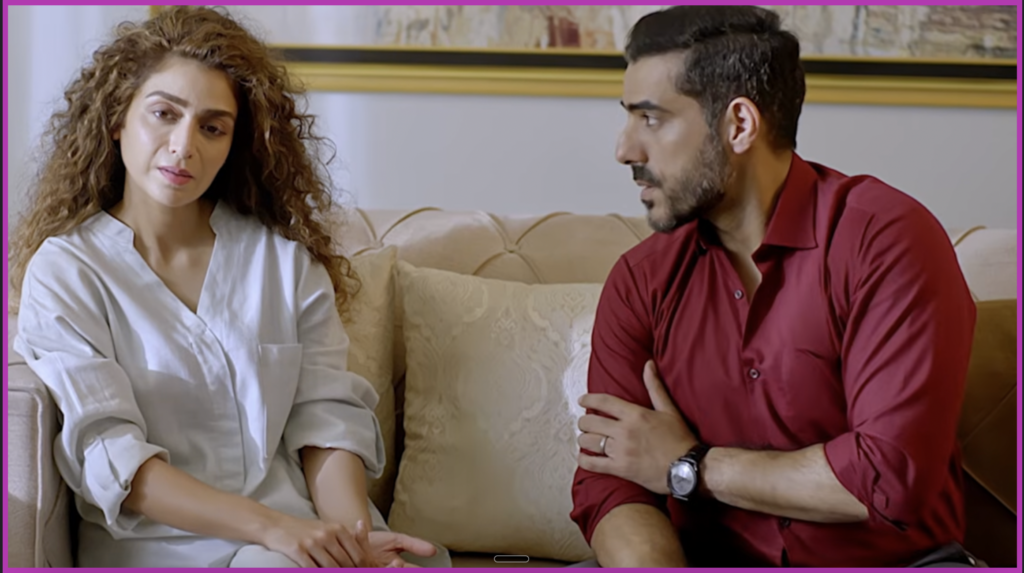
That contradiction sits at the centre of Dr Bahu. Before marriage, women are wanted, praised, displayed, and chosen. But once chosen, they are expected to shrink.
The drama may not fully succeed in its execution, and it often stumbles in tone, but it lands on one unsettling truth. In many respectable homes, patriarchal control does not look like violence. It looks like care. It looks normal. Decisions are made for Sania. Plans are made and cancelled on her behalf. Her tutions are deemed inappropriate. Her wants are postponed, then forgotten. Until eventually, like Minna, she will stop recognising what she wanted at all.
This is what makes polite patrairchy so dangerous. It is invisible, familiar, and socially acceptable.
Even privilege does not break the pattern. She may live in a mansion. She may be given an Audi by her father-in-law.
But comfort does not equal freedom. A golden cage is still a cage.