

In the world of social psychology, there is a concept known as the “threshold of tolerance.” It’s the invisible line that a society draws around its collective behavior. Cross it in one direction, and you are a hero; cross it in the other, and you are a pariah.
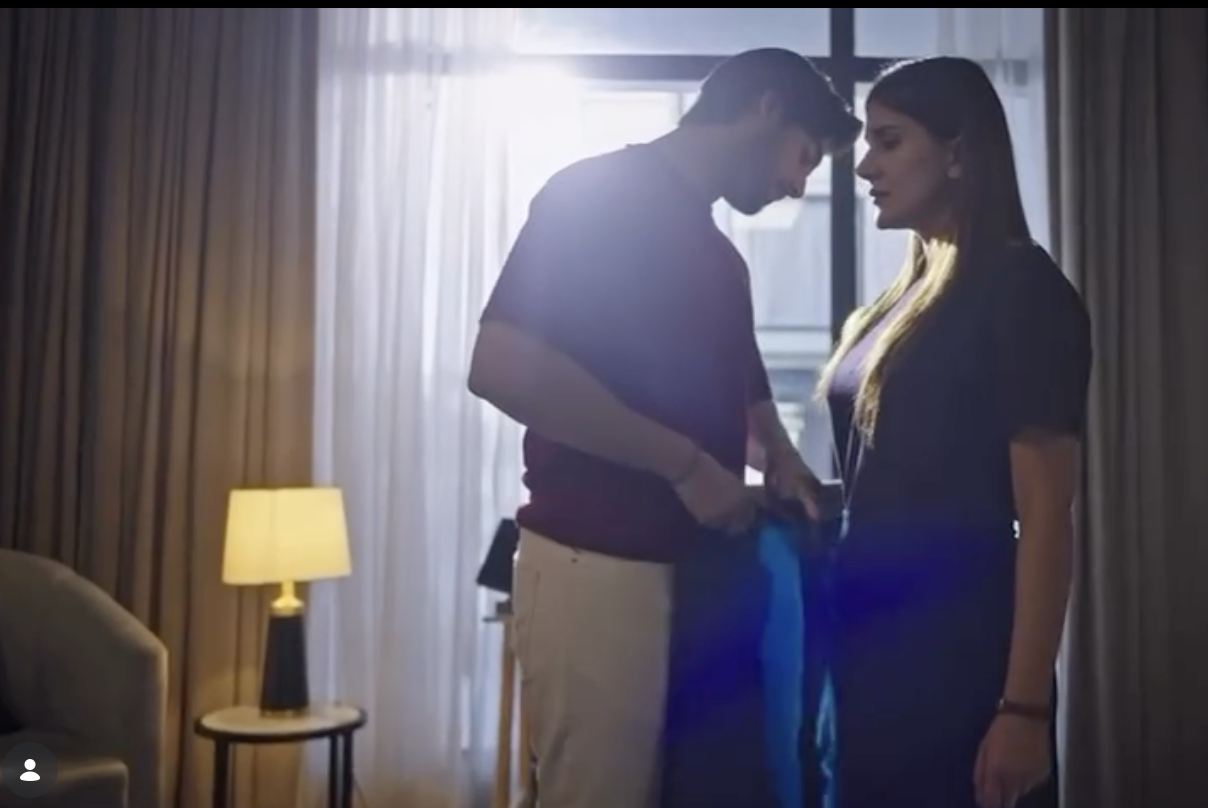
Recently, a viral out-take from the drama Doctor Bahu – a private moment involving the characters played by Kubra Khan and Shuja Asad – provided us with a perfect, if somewhat jarring, laboratory for this phenomenon. In the clip, a loving husband helps his wife drape a black chiffon sari. It is gentle. It is domestic. It is, by any definition of the word, a moment of profound intimacy. And yet, the digital reaction was not one of warmth, but of “Haw-Hayee” – the collective, performative gasp of a scandalized public.
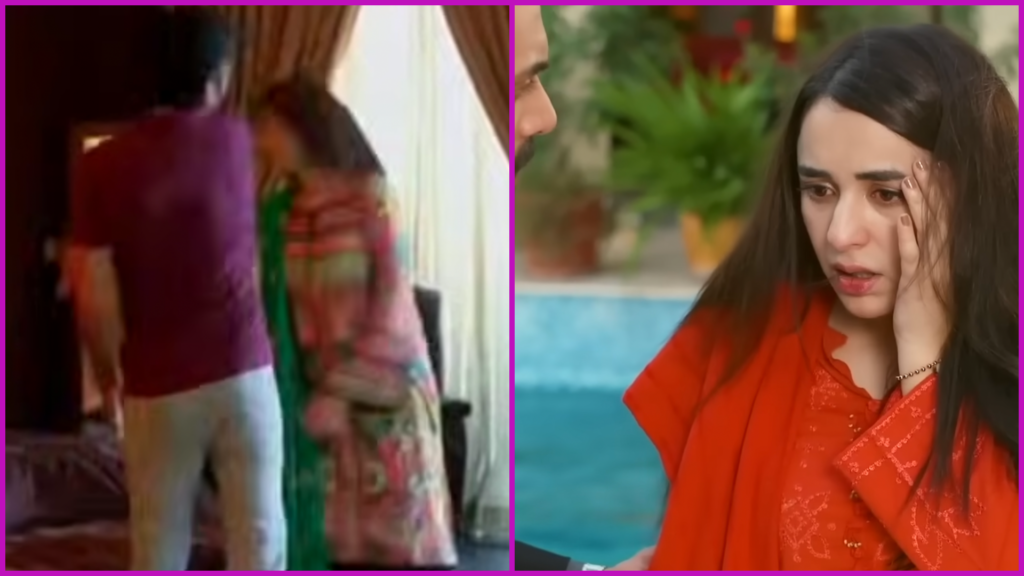
In the same television season where a husband helping his wife with a garment is labeled “vulgar,” a dozen other husbands have likely slapped their wives on screen. Those slaps didn’t go viral for their vulgarity. They didn’t trigger PEMRA notices. They were, instead, consumed as “drama.”
What does it say about a culture when touching a woman in anger is more acceptable than a hand extended in help?
The Normalization of the Blow
To understand this, we have to look at the “background noise” of violence. In Pakistani television, the slap (the thappad) has become a “narrative utility.” It is a tool used by directors to signal authority, to resolve a conflict quickly, or to “correct” a character’s path.
This is not happening in a vacuum. Between 2021 and 2024, over 7,500 women were murdered in Pakistan, with 1,553 of those killed specifically in the name of “honor.” When we see violence on screen, we are seeing a reflection of a grim statistical reality. Yet, research suggests that nearly 71% of violent scenes in these dramas pass without any legal or moral consequence for the perpetrator. A “good” man was forced to slap a wayward woman to make her see the light.
The Regulatory Paradox
This cultural anxiety is codified at the highest levels of governance. In 2021, the Pakistan Electronic Media Regulatory Authority (PEMRA) issued a formal directive banning the airing of “caress or hug” scenes in dramas. The rationale? That such gestures are “un-Islamic” and a violation of “Pakistani culture.”

Of course, the enforcement of this ban is curiously selective. There are the “occasional slips” – the fleeting hugs or hand-holding that manage to bypass the censors – which often spark a frenzy of digital outrage as if a single embrace could collapse the nation’s moral fabric. These slips (often featuring a mega-star) serve as “outliers” that prove the rule: we have created a system that hyper-monitors the body for signs of affection while remaining almost completely blind to violence.
The Anatomy of Intimacy
Why does a husband helping his wife with a pleat feel more “dangerous” to the public eye than a husband striking her?
Violence is an act of exclusion – it is designed to isolate and push someone away through fear. Intimacy, however, is an act of inclusion; it creates a private, autonomous world that the state and the “morality police” cannot survey or control. When Mehreen Jabbar shared that romantic clip depicting trust and equality, it was branded “vulgar” because in a landscape where power is wielded from the top down, partnership is the ultimate subversion.
The hypocrisy is backed by statistics: 43% of women and 34% of men in Pakistan believe a husband is justified in beating his wife. Within this framework, a slap isn’t “vulgar” because it fits the script of ownership – it is readable as “discipline.” We have built a society that pathologizes a husband’s touch while effectively legalizing his violence. By refusing to criminalize marital rape eplicitly, the law suggests that a woman’s consent is a secondary concern to a man’s “right” of access.
This is the life-or-death friction that powers the Aurat March. It is the grit in the eye of a system that views 1,553 “honor” killings as a domestic matter, yet treats a consensual hug like a national emergency.
We are a culture that would rather see a woman in a burial shroud than in an embrace.