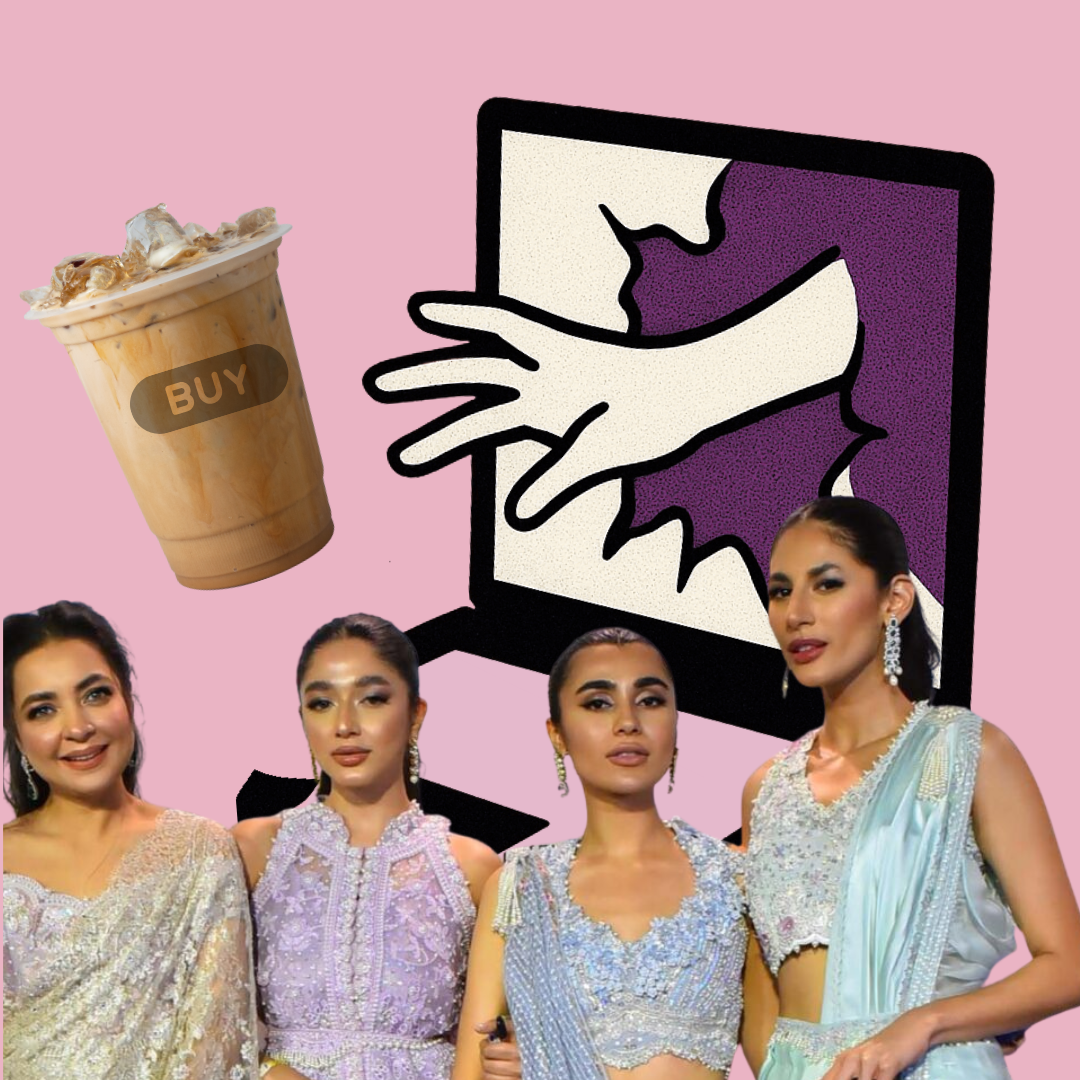


I live on the internet. Not just on it, but in it, like a fish in plastic-choked water, inhaling memes instead of air.
I remember when it wasn’t this bleak. The internet once felt like a refuge, a parallel world that softened the suffocation of the offline one. Sharing silly memes was a small act of rebellion, an inside joke against bosses, parents, and the patriarchy. A nod of community. Now, those same memes appear in ad campaigns to sell hamburgers.
Logging on used to feel like an escape. Now the current carries mostly AI slop.
Every scroll preaches the same capitalist sermon: what to buy, how to look, who to become. Skincare routines are displayed like museum exhibits. Booklists are sold as moral virtue. The endless carousel of “Pakistani girl boss” aesthetics, beige and interchangeable.
Like graffiti crews, zine collectives, indie musicians, every underground scene in Pakistan, the online subculture was swallowed by the mainstream. Counterculture became content. Freedom became a market.
In the early 2010s, Pakistani Twitter crackled with energy. Writers, activists, misfits, and anonymous wits shaped discourse in real time. There was poetry, satire, fierce critique of power. Fatima Bhutto, Beena Sarwar, Nadeem F. Paracha, and countless pseudonymous voices amplified struggles ignored by Geo or ARY. Today, even dissent feels brand-managed. Activists curate identities like influencers. Outrage arrives packaged for feeds. Commodification polishes the edges, then flattens the politics. When every post turns into a product, self-expression feels risky. Even naïve.
Tumblr poetry blogs, meme pages mocking moral policing, bedroom SoundCloud rap, all dissolved into the content machine. Spaces once built for the kids who didn’t belong at dinner tables now resemble shopping malls.
This cycle isn’t new. Capitalism has always repackaged rebellion. Punk became Hot Topic. Hippies became lifestyle stores.
But in Pakistan, where safe spaces were scarce to begin with, the loss cuts deeper.
The enshittification of the internet runs so deep that Gen Alpha is opting out. They gather in malls, art cafés, bookstores, seeking offline the connection we once found online. Meanwhile, I remain tethered to the scroll, haunted by the memory of an internet made for misfits, not marketers.
So how do you reclaim what capitalism hasn’t stolen? You rewire.
Trade binge-watching for slow-burn cinema, films that breathe in silence. Replace the dopamine drip of headlines with documentaries that explain instead of inflame. Read memoirs, not gossip; at least then you learn how a life was lived. Reject glass-skin trends; the face is not a billboard. And when you choose a café, pick it for its value, not its virality.
It’s not easy. Dopamine withdrawal bites. The itch to scroll, to post, to perform never fades.
But if the internet has become little more than billboards, perhaps the most radical act left is learning what to ignore.