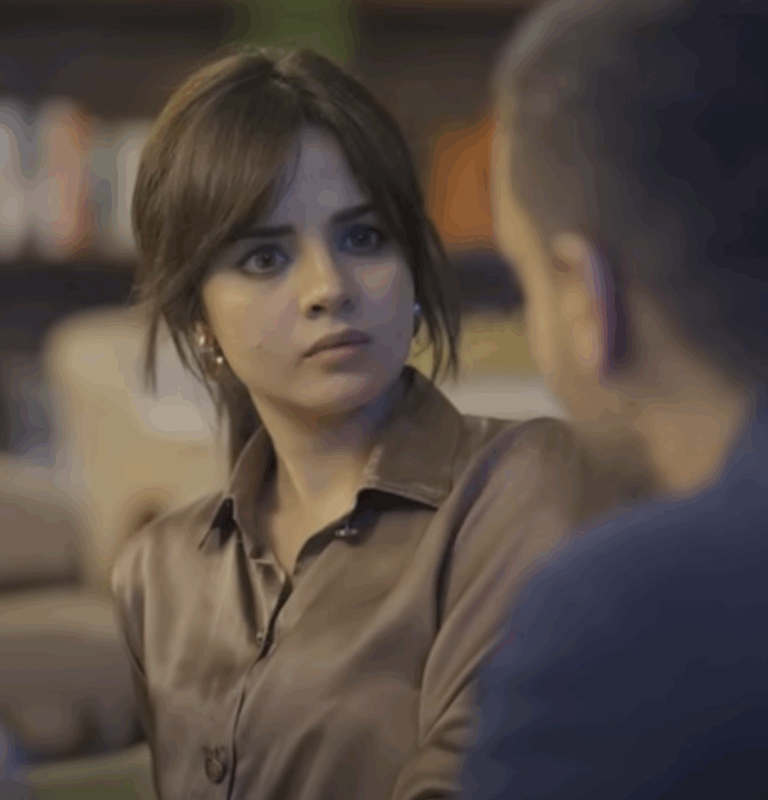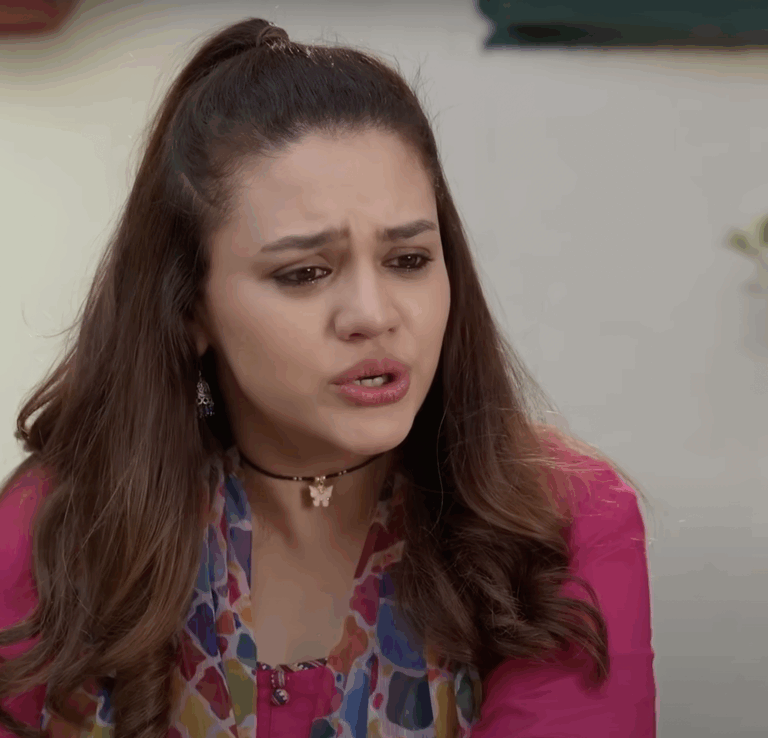



Few Pakistani dramas arrive with as much romantic potential as Winter Love. Hum TV’s Mawra Hocane and Khushhal Khan-starrer combines an arsenal of beloved romantic tropes: enemies-to-lovers, slow-burn romance, forced proximity, and pretend marriage, as these two professions collide in increasingly awkward circumstances.
Mushk (Mawra Hocane) inherits a matchmaking company from her late mother, carrying not only a business but also an emotional legacy centered around helping people find love. Hayat (Khushhal Khan), meanwhile, works as a wedding planner, arranging the happily-ever-after celebrations. One helps people find their perfect partners; the other turns those relationships into unforgettable occasions.
The professional overlap naturally creates opportunities for conflict, banter, and romance. Every wedding consultation, matchmaking disaster, and professional disagreement should bring them closer together, even as they resist their growing attraction.
And for a while, it does.
The series thrives on the humorous and awkward run-ins between Mushk and Hayat. Their clashing personalities create genuine sparks. Mawra Hocane excels at portraying Mushk’s stubborn determination and emotional guardedness, while Khushhal Khan gives Hayaat an easy charm that prevents him from becoming simply another arrogant romantic hero.
The problem is that Winter Love has mistaken slow-burn romance for narrative inertia.
Seventeen episodes into the drama, Mushk remains almost exactly where she began emotionally. Despite countless encounters, moments of vulnerability, cooperation, and obvious chemistry with Hayat, she still seems utterly committed to disliking him. What initially felt like entertaining enemies-to-lovers tension has increasingly become repetitive.


Enemies-to-lovers works because each interaction chips away at the characters’ preconceived notions of one another. Audiences need to witness gradual emotional evolution. Instead, Winter Love repeatedly resets Musk and Hayat to square one.
This stagnation becomes even more apparent through Mushk’s engagement to a wealthy millionaire. On paper, the engagement makes perfect sense. Mushk is under immense pressure to save her family home, needing six crore rupees to prevent her greedy mamu (Deepak Perwani) from taking it away. Stability and security are attractive propositions when your future feels uncertain.
Her fiancé represents exactly that: practicality.
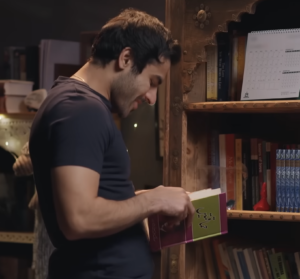
Yet the drama smartly complicates this seemingly perfect match by revealing his more controlling tendencies. He is not a villain in the traditional sense. Instead, he embodies a different kind of incompatibility. Hayat’s love of reading. In an era where romantic heroes are often defined solely by grand gestures or brooding silences, Hayat’s recurring habit of reaching for a book gives him a welcome sense of individuality. The drama makes a particularly charming choice by repeatedly placing Shafiqur Rehman’s beloved classic Hamaqatein in his hands.
The contrast with Hayat is obvious. Where her fiancé offers certainty, Hayat offers unpredictability. Where one attempts to fit Mushk into an ideal mold, the other consistently challenges her assumptions while accepting her stubbornness.
The audience understands this dynamic.
The frustrating part is that Mushk seemingly does not.
After seventeen episodes, viewers have invested considerable time watching matchmaking events go wrong, parking lot crises unfold, and awkward encounters accumulate. Yet the emotional payoff remains elusive. The latest development, forcing Musk and Hayat into a romantic cottage setting where they must pretend to be married, finally provides the kind of proximity and intimacy that should push their relationship forward.
Will this new turn of events reveal Winter Love‘s untapped potential?
The drama’s greatest strength lies not in its central romance but in its refreshingly functional families.
Winter Love offers something surprisingly rare: families that genuinely care about each other. No scheming relatives, vindictive mothers-in-law, and family members constantly plotting against one another. While conflict exists, the show’s family dynamics are rooted in concern and support rather than endless manipulation.
It is an understated but welcome departure from formula.
The supporting characters also contribute significantly to the drama’s charm. Meeram and Zarak, in particular, serve as delightful sidekicks to Mushk. Whether offering emotional support, practical advice, or simply providing comic relief, they help ground the series in warmth and friendship. Their presence enriches Mushk’s world and reminds viewers that romantic relationships are only one part of a fulfilling life.
Edited with AI assistance for clarity and structure.