

Written by Yogeshwar Karera and directed by Ali Junejo, Bargad is an unsettling look at family, faith and the things we choose to believe.
Staged by NAPA’s graduating class of 2026, it is best experienced knowing as little as possible.
All I knew entering the theatre was that it was rated 16+ for themes of death and grief and that it was inspired by true events. It was not until halfway through the play that I realized which events the play was based on – and by then I was completely riveted.
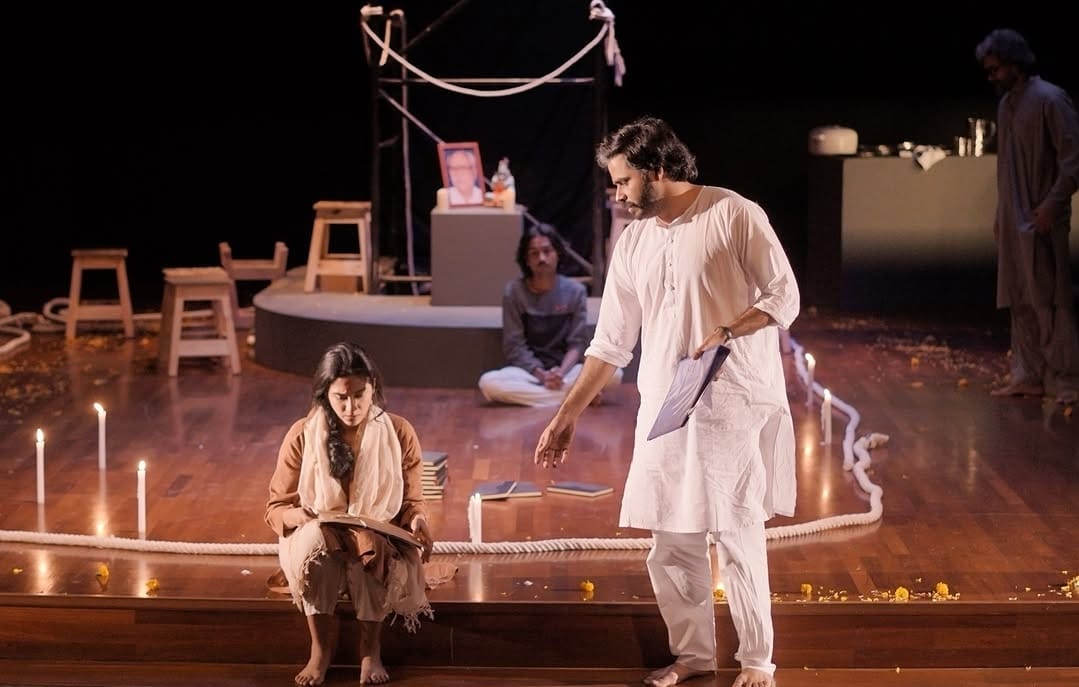
The play opens in the middle of an engagement party. Eleven characters rush around the stage in a flurry of mundane activities. At first the abundance of characters feels overwhelming but slowly we figure out their relationships with each other as they sort wedding gifts, gather for meals and debate family loyalty. The family is clearly bound by love but could something more sinister be going on?
JUST A REGULAR FAMILY
Damyanti Gosai is the widowed mother of three sons Manoj, Sanjeev and Vikas. Manoj (Junaid Sidhu) is married to Moni (Sana Toaha) and their daughter Reema (Raana Kazmi) is engaged to Vinay (Zain Chohan). Sanjeev (Hajan Khan)has two teenage sons Banto (Saim Ahmed) and Adi (Shayal-Ud-din). Vikas (Yogeshwar Karera) is married to Savita (Shazia Shahanshah). Lastly Ratan (Waseem Abbas) is an adopted member of the family who was rescued from an apparently abusive home.
All these seemingly disparate people are bound by a shared loyalty to a patriarch who died twelve years ago. His presence lingers over the household, especially through Vikas, who is suggested to have a special connection to his father. The bargad tree planted at the heart of the home is a symbol of his dominance as he had planted it despite his wife wanting a tulsi plant. His wishes continue to supersede everyone else’s.
The roots of the bargad spread and take hold in multiple places, creating something that is simultaneously one organism and many. It can provide shelter but can become so tangled that there is no easy escape. The family that gives you a sense of belonging can also erode your independence. Control doesn’t always start as violence, it can look like devotion, routine or just how this family does things. Any resistance is then treated like the worst form of betrayal.
Director Ali Junejo builds a claustrophobic atmosphere in which there is a constant sense that something profoundly wrong is about to happen. The initially mundane domestic scenes acquire an ominous quality as we begin to understand how deeply Vikas’s beliefs have taken root.

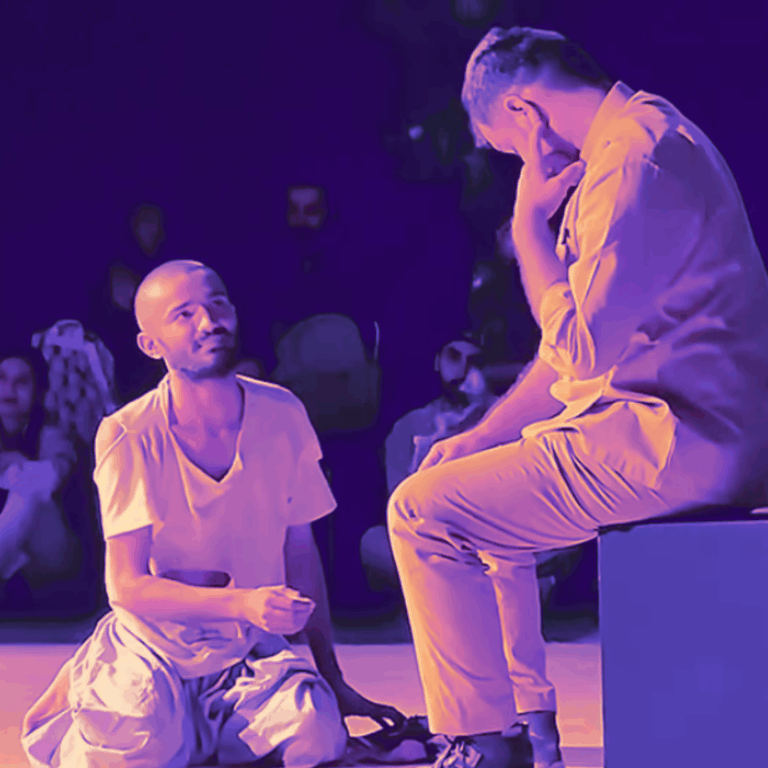
Reema and Vikas stand on opposite sides of blind faith. Their wills clash. The rest of the family has never learned to live without their father’s instructions so any tether to him feels like a lifeline instead of a noose. If you are taught to surrender your power, surrendering your life comes easily. The cast carries a story that becomes progressively more unsettling. .
In hierarchial systems, one opinion dominates others. The other family members are neither allowed nor encouraged to make decisions, so they never develop the confidence to do so. Deference becomes the natural order. Of course, father knows best and he is the only one who can save them all. So when Vikas discovers a way to channel his father’s orders, the rest quickly fall in line.
Afterall your life is a branch only a branch, it is ungrateful to separate from the tree. Reema’s impending marriage threatens a breakage and acts as a catalyst to the final reckoning. Belief shapes what is considered duty. There is a gradual tightening of what is possible until the unthinkable is the only way forward.
The play explores the line between faith and delusion. Stigma around mental health can mask warning signs of unhealthy control making it difficult to recognize when belief becomes gospel. Within the logic of this family, what feels bizarre and shocking to outsiders was just tradition and values to them. The same closeness that keeps a family together builds dependence preventing anyone from walking away from danger.
Spoilers
By the time the connection of this story to the Burari deaths became clear, I was already emotionally invested in this family’s disturbing worldview. Knowing what was coming did not make the ending any less devastating. The trigger warning is definitely earned. Ultimately Bargad stays with you because it delves into the human need to believe and the frightening possibility that hope is dangerous in the wrong hands.