



Ageism and misogyny do not announce themselves as villains. They arrive smiling, joking, framed as banter.
This week, we saw two such incidents, one in a victorious Olympic locker room and the other on a television set in Pakistan. Both revealed the same ingrained reflex – to trivialize and denigrate women and then frame the backlash as the real problem.
Members of the US men’s hockey team laughed along as the president “joked” about having to invite the gold medal-winning women’s team to the White House as an obligation or a courtesy.
The men’s team received a congratulatory call from Trump, who invited them to his State of the Union address and said he would have to ask their female counterparts as well or he “probably would be impeached”. The women’s team has won a medal in all nine of their Olympic appearances since the sport’s debut, while the men’s team won after 46 years. Somehow, demeaning women even in their moment of victory becomes bonding material.
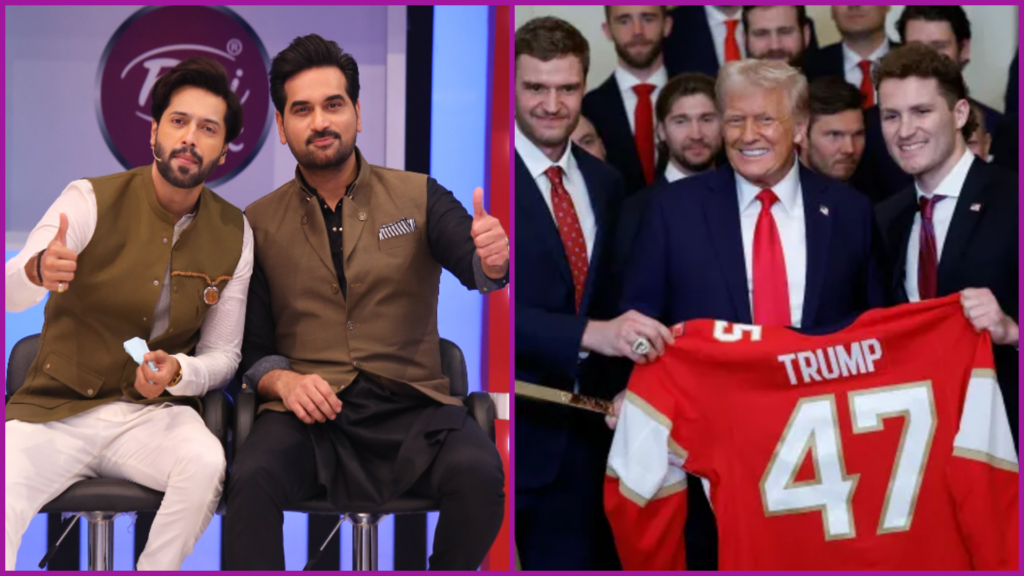
Across the globe, when actress Atiqa Odho suggested that middle aged leading men might consider working with women closer to their own age, she was simply pointing out an industry norm. A norm that is dangerous to real-life women who are constantly told their only value lies in their beauty and youth. The vicious response from Fahad Mustafa did not engage with that criticism; instead, it turned to her age and looks. “. You get two or four more surgeries and we’ll feature alongside you,” he joked on live TV as Humayun Saeed smirked along. The structure she critiqued was instantly reinforced.
Both moments show how easily male authority deflects critique by reframing women as the punchline. Systemic oppression survives on habit, on jokes, on the assumption that women’s concerns are exaggerations, that women who speak out about inequality are bitter and irrelevant. It thrives when public belittling is excused as banter and discomfort is dismissed as oversensitivity.
The response to the backlash of these incidents was also eerily similar. The NHL posted videos of hockey players with their daughters to soften their image. The US men’s hockey team cheered on their female colleagues and praised them to the press. Fahad Mustafa told Atiqa Odho that he loved her and called her beautiful.
This hollow praise seems meaningless next to the obvious derision we all witnessed.
This is how ageism and misogyny work together on screen: one polices who is allowed to remain visible, the other punishes those who speak about it.