
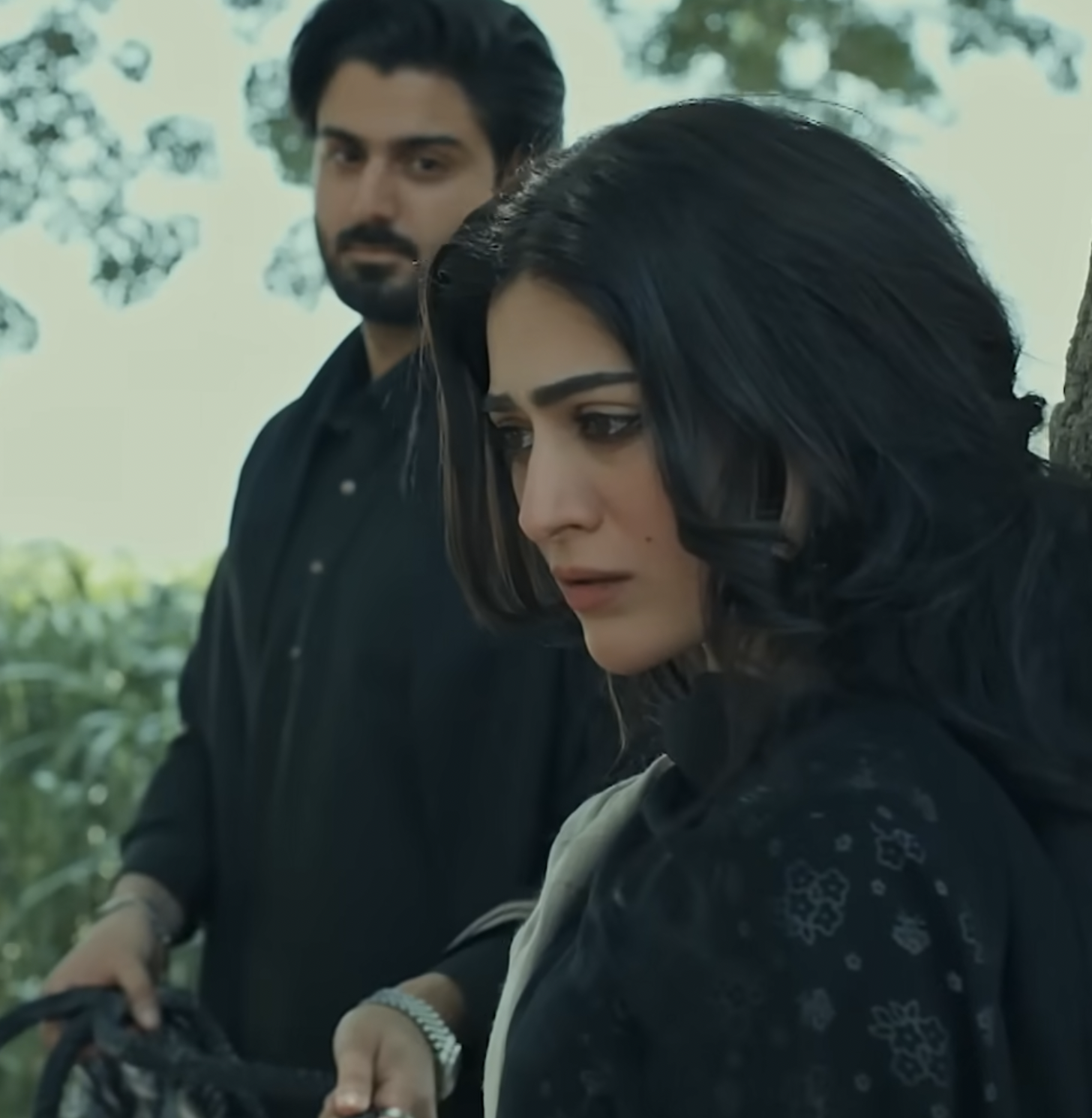


Green TV’s unabashed masala action drama opens to a world where power is inherited and consequences are optional.
At the center of all the madness, is the bromance between Bashah and Ghulam.
This relationship might seem cute. They shoot guns together. Drive giant SUVs together. Evade laws together. But it’s not all machismo and bullets. Ghulam operates as Bashah’s fixer, absorbing the fallout of his master’s excesses so Bashah never has to face any accountability. Bashah belongs to the landed political elite: spoiled, entitled, corrupt, and perpetually drunk on both alcohol and inherited power. He often insists that he and Ghulam are “like brothers,” a claim the drama itself repeatedly contradicts. Brotherhood implies equality. Feudalism does not.
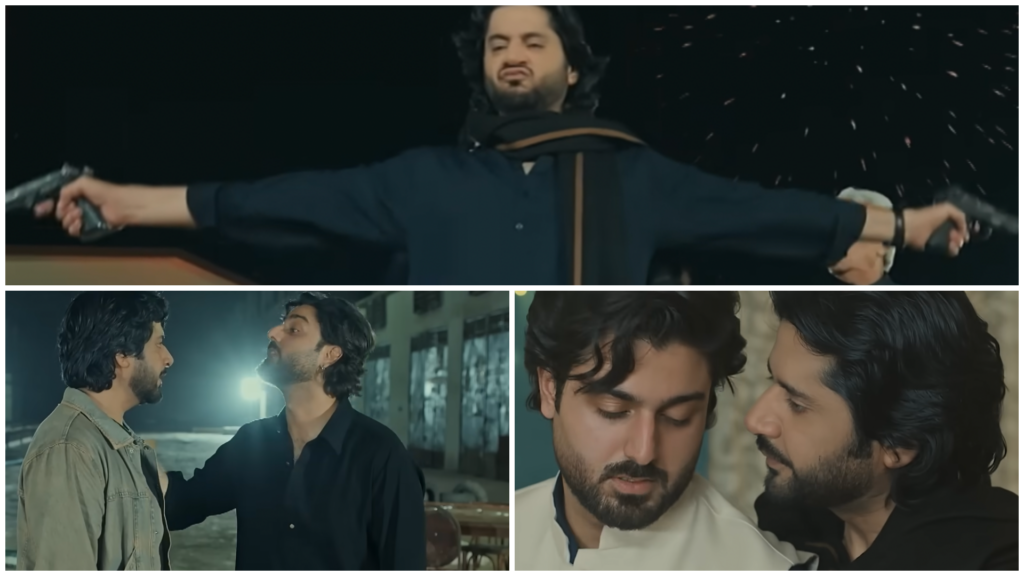
As the son of a feudal lord, Bashah slurs his demands through election season with the confidence of a man raised to believe the system exists to protect him. Zaviyar Nauman plays the role with unsettling ease, embodying generational entitlement so convincingly that the performance becomes the show’s only saving grace.
A much more heavy-handed performance by Imran Ashraf as Dr Ghulam is not enough to create a multidimensional character. All we know is that he is loyal beyond question and that he went to medical school. Despite becoming a doctor, Ghulam is constantly reminded that social mobility is an illusion. Sardar Jhandad sneers, “Tumhara qad ooncha hua hai, rutba nahi” with aristocratic relish. The drama repeats this idea often, just in case nuance tries to sneak in.
Subtlety has no place in Ghulam Bashah Sundri.
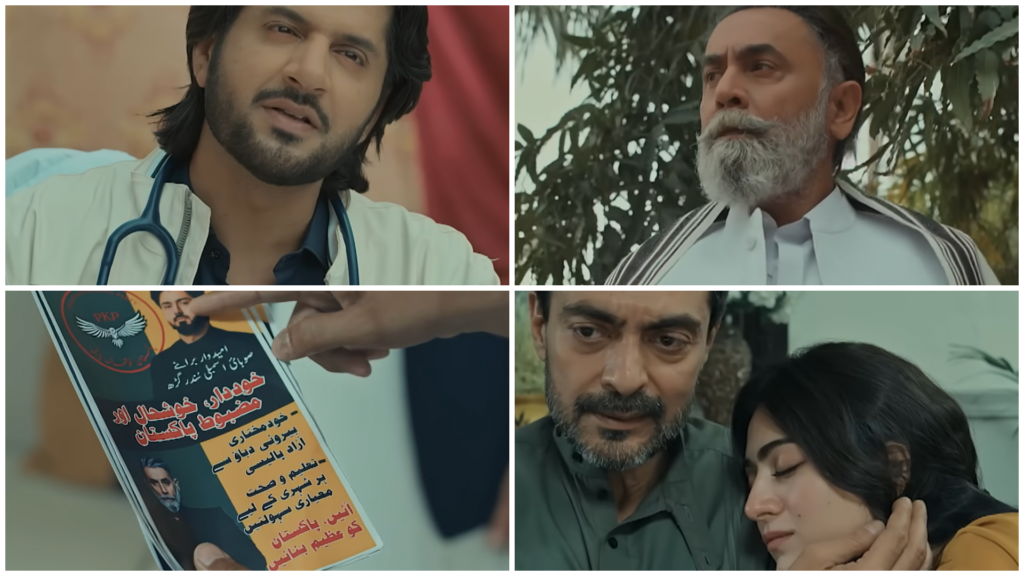
The show leans enthusiastically into clichés and archetypes, embracing operatic extremes. Sundri (Hina Adridi) is written as a beautiful and profoundly naïve schoolgirl. She is the daughter of a morally upright teacher, her virtue exists to glow in contrast to the corruption surrounding her.
Her fateful meeting with Bashah occurs, on a rain-soaked night after a school dance. As destiny pours down dramatically, Badshah’s oversized SUV pulls up on cue. Sundri and her friends ask for a lift, and Bashah notices her immediately. Seeing rain-drenched, dressed-up girls on the roadside, one wearing ghungroo, he makes the confident assumption that they must be prostitutes.
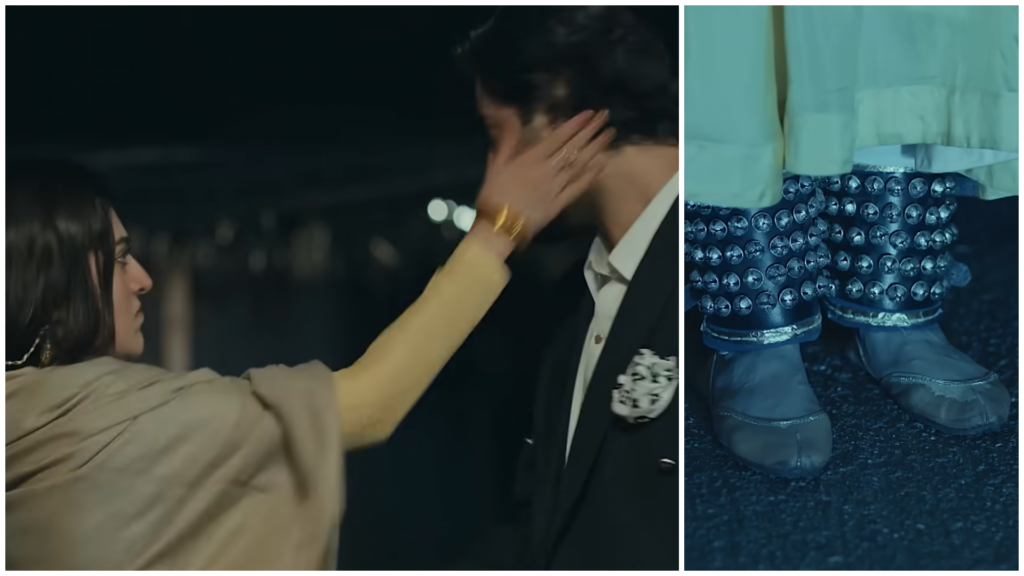
After dropping them off, Bashah asks Sundhri her “rate.” She slaps him. How romantic! This moment marks the beginning of his pursuit. With the assistance of his goons, he abducts her and ties her to a tree. Once he discovers she is actually an “honourable” woman, he apologizes and releases her. See, he’s not a villain after all! Sundhri, disturbingly, remains largely unfazed by the ordeal. Bashah praised her spirit and calls her a “sherni.”
The moment he unties her is shot in slow motion, bathed in soft focus, and replayed like a romantic memory. What is objectively an act of violence is transformed into a tender visual.
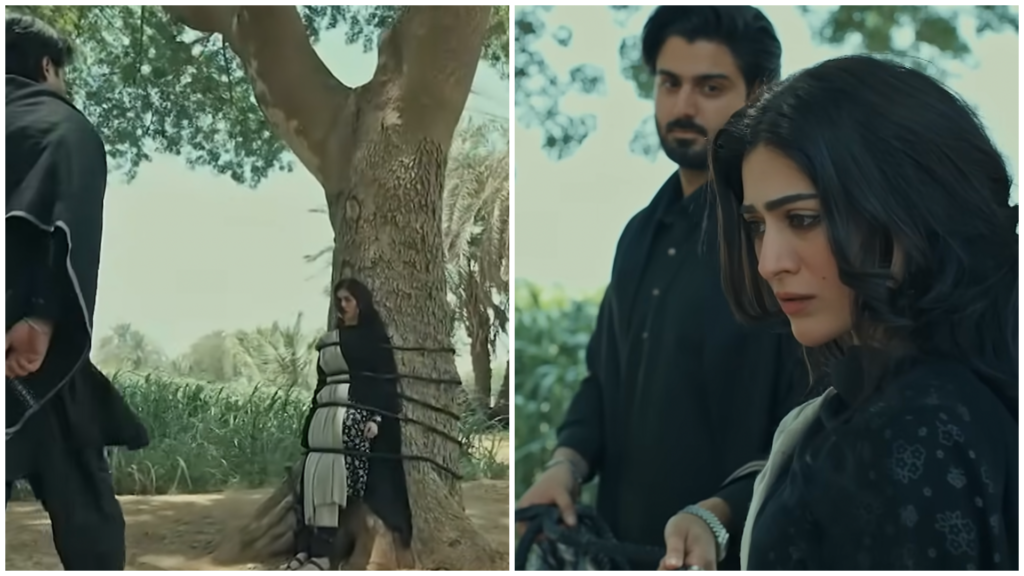
Upon learning that his daughter was abducted by a powerful politician, he correctly concludes that her life is in danger and insists they leave the city. Sundri, however, waves this off with remarkable calm, assuring him that the kidnapping was “not a big deal.” She is more concerned about missing the latest episode of her favourite TV show than her own kidnapping.
By the end of the fourth episode, the drama escalates further into full-blown melodrama. Violent rival gangs emerge, alliances are tested, and Bashah and Ghulam are positioned as action heroes. The story hints at a few mysteries: Is Ghulam truly Badshah’s brother? Why has Sundhri’s father moved sixteen times? What really happened to her mother?
As masala action, the drama knows exactly what it is doing. Logic, however, is not its strong suit.
After the massive success of Pamaal, it is surprising to see Zanjabeel Asim churning out such exaggerated drivel. A critic on Kya Drama Hai, speculated that the script was altered. Regardless of these rumours the drama has found its audience with millions tuning in for a dash of escapism. Much like Sher, SanwalYaarPiya and Daayan the drama will not appeal to critics but it succeeds on its own terms, offering viewers a heightened fantasy of power, punishment, and romance.
Green TV’s Main Zameen Tu Aasmaan Glosses Over Land Grabbing


