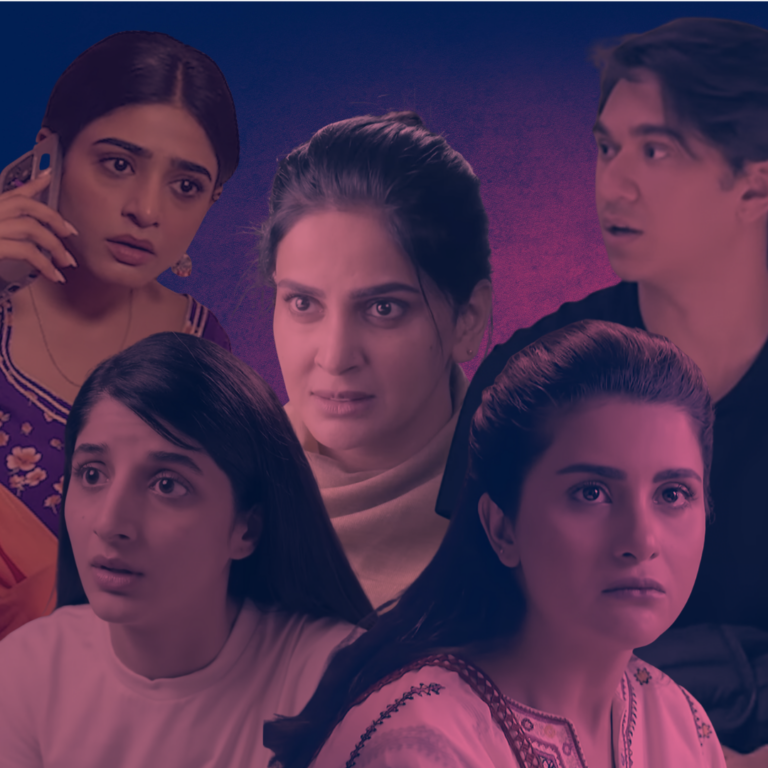
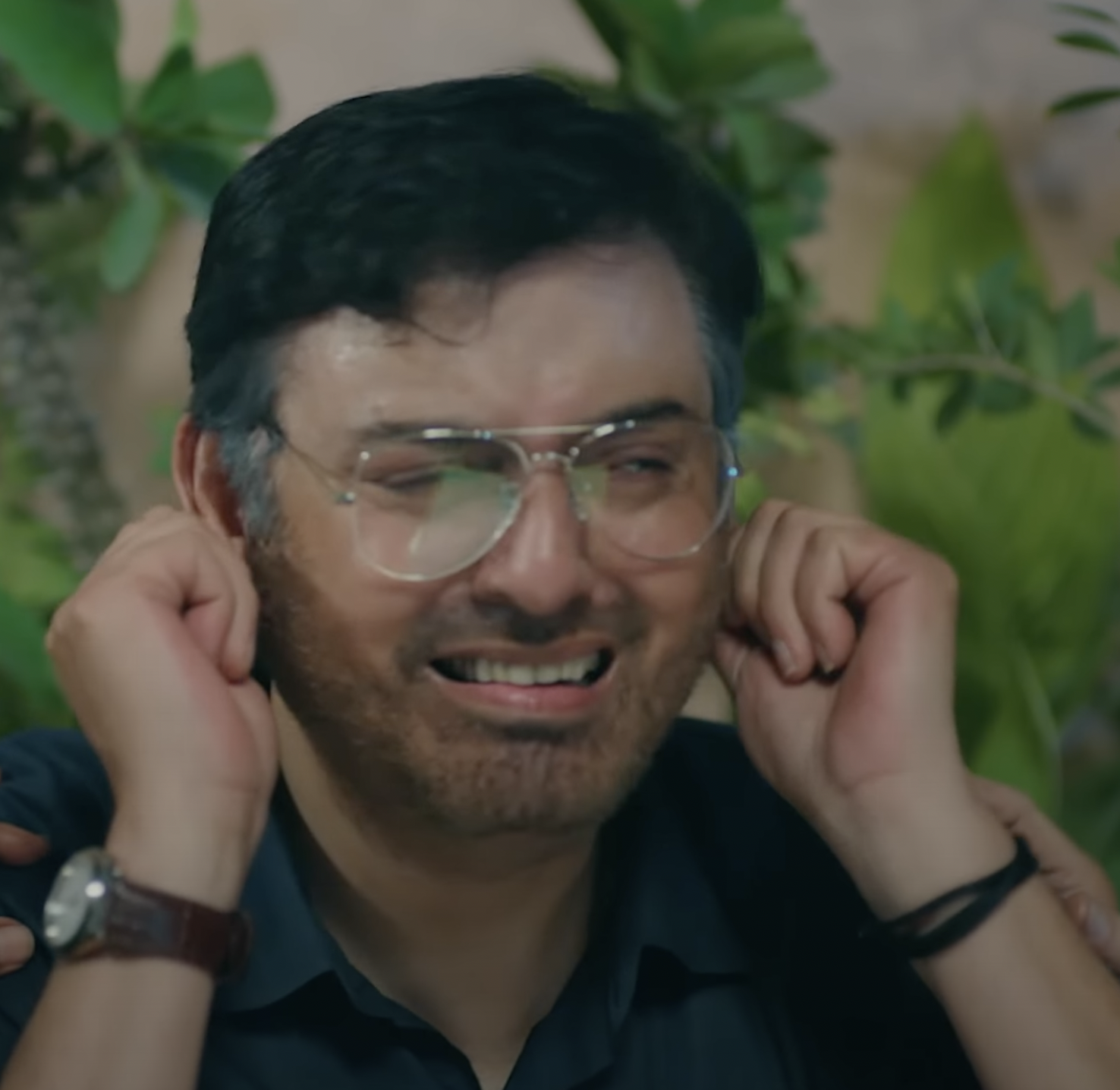


Sharpasand revolves around Farasat Ali Khan (Nauman Ijaz), a man who has perfected the art of moral theatre. Polished, pious, and endlessly judgmental, he presents himself as beyond reproach — the very picture of decency. But behind this holy veneer lurks a predator who weaponizes faith and reputation to prey on others.
A Deceptive Saint
Nauman Ijaz shines in the opening episode, as Farasat Ali Khan, a master manipulator with a charming façade. The episode begins with a minor car collision between Farasat and his new neighbors, Fida (Affan Waheed) and Sanam (Hareem Farooq). With effortless charm, he deflects responsibility. Instead of paying for the damage, he skilfully invites himself and his family over to the neighbors’ house, offering to bring food. By the end of the conversation Fida belies him to be a trustworthy and friendly.
But Farasat’s demeanour is a clever ruse.
A Domestic Circus
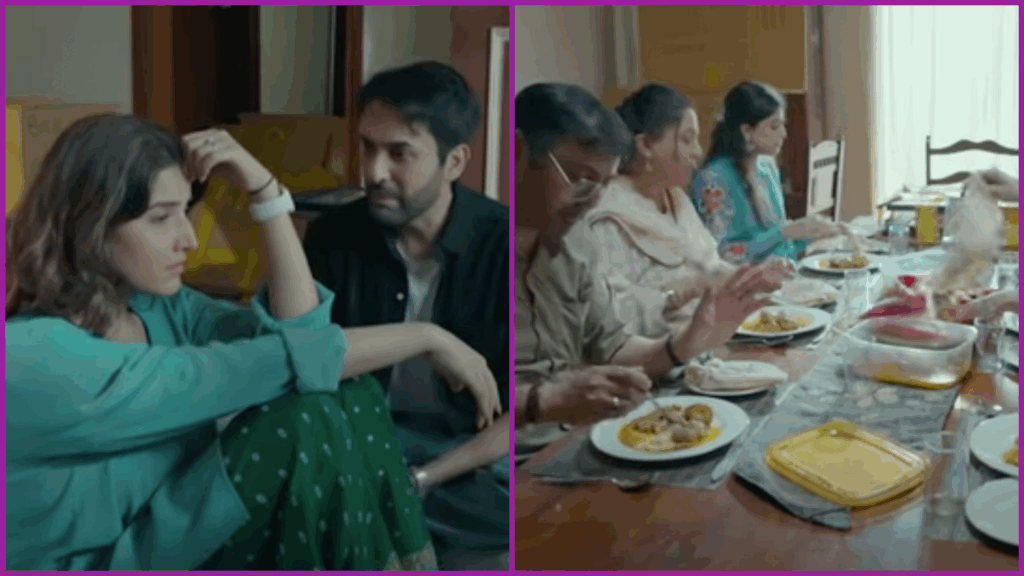
The lunch scene introduces Farasat’s family, including his wife (Nadia Afghan), two daughters, and a son. He also has a mother at home (Azra Mansoor), who so far appears to be the family’s sole voice of reason. When Farasat brings lunch over to the neighbors’, it’s clear that his family is overbearing, with Sanam seemingly exasperated by their antics. She has no patience for obnoxious theatrics (they don’t even leave her a morsel of chicken!).
The Neighbourhood Watches
These modern love birds have moved into a conservative neighbourhood filled with gossip. We meet Shazia (Seemi Pasha), whose son is moving to New Zealand. The son seems to have an emotional bond with Farasat’s older daughter. Then we have Shahzmeen (Hira Mani), a young widow, living independently, She navigates the challenges of being single in a conservative society. We meet her character when she’s forced to seek help with an electrical issue at her house, and Farasat, ever the opportunist, sees this as a chance to make a move.
Holy Hypocrisy
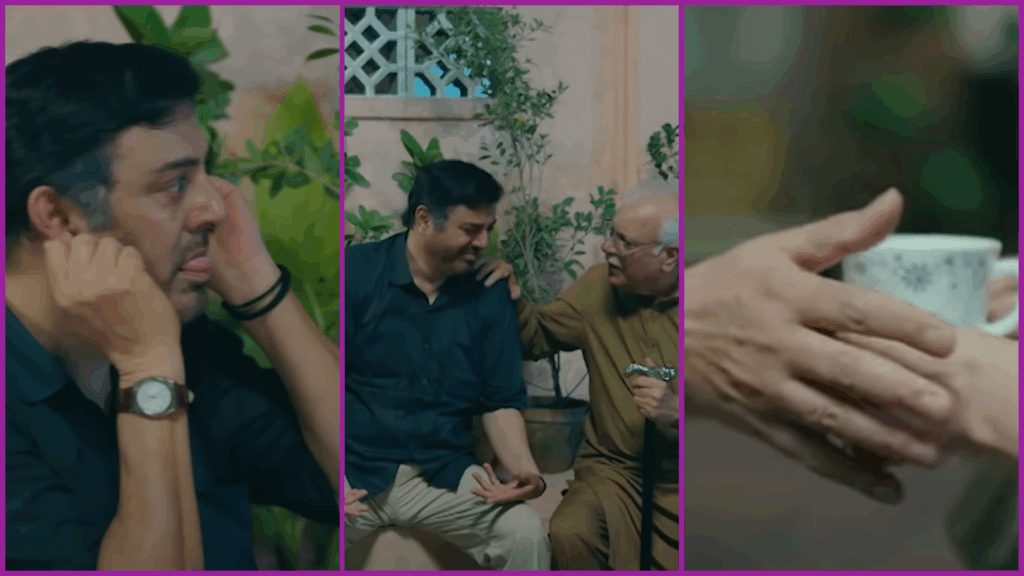
The cheap advances Farasat makes towards her and then touches Shahzmeen’s hand is a pivotal moment in the drama. Shahzmeen’s reaction is swift and decisive. She kicks him out of her house and calls out his so called “sharafat.” She has seen the man behind the mask. This moment is a shift for Farasat’s character – a testament to her strong character but also a powerful commentary on the importance of setting boundaries and demanding respect. Shahzmeen’s ability to ask for help without hesitation, despite being a single woman living alone, speaks to her independence and self-assurance. However, when faced with Farasat’s lecherous behavior, she doesn’t hesitate to assert her boundaries and take control of the situation. This nuanced portrayal of a strong female character is a welcome respite from the stereotypical depictions of women in our dramas.
The next scene will send shivers down your spine.
The Mask Slips
Farasat’s true nature is exposed to the audience, who smoothly manipulates others to avoid accountability. When Shahzmeen kicks him out, Farasat swiftly shifts gears, ready to protect his reputation by destroying hers. His brand of holier-than-thou dramatics is in full effect. The neighbors, already predisposed to Farasat’s charm, eagerly lap up his fabricated claims, confirming their deep-seated biases and double standards. They never trusted this strange single woman in their midst.
The Cost of Misogyny
The crowd of elderly men depict how easy it is for society to believe a victim -if it it serves their purpose. By portraying Shahzmeen as a “wicked woman” who “lured” Farasat, the neighbors demonstrate a disturbing tendency to prioritize male egos over female dignity. This exchange sheds light on the insidious nature of misogyny, where men often masquerade as champions of virtue while harboring deep-seated resentments towards women. The underlying message is clear: men like Farasat feel threatened by women who refuse to conform to traditional roles, who don’t fawn over them or depend on them for validation. Instead of acknowledging their own guilt, they blam women, often with devastating consequences. This scene serves as a scathing commentary on societal norms and the devastating impact it has on women’s lives.
The Gossip Machine
Farasat’s encounter with Shahzmeen quickly becomes the talk of the neighborhood. The men gather and whisper about the incident, their reactions revealing their deep-seated biases and prejudices. But it’s not just the men. When Farasat shares his version of events with his wife, she readily buys into it and becomes an active participant in spreading the rumor. She gossips with another woman, portraying Shahzmeen as a predatory woman who can’t be trusted, and even goes so far as to suggest she’s setting a bad example for their daughters. This behavior is a stark reminder that patriarchal norms are often perpetuated by both men and women and that women can be just as complicit in belittling and judging other women.
Encouraged by the neighborhood’s reaction, Farasat takes it a step further by warning Fida to keep his wife, Sanam, away from Shahzmeen. Gullible as he is Fida is also doubting Shahzmeen.
Sanam alone calls out Farasat’s behavior, refusing to believe his lies without question.
A Promising Start
Sharpasand is hitting the right chords in just two episodes. Tackling complex themes like patriarchy, gaslighting, and the struggles of single women, the drama is definitely on our watchlist. Nauman Ijaz’s portrayal of Farasat is brilliant, capturing the character’s nuances with a bit of over-the-top flair. The powerful female characters, particularly Shahzmeen and Sanam, are the highlight of the drama.
With such insightful themes and strong characters, this drama has the potential to resonate with viewers and spark important conversations. Eagerly looking forward to what’s coming next.