
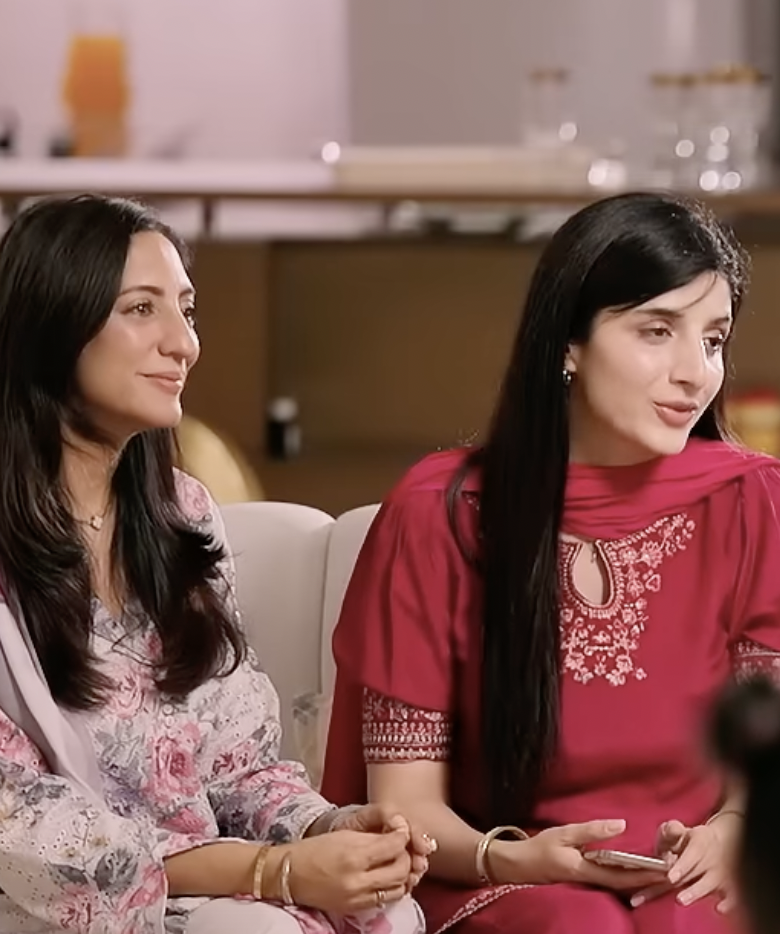


All love stories need contrasts to keep them interesting. Hum TV’s Jama Taqseem, written by Sarwat Nazim and directed by Ali Hasan goes further than the expected rich vs poor or rival families to incorporate multiple contrasts layered upon each other. It’s a study of the gap between what we wish family to be and what it can sometimes become.
Joint Family vs Nuclear Family
Qais (Talha Chahour) is the youngest of 4 siblings. His home overflows with people, noise and chaos. At first glance, this feels warm and lively, the platonic ideal of a large close-knit family but a closer look reveals the cracks. Do these people actually care about and support each other or has such proximity created a seething resentment that will be difficult to overcome?
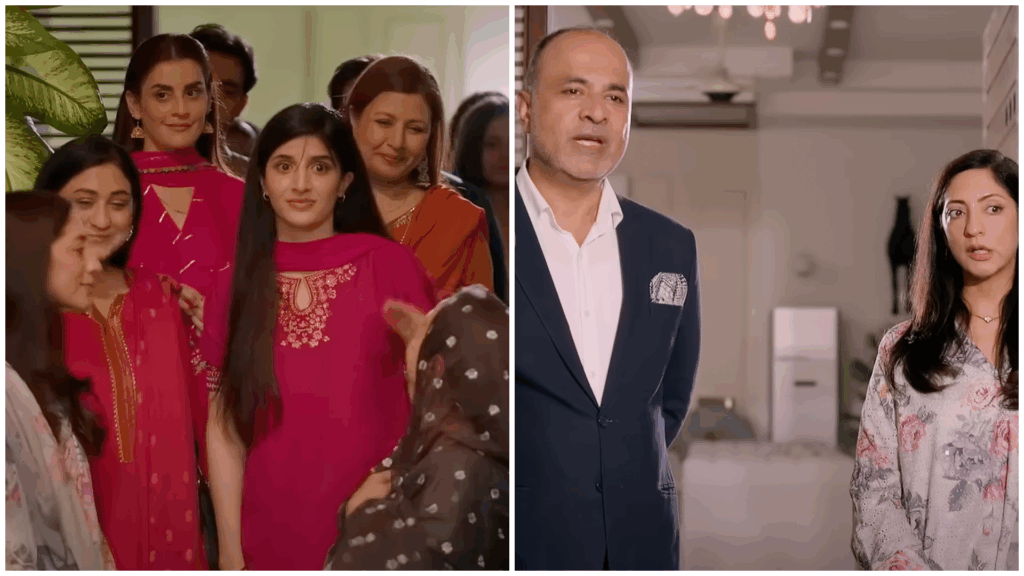
Laila (Mawra Hocane) has the exact opposite background. She is the only child of two successful educated individuals played with understated refinement by Deepak Perwani and Tazeen Hussain. She enjoys complete freedom and privilege but perhaps also a little loneliness. To her, a big family is an abstract concept that represents companionship and a sense of belonging.
Conservative vs Progressive
The sharpest contrast in the show is pointed out right away by both Qais and Laila’s father. Qais’ father Rafiq (Jawed Shaikh) rules over his household with an iron fist, holding on to every tradition he can think of. He had no qualms turning his flailing publishing house (he published books but had no time to read them) into a flourishing hosiery business. Meanwhile Laila’s professor mother encourages her daughter to study abroad, works for women empowerment and believes in financial independence.
What is refreshing and clever is that the show tries not to reduce these differences to simple labels with clear good guys and bad guys. The ‘progressive’ family can veer toward too rational and clinical. The ‘conservative’ one can be infuriatingly rigid but also full of warmth and humour. Neither side is villanised and we get to see the pros and cons of both.
Dinner Scene vs Car Scene
The pros and cons of the joint family are perfectly encapsulated in two great scenes.
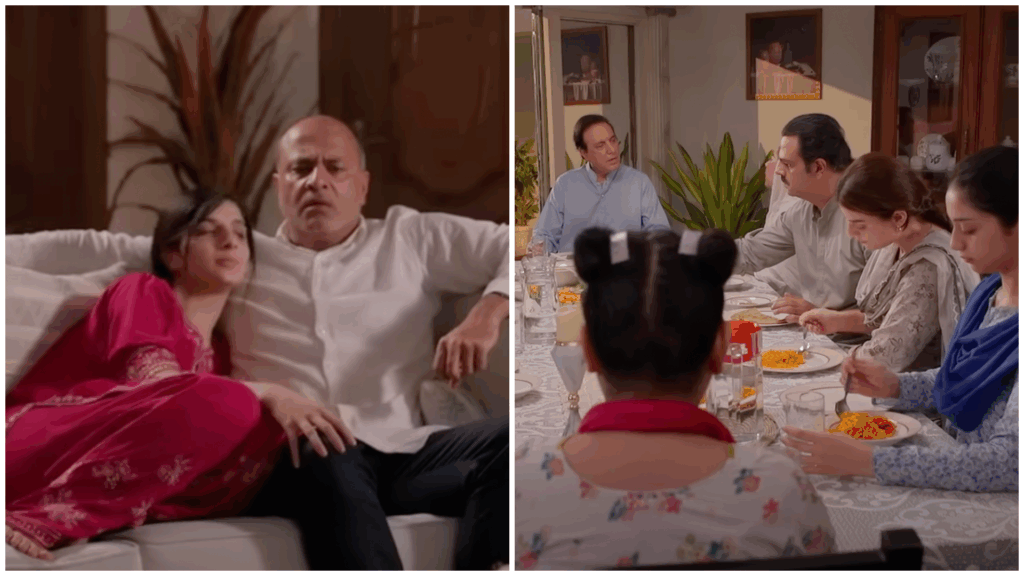
Dinner is tense, less a time to unwind and spend time with family, and more an episode of MasterChef where failure results in public humiliation. Rafiq serves as an unhinged version of Gordon Ramsay, first shaming any family member who isn’t present at the dinner table and then continues to pass judgement on the food, never acknowledging the labour involved. What should be a moment of connection through the act of care is instead a daily trial breeding resentment and competition instead of harmony.
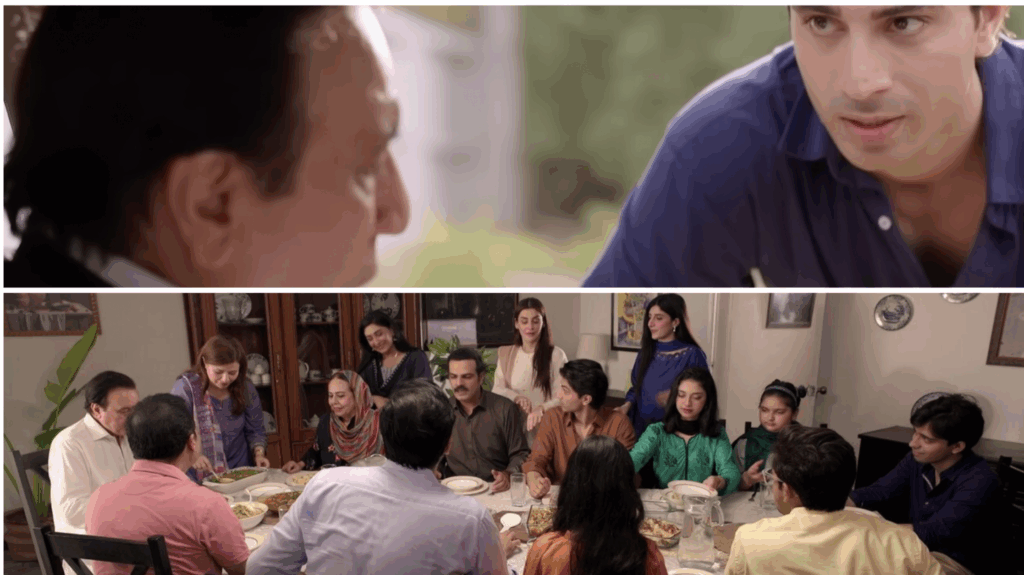
No wonder the elder sister-in-law looks for loopholes to skip her turn in cooking dinner. Who would want to be at the center of such scrutiny? Even the children are not immune.
Shafaq’s mother asks for a separate room for her that ultimately benefits Sidra and Maria too as now there will only be two in a room instead of three. But the bitterness has been so corrosive that Sidra’s mother is happy that this idea is rejected simply because it came from her sister-in-law who she wants taken down a peg. She completely ignores the effect this may have on her own daughters.
In contrast, the car-pooling scene is light and warm, full of laughter. Everyone squeezes into too few seats balancing children on laps, shifting like a manic game musical chairs until they all fit. When Qais suggests getting a taxi (a seemingly sensible idea) his brother waves it off as unnecessary and wasteful showing how accustomed this family is to making things work. It is chaotic but intimate, the kind of scene that makes you want to be part of this family if only for a moment.
Together these scenes remind us that family can comfort or crush you, sometimes in the span of a single day.
Laila vs. Sidra
Jama Taqseem may start as Laila and Qais’ love story, but lurking just below the surface is the story of Sidra, Qais’ niece who lives in a house full of people but is completely alone.
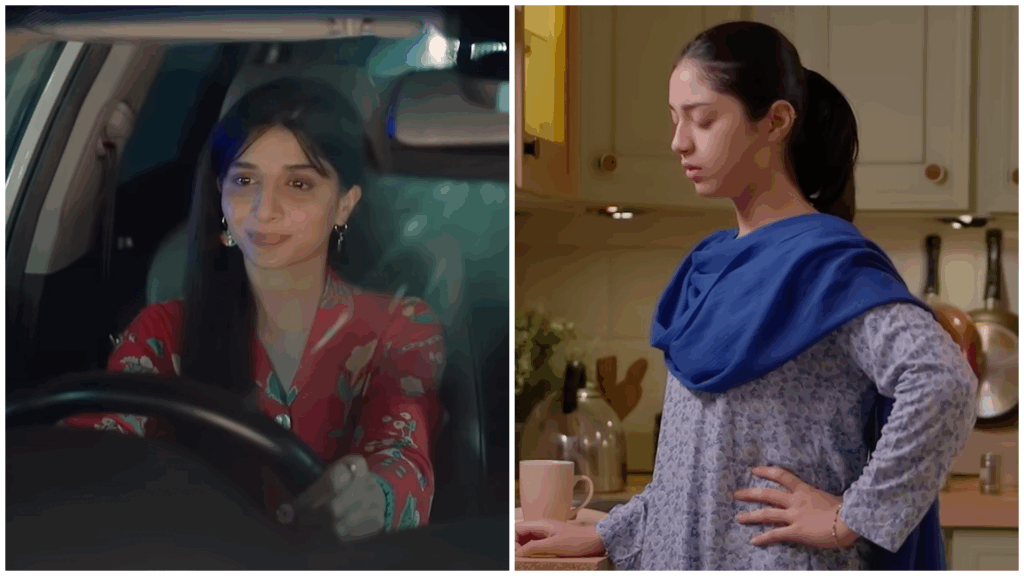
She is being harassed by one cousin, bullied by another, feels responsible for her younger sister and is a pawn in the machinations between her mother and aunt. She is scared to speak up because it may cause tension in the family.
Laila has grown up in a home where she is safe to speak and argue and still be loved. She has the confidence to propose to Qais when he hesitates and to stand firm with her parents until they agree to the match. Her strength is colored with romantic naivety. She has idealized the large family so much that she is willing to put herself at the very bottom of its hierarchy just to belong.
This is what makes her choice heartbreaking. Sidra is trying to survive this oppressive suffocating environment and Laila walks into it voluntarily.
Patriarchy vs Equality
Qais’ family functions like a microcosm of patriarchy. One man’s will is law and everyone else scrambles to please him just for scraps of power. Love and respect are conditional rewards for unflinching obedience. Equality would look different. Sidra could speak out, Qais’ wishes about his own marriage would matter, dinner would be a meal instead of an ordeal.
Joint families are not inherently bad. The family in “Parvarish” worked because it was egalitarian, even the children had a voice. No one person had the final word, resulting in a home where people felt responsible for each other instead of afraid of each other. Imbalance only occurred when JB declared himself “head of household’ and expected everyone to do his bidding.
Jama Taqseem shows us the opposite, a house where fear keeps people silent, every decision is a power struggle and even kindness is a tool to gain favor.
Perhaps that is where Laila comes in, making space for a new way of thinking.
Maybe love won’t just conquer all maybe it can transform everything too.