


Pakistan’s land mafias fuel displacement and violence. The drama makes it look easy to fight back.
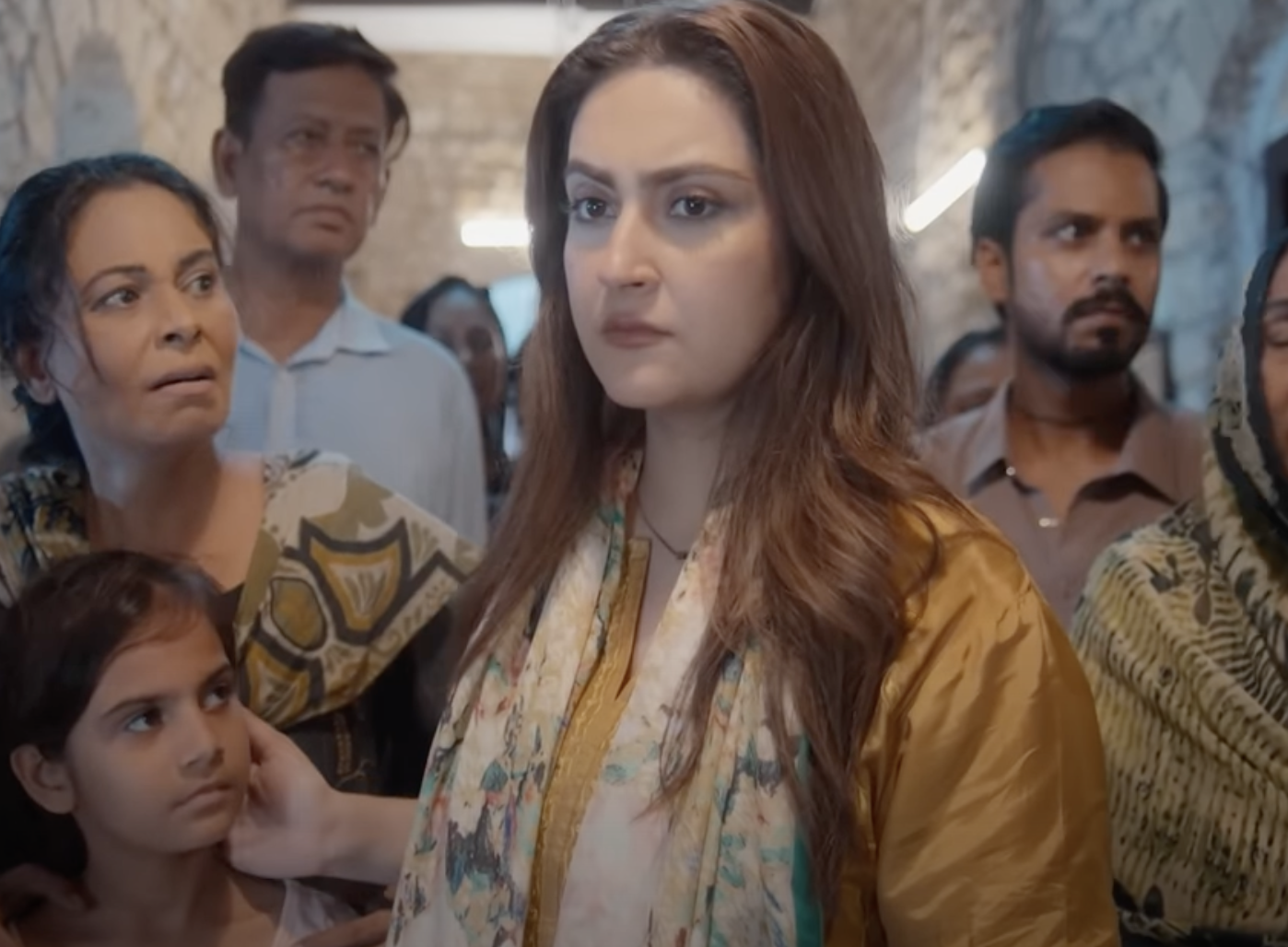
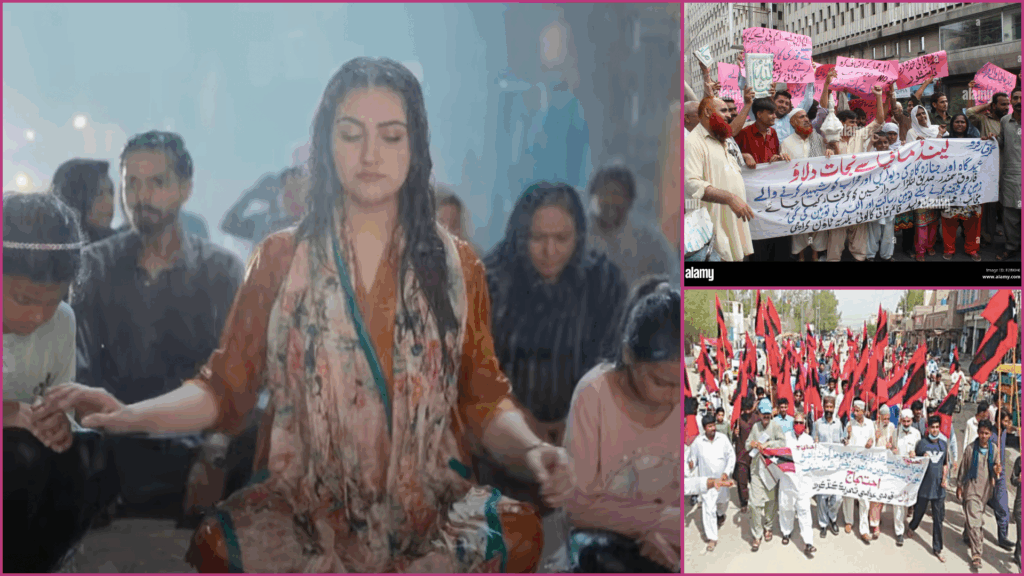
The story begins with Shahabuddin refusing to sell his hotel to a powerful family, leading to his arrest. His daughter Hooram (Hiba Bukhari) storms into a police station, delivers a lecture on constitutional rights, and then stages a picture-perfect “protest” in the rain. Within minutes, the media has declared her a national hero, her father is freed, and oppression is vanquished. All it took was a sit-in that looks more like a yoga retreat than a desperate struggle.
Hooram made zero effort to actually organise the community, galvanise dissent and create an impactful campaign. She screams ‘ahtejaj’ and magically ahtejaj has happened, media coverage, social media virality and the mafia has backed off.
Real victims of land mafias rarely get the luxury of TV cameras, let alone immediate justice. Their sit-ins drag on for weeks, often ignored. Their leaders are threatened, and their families are terrorized. In Main Zameen Tu Aasmaan, Hooram, immaculate in hair and makeup, stands out against a crowd of drab “poor people” extras who exist only to frame her as the “bahadur beti.”
By episode two, the show doubles down on binaries. Hooram is framed as the righteous, pious girl who donates to charity, gets kissed by children, and rolls rotis for her family. She may be a rebel against the qabza mafia, but only within the limits of a “good girl” archetype. Even her backstory leans on melodramatic tropes: we learn she is adopted, found as a baby in a trash dump.
Enter Feroze Khan as Shazil Sultan, heir of the corrupt land-grabbing family. Instead of confronting power, his arc begins with stalking. Shazil is instantly smitten with Hooram the viral protest girl he casually follows, watching her in soft-focus montages. It’s predictably creepy.
Rather than building a layered conflict between oppressor and resistor, Main Zameen Tu Aasmaan slips into 1970s Bollywood tropes: the himmat wali larki versus the spoiled zamindar heir, destined for attraction.
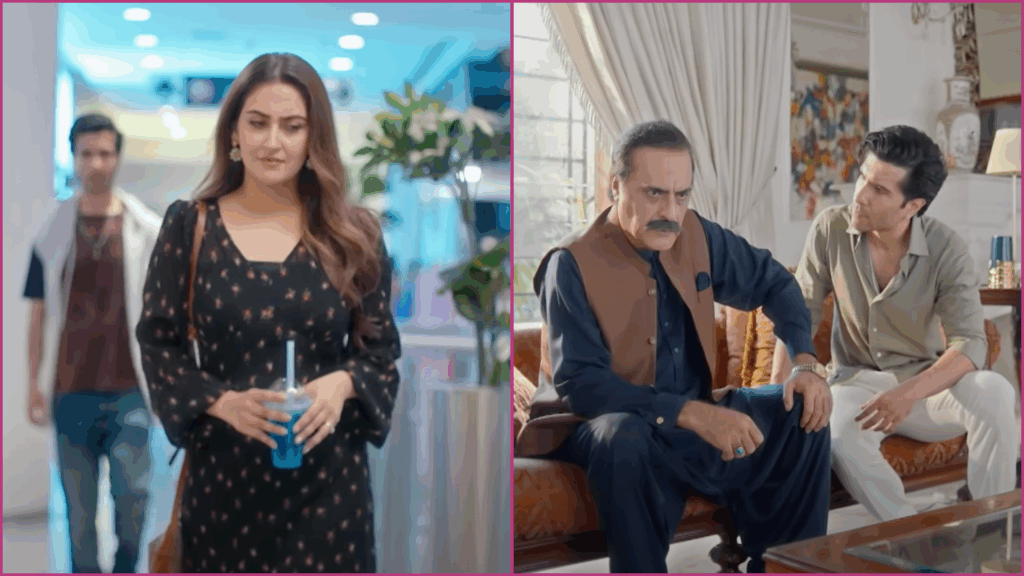
A side-plot of a greedy sister-in-law who demands her share of the property hint at more soap opera style antics coming up.
Unlike TV, land grabbing in Pakistan is not glamorous or solvable in a single scene. Resistance is often crushed violently.
Shows like Main Zameen Tu Aasmaan and before it, Dil Wali Gali flirt with this issue but strip away the messiness, violence, and systemic corruption.
This is an important story to tell. Thousands marched against Bahria Town Karachi after their homes and farmland were bulldozed. Families who had lived on that land for generations were pushed to the city’s edge. The towers and gated colonies that replaced them now sell for millions.
The cost of resistance has been deadly. In 2013, Parween Rehman, an architect and activist who exposed land grabbing in Karachi, was murdered. Her killing shows how powerful these mafias are and how dangerous it is to stand against them.
As housing schemes, often sold as “mini Utopias,” spread across the country: urban sprawl, low savings. Developers get richer while the poor are left with nothing.
Real people are still protesting, often at great risk. Their struggle deserves to be told.
Main Zameen Tu Aasmaan turns human pain into standard bubble-gum gloss.