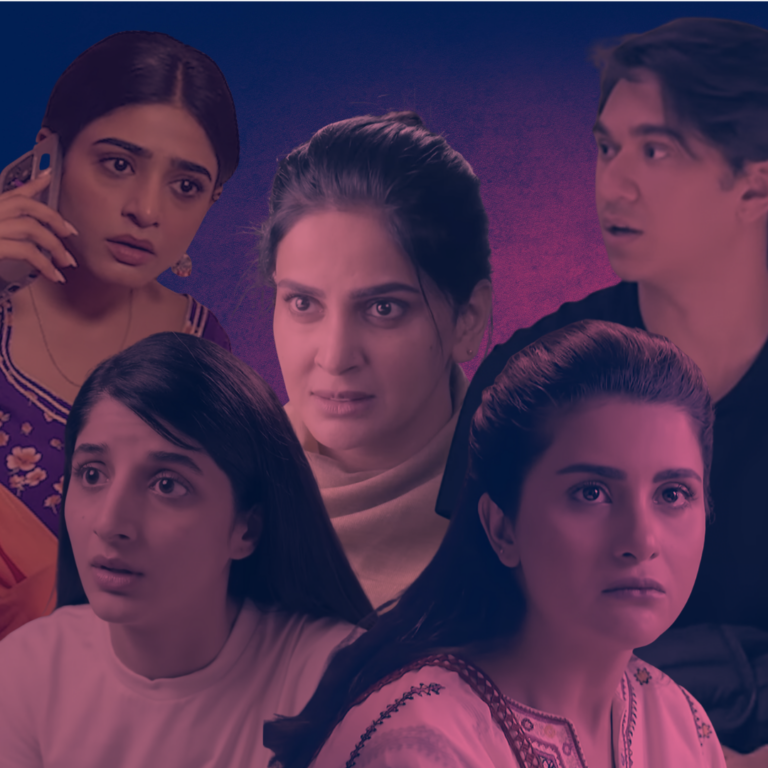



Shikwa is almost over, but it still doesn’t make sense. While some Pakistani dramas like Parwarish and Behroopia are daring to subvert social norms and offer layered characters and nuanced narratives, ARY’s Shikwa plays it safe and reinforces every classist and sexist cliché instead of challenging them. The plot? A rich businessman is tricked into a second marriage by a greedy, jealous young woman, while his first wife remains the ever-suffering, saintly victim. The drama leans heavily on melodrama, caricatured villains, and one-dimensional protagonists, reinforcing every tired trope in the book, presenting a story we’ve seen a hundred times before with little effort to refresh or innovate. It ultimately falls flat.
The Passive Heroine
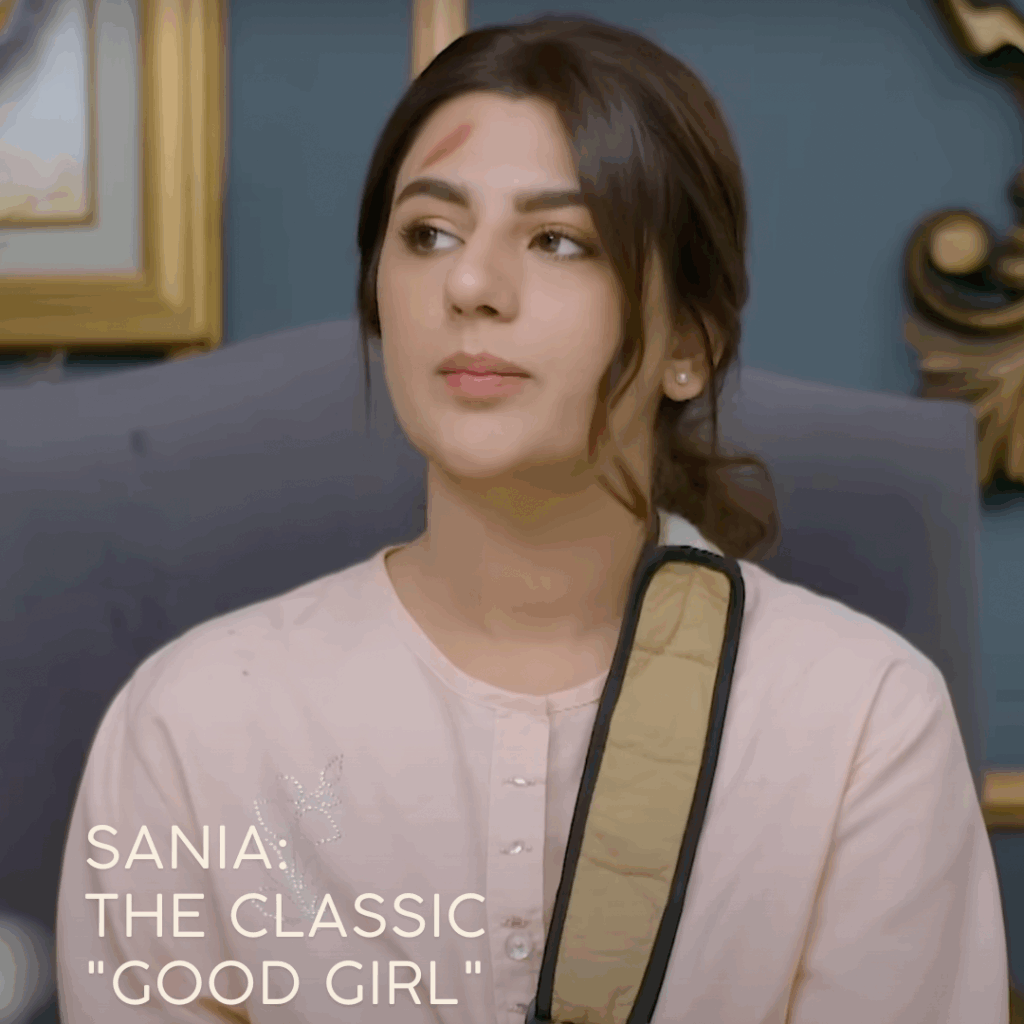
Sania (Maria Malik) is the classic “good girl” – soft-spoken, docile, emotionally fragile, overly obedient, and virtually powerless.
One of the weakest female leads seen on screen in recent times, her existence is confined to a single emotion: misery. Her interactions with other characters lack any emotional depth or chemistry, making it difficult to connect with her journey. She constantly feels isolated but never reflects on her privilege or tries to understand other people’s problems. A frustratingly passive protagonist with no personal growth, Sania sits in sadness while others fight her battles, letting events unfold around her without any meaningful resistance or transformation. Her personality is in soft focus and slow-motion just like the cinematography.
The Convenient Villain
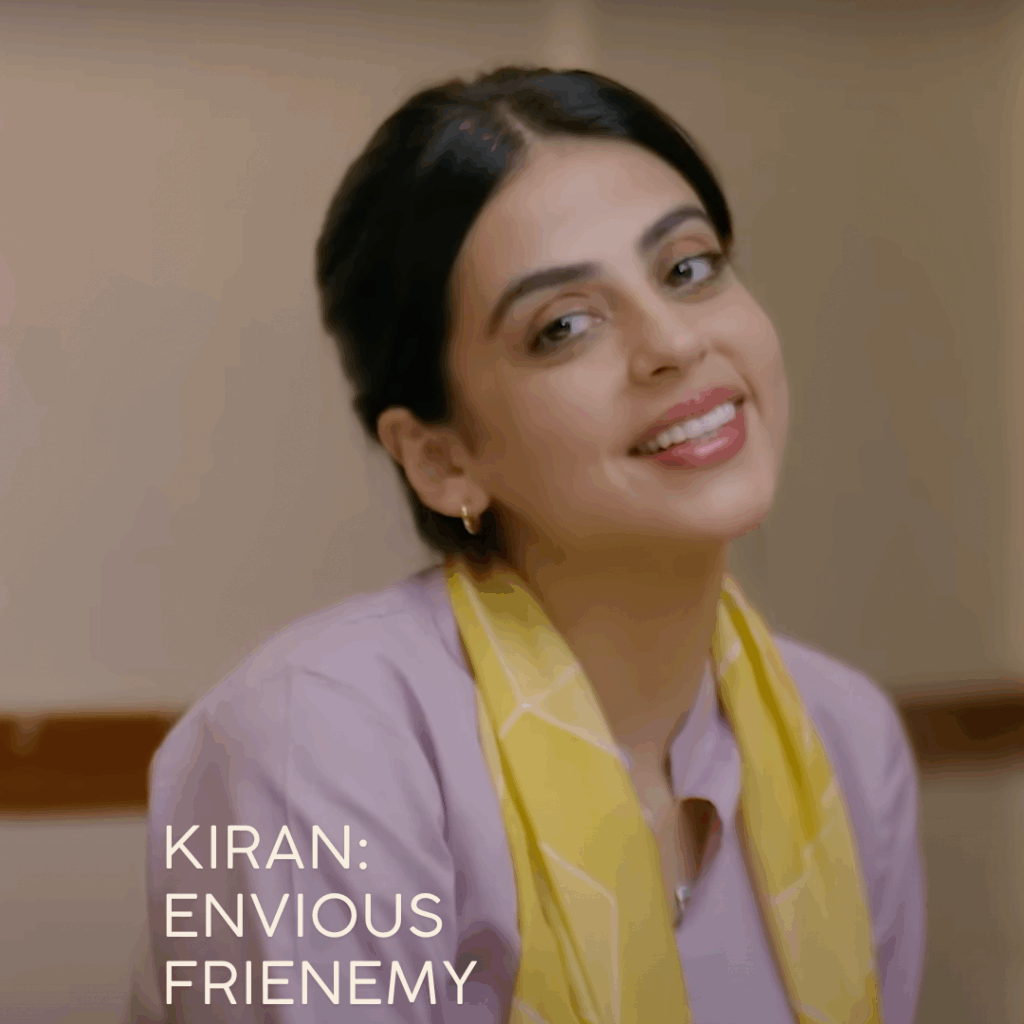
Kiran (Yashma Gill) is supposedly Sania’s best friend but apparently has spent all this time getting close to her just to ultimately betray her. In a role almost identical to her character in Behkaway Gill plays the scheming second wife convincingly. However Kiran’s worst “flaw” seems to be that she is ambitious and outspoken while also being poor. She is vilified for seeking upward mobility, blamed when she stands up for her sister and portrayed as selfish for resisting inequality and classism. Her outlandish schemes succeed making her a villain because the system says so.
Villains With No Cause
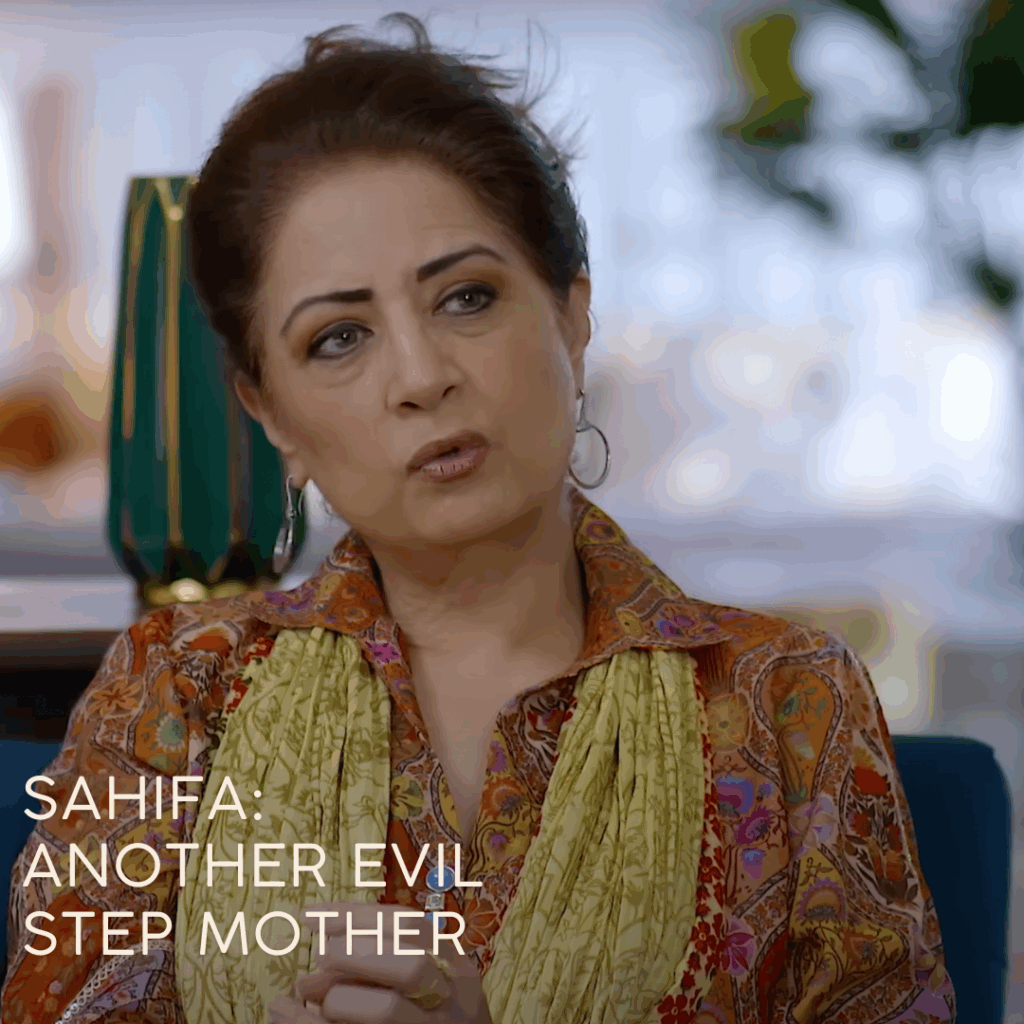
At least Kiran has a clear motive: she plots against Sania to get ahead in life. But Sania’s stepmother Sahifa (Atiqa Odho) and her failed love interest Faseeh (Asim Mehmood) seem to hate her for no reason at all. Their constant scheming makes no sense! They go out of their way to destroy her without motive. Faseeh really seems to have no life to the extent that he has become obsessed with destroying Sania just because she dumped him. Atiqa Odho, though talented, is trapped in a role devoid of nuance. Sahifa is cartoonishly evil and offers no complexity or justification for her actions. She gains nothing from this enmity except seeing Sania’s perpetually moping face. This isn’t good storytelling, it is lazy writing and pointless conflict.
The Cipher Husband
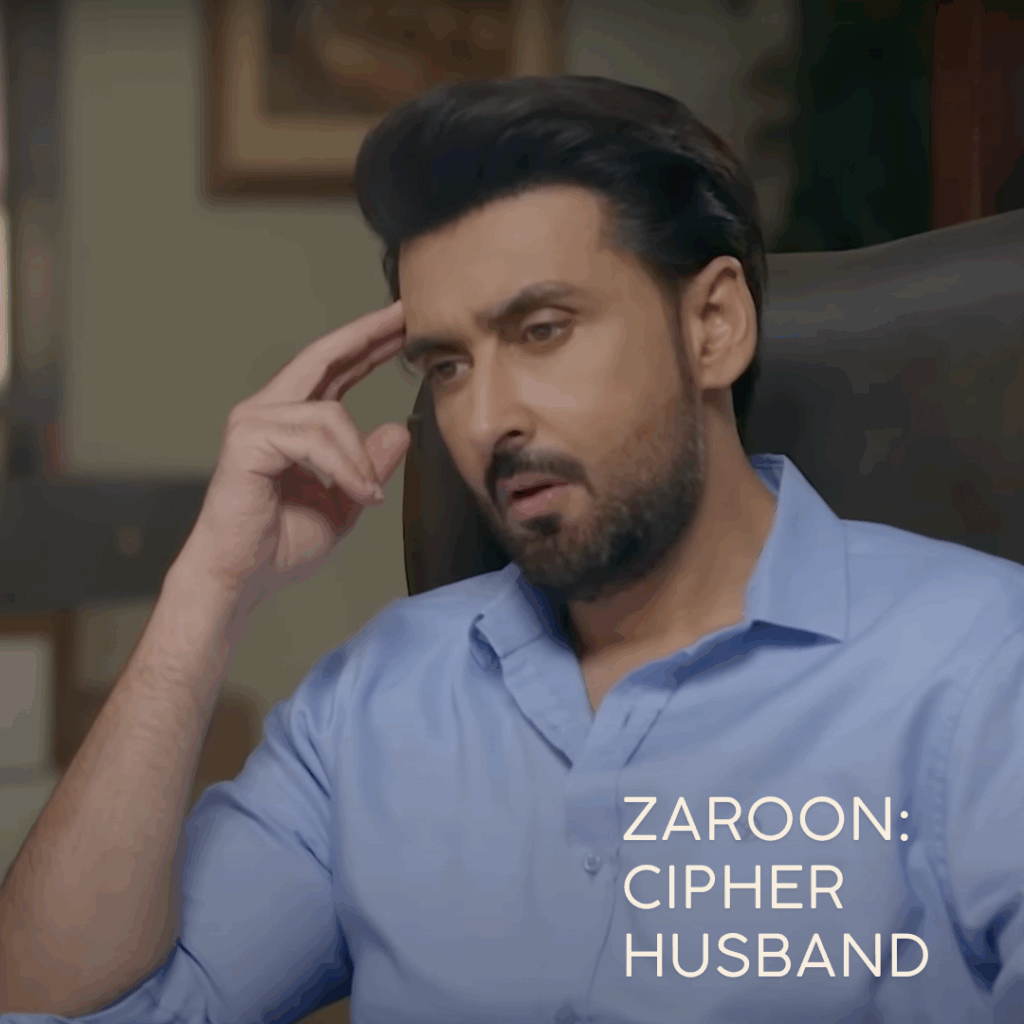
Zaroon (Sami Khan) is the supposedly ideal man: successful, respectful, and instantly smitten with Sania. But that illusion quickly unravels. His character arc, like the rest of the story, lacks development and credibility. Chivalrous at first, inexplicable later. He marries Kiran to “save” her reputation and is surprised when people (like his wife) are shocked at his actions. Despite claiming to love Sania, he believes lies about her without question and flips sides with disturbing ease. Once again it feels like lazy writing that serves plot twists rather than character development.
Every side character is cardboard
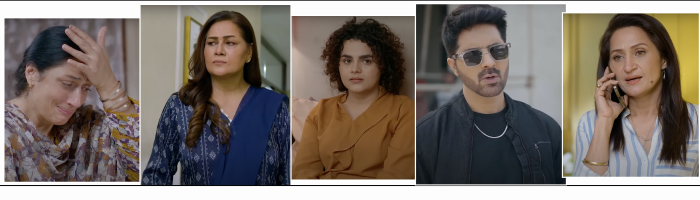
There are so many side characters and not a single one has a personality! Everyone is manipulated—fast.
Sania’s father (Usman Peerzada) blindly believes everything his wife Sahifa (Atiqa Odho)says and fails to understand his own daughter. Their son (Sania’s half brother) watches his mother stirring up trouble and makes non effort to stop her. Zaroon’s mother (Nida Mumtaz) starts out warmly and is excited for Zaroon to marry Sania but as soon as he does, she turns toxic. Shefinds fault with everything she does and sides with Kiran, who just may provide the family heir. Equally confusing is Zaroon’s sister (Qudsia Ali) who makes no sense whatsoever! She is head over heels for Faseeh (who previously was involved with Saniah) even though he clearly does not care about her. Zaroon’s father (Javed Sheikh) shows up occasionally to make vague comments about “broken homes”. The most wasted character is of Kiran’s father (Saife Hasan). He hates her and constantly yells at her and ultimately has a heart attack when she dares to fight back. Kiran’s sister Samia is a doormat whose inlaws take advantage of her but somehow she blames her sister. Samia’s husband switches sides from his wife to his sister back and forth without any explanation. Sania’s aunt (Seemi Pasha)might be the most reasonable person in the show but no one really listens to her.
Shikwa offers: No fresh narrative. No strong lead. No emotional payoff – just endless crying, betrayal, and cliché villains. Tired tropes. Classist undertones. Weak character arcs. Shikwa punishes ambition, rewards passivity, and misplaces all the blame. Watch only if you miss outdated TV melodrama.