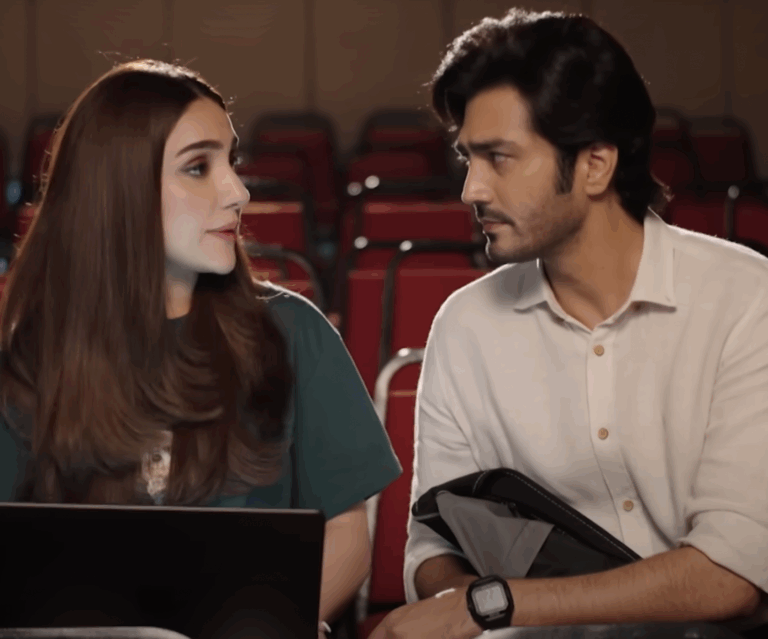



After 25 episodes of blood, betrayal, and blurred morals, Faraar finally reached its conclusion.
But after the thrilling buildup of the previous episodes, the finale was a major letdown. While the series deserves credit for venturing into uncharted territory in Pakistani television, its ending exposed cracks in storytelling that even its strongest performances couldn’t patch.
Despite its shortcomings, Faraar remains an important experiment.
With themes of justice, corruption, and personal redemption, Faraar gave us complex characters operating in morally grey spaces — a rarity on our screens.
Strengths: Bold Themes, Strong Performances, Stylish Direction
At its best, Faraar was gripping. The final stretch — particularly episodes 21 to 24 — injected adrenaline into the slow-burning narrative. Kudos to Green Entertainment for backing a show like Faraar — dark, ambitious, and unlike anything else on prime-time TV. Mustafa Afridi’s writing, paired with the directorial vision of Syed Wajahat Hussain and producer Mussadik Malik, dared to move beyond saas-bahu clichés.
It’s a testament to the audience’s appetite for action-thrillers and layered storytelling. Faraar proves that Pakistani viewers are hungry for diverse content — and it was refreshing to see creators taking risks and pushing boundaries.
Hamza Ali Abbasi’s Batish was compelling as a morally ambiguous hitman haunted by his past. Sohai Ali Abro delivered an intense performance as Nazish/Baggi, especially in the scenes where she stood up to powerful men and exposed the truth behind her husband’s murder.
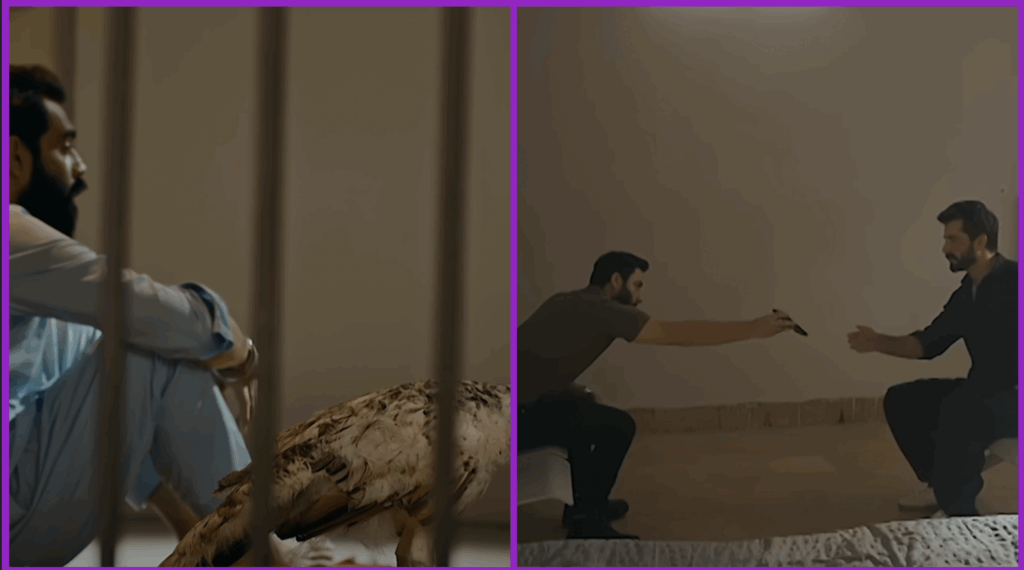
Hassan Niazi’s portrayal of Jabbar Malik was a standout — every smirk and calculated glance left an impression. His final prison scene, reciting prayers with a peacock perched nearby, was visually jarring in the best way. Symbolic or absurd? Either way, it was unforgettable.
The show’s cinematography and mood-setting were also top-tier. From the village alleys of Jandiala to the grim interiors of police stations and jail cells, the aesthetic held true to the noir vibe the series promised.
Misses: A Rushed, Convenient Ending
Unfortunately, for all its highs, Faraar stumbles in the home stretch.
The finale opens with Babrik and Zallay returning to the village thanks to Batish’s unexpected heroics. The jirga convenes, and voila — the matter is settled, and the star-crossed lovers get married. What was the point of all the drama if a tribal council could fix everything? The European dreams, the running, the hiding… all for nothing. And Batish, the cold-blooded assassin, suddenly becomes a hero?
Another quick fix: Batish makes one threatening phone call, and Azam Shah (Mehmood Aslam) — an exiled crime lord with international reach — cancels his return to Pakistan. For a man who once controlled an entire city from abroad, this retreat felt like lazy plotting rather than a credible development.
A more believable approach could have shown Azam Shah’s response as more calculated — perhaps introducing internal conflicts or vulnerabilities that made him more susceptible to Batish’s threat. This would have added depth and made the twist more convincing.
The conclusion felt rushed — as if the writers spent time building the world but then hurriedly wrapped it up. The abrupt ending left some questions unanswered and plot threads unresolved.
Overall, Faraar was engaging and kept us hooked — but its pacing left much to be desired.
Absolution for Batish
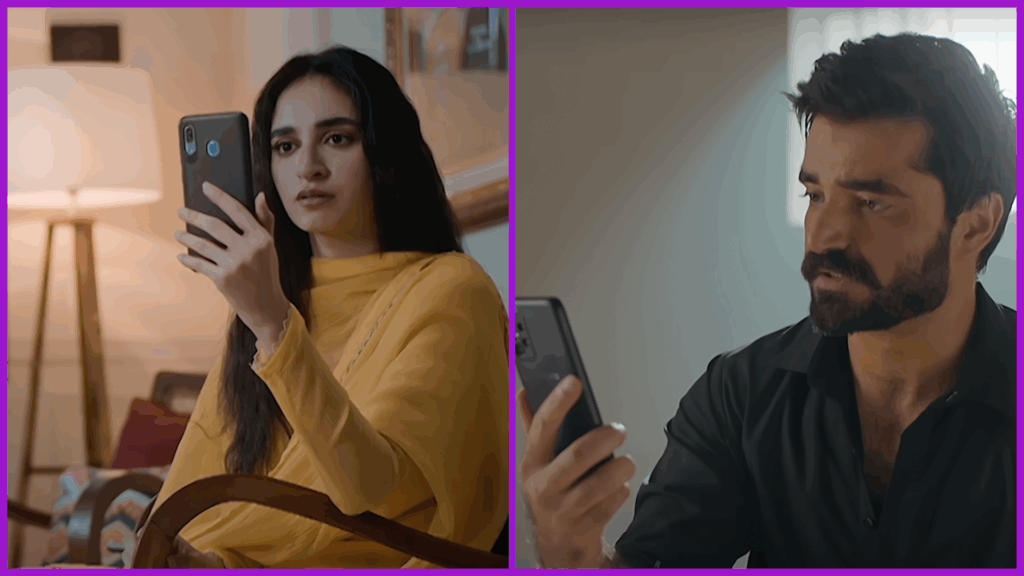
Fasih (Ahmed Ali Akbar) returns home to Sadia (Mamya Shahjaffar), announcing he’s finally got Batish in custody. But let’s not forget — Batish didn’t exactly get caught. He chose to walk into custody because Nazish convinced him to. But I suppose what happens in Jandiala, stays in Jandiala… right?
Fasih breaks the news to Sadia that Batish didn’t kill her father. But let’s be real — that’s not exactly a clean slate. The guy is a professional assassin with a body count likely in the triple digits. But hey, at least he didn’t kill her dad.
As part of some twisted deal, Fasih lets Batish have a video call with Sadia, during which Batish pours his heart out and confesses. And Sadia’s response? “I’ll pray for you.”
Pray for him? The guy’s a trained killer. It’s like praying for the devil himself. I’m not sure what’s more surprising — Sadia’s response or Batish’s apparent hope that she’d see him as more than a ruthless assassin.
Wasted Characters: Faraz and Shakeela
Some of the show’s most talented actors were criminally underused. Nadia Jamil’s Shakeela had the potential to be a formidable antagonist, but she appeared in only a handful of scenes. Her character had depth on paper but was never explored onscreen.
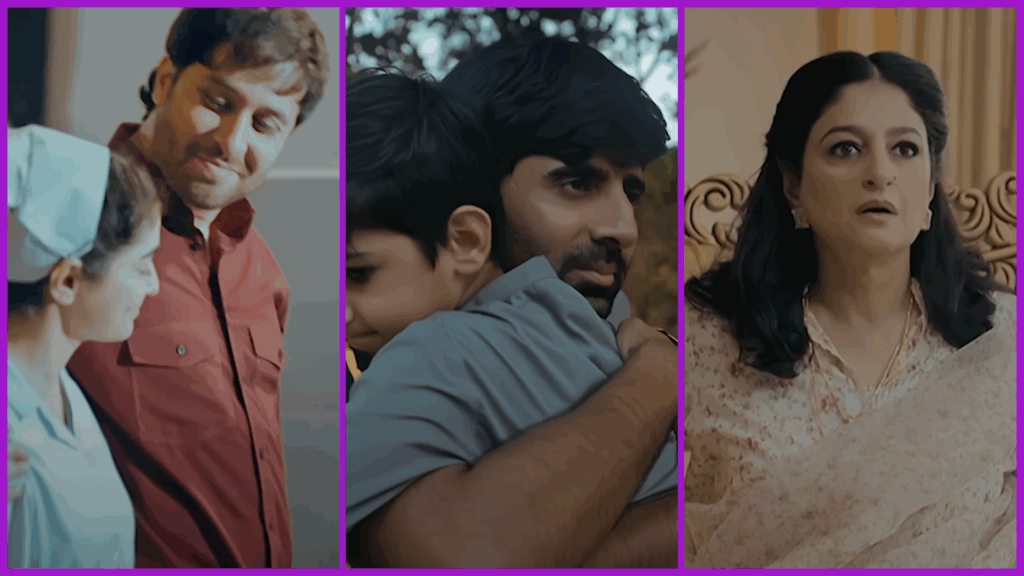
Maybe the writers should have flipped the roles — Shakeela could’ve been the ruthless sibling, and Jabbar Malik the one searching for Nazish in Jandiala. That way, both powerful characters could have been better utilized.
Adnan Jaffar and Iffat Omar were also left with little to do. Their characters lacked substance and meaningful contribution. They existed in the background, occasionally surfacing for exposition before disappearing again.
Meanwhile, Faraz, played by Haroon Shahid, finally reunites with his wife — a payoff that lands flat. You can’t help but feel bad for Faraz. He had the worst luck, no agency, and was mostly reduced to a background prop — occasionally serving as the voice of sanity.
Recap: What Actually Happened in the Finale?
-
Batish redeems himself by saving Babrik and Zallay, returning them to the village for a fairytale ending blessed by a jirga.
-
Faraz reunites with his wife and learns they’re expecting a child — a neat, if unconvincing, end to a mostly sidelined arc.
-
Nazish submits crucial CCTV footage proving Jabbar Malik’s guilt. Malik ends up in prison — oddly serene and spiritually awakened.
-
Shakeela, Malik’s sister, fades into obscurity with barely any narrative weight.
-
Fasih allows Batish a video call with Sadia, during which he confesses. She responds by saying she’ll “pray for him.”
-
Batish threatens Azam Shah over a phone call. Shah, terrified, cancels his return.
-
Mohsin Baig ends up asleep at a police station. Seriously.
-
Final scene: Batish records statements against Azam Shah — closing the loop, albeit unconvincingly.