



Justice for women is rarely loud, swift, or uncomplicated and Case No. 9 refuses to pretend otherwise.
After 32 episodes on Geo Entertainment, the drama, produced by 7th Sky Entertainment and written by Shahzeb Khanzada and directed by Syed Wajahat Hussain, concludes as an unflinching indictment of how power, patriarchy, and silence collide to fail women. Anchored by compelling performances from Faisal Qureshi as Kamran and Saba Qamar as Sehar, the series confronts the brutal realities of workplace harassment and rape, centering not just the crime itself but the exhausting aftermath women are forced to survive.
While deeply rooted in Pakistan’s social landscape, the show’s relevance extends far beyond national borders. Sexual harassment and rape remain global crises, but in the subcontinent, these violences are often intensified by cultural shame, misplaced notions of honour, and systemic apathy. Drawing from his background as a journalist, columnist, and television anchor, Shahzeb Khanzada brings a familiar urgency to the narrative.
Much like his current affairs program Aaj Shahzeb Khanzada Kay Sath, Case No. 9 challenges distorted narratives around survivors and forces viewers to confront uncomfortable questions about accountability, complicity, and justice.
The drama’s strength is its informative and socially responsible approach.
Beyond storytelling, Case No. 9 actively educates the audience by highlighting emergency police helplines, the importance of timely medical examinations, and the illegality of the two-finger test. These moments elevate the series from mere entertainment to public awareness, ensuring that viewers walk away not only emotionally impacted but also better informed about their rights. It is this commitment to truth, education, and feminist accountability that is a rarity on Pakistani television.

When Respectability Becomes a Cover for Violence
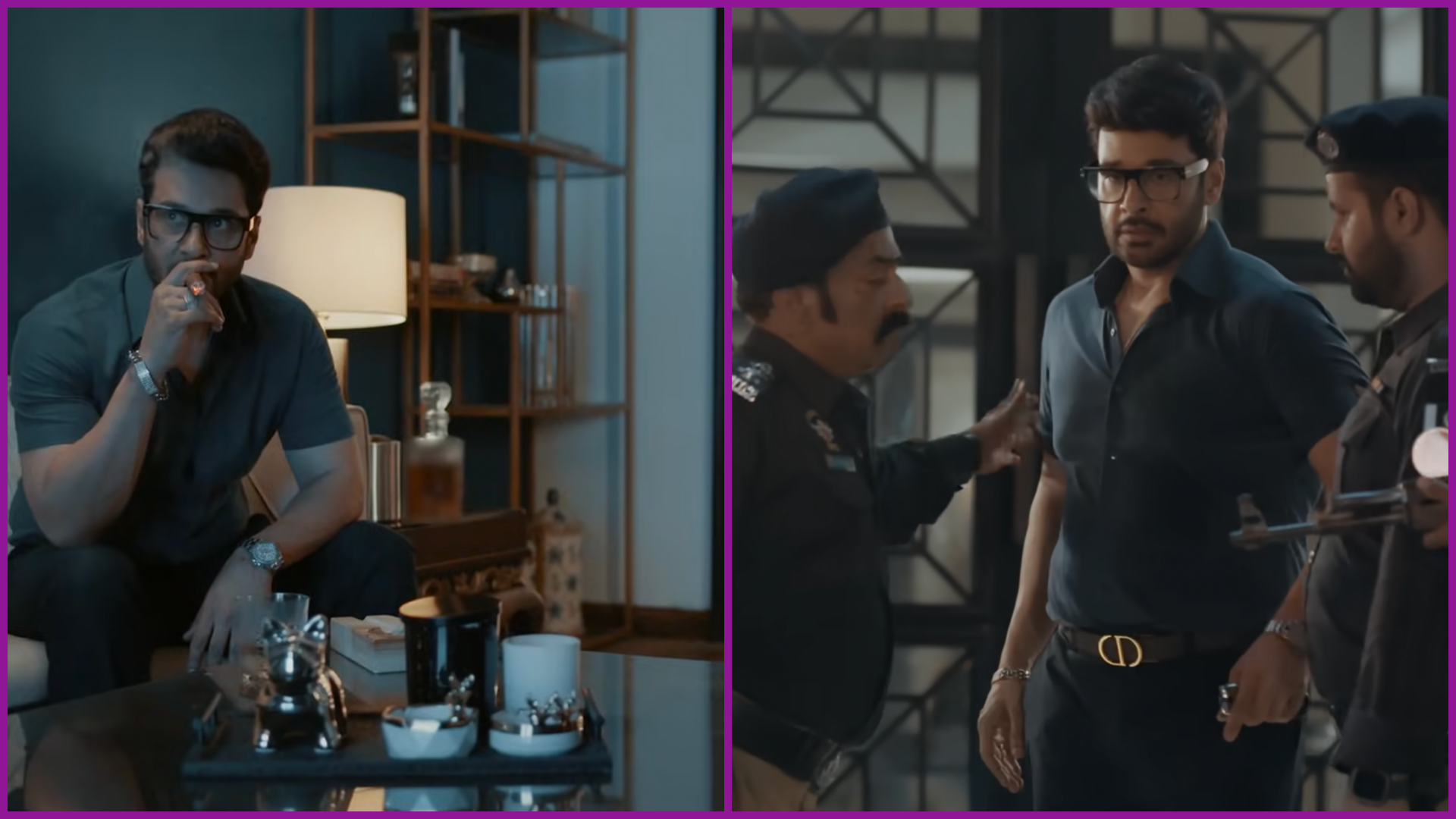
The series begins with a disturbing scene in which Kamran, a seemingly respectable businessman, manipulates his employee Sehar into coming to his house for dinner under false pretenses. Little does she know that Kamran has meticulously orchestrated the evening to ensure privacy. He sends his pregnant wife, Kiran (Rushna Khan), to her parents’ home and tells his business partner Rohit (Junaid Khan) and Rohit’s wife Manisha (Naveen Waqar) that the dinner has been cancelled. He gives his staff the night off, leaving only his fiercely loyal security guard (Hassan Noman).
From the outset, Kamran’s manipulative nature is evident. He preys on Sehar’s trust and professional relationship, carefully isolating her from any support system. The fact that he involves the guard in his scheme is further evidence of his cunning and lack of empathy. This calculated move reveals a predator who knows exactly how to manipulate situations to his advantage, setting the tone for the rest of the series and making it clear that Kamran’s action are those of a man who believes he’s above the law.
Workplace Power and Default Misogyny
From this pivotal moment, Kamran’s abuse of power reaches its darkest point. The depiction of Sehar’s rape is both harrowing and revealing, serving as a powerful commentary on how those in positions of authority exploit their status to violate and control subordinates. The show effectively illustrates the dynamics of power, manipulation, and fear. We see how a boss can use professional authority to lead the complicity of others (like the guard and his other staff members).
.
How Men Rewrite Violence to Protect Themselves
When Rohit arrives, he senses that something is amiss, the tension escalates. Kamran, realizes his actions may be exposed and he manipulates Rohit by leveraging their friendship and business partnership. He emotionally blackmails him, insisting that what happened was not entirely his fault and portrays himself as a victim of circumstance. This calculated display of vulnerability shifts blame and seeks sympathy.
This nuanced portrayal underscores how perpetrators can twist narratives, presenting themselves as victims to deflect responsibility and garner support, thereby complicating the pursuit of justice for the real victim.
The series offers a nuanced portrayal of how perpetrators twist narratives to deflect responsibility and complicate justice for the real victim, demonstrating how relationships and emotions are weaponized to shield abusers from consequences.
Sexual Violence as a Systemic Failure, Not a Personal Tragedy
After this, the drama sheds light on the investigative process, court trials, and the struggles faced by survivors, exposing the systemic flaws that hinder justice. Shahzeb Khanzada’s writing carefully details procedures that can make or break a case, particularly the importance of timely medical examinations and FIR filings.
Sehar’s journey becomes a commentary on the societal pressures and stigma surrounding rape victims, emphasizing the urgent need for awareness and reform.
Honour, Silence, and the Family’s Role in Denying Justice
The drama highlights how Sehar’s family, inadvertently sabotages her case by delaying medical examination and filing an FIR. The delay weakens her position. Her family’s fears around the stigma surrounding rape are not unfounded. A victim’s character is often questioned, and they are thus pressured to stay quiet. The social attitude that silence a woman before she even reaches court are the real systematic flaw.
Choosing Resistance Over Respectability
As the drama progresses, Sehar undergoes a significant internal transformation. After being restricted by her family for a week, she takes matters into her own hands and decides to pursue the case despite their disapproval. This marks a turning point, as Sehar begins to reclaim her agency and assert her rights.
While Sehar finds courage Rohit’s response to the crime is conflicted. Although he claims to be disgusted, his loyalty to his friend prevents him from actively supporting Sehar.
Sisterhood of Women versus Institutions Support
In contrast, Manisha, Rohit’s wife and an NGO worker, steps forward to support Sehar, driven by her commitment to women’s empowerment and justice.
Notably, Manisha risks her marriage to support Sehar. Her actions highlight the importance of solidarity among women and the need to prioritize justice over convenience. Manisha’s character embodies conviction, empowerment, and compassion. .
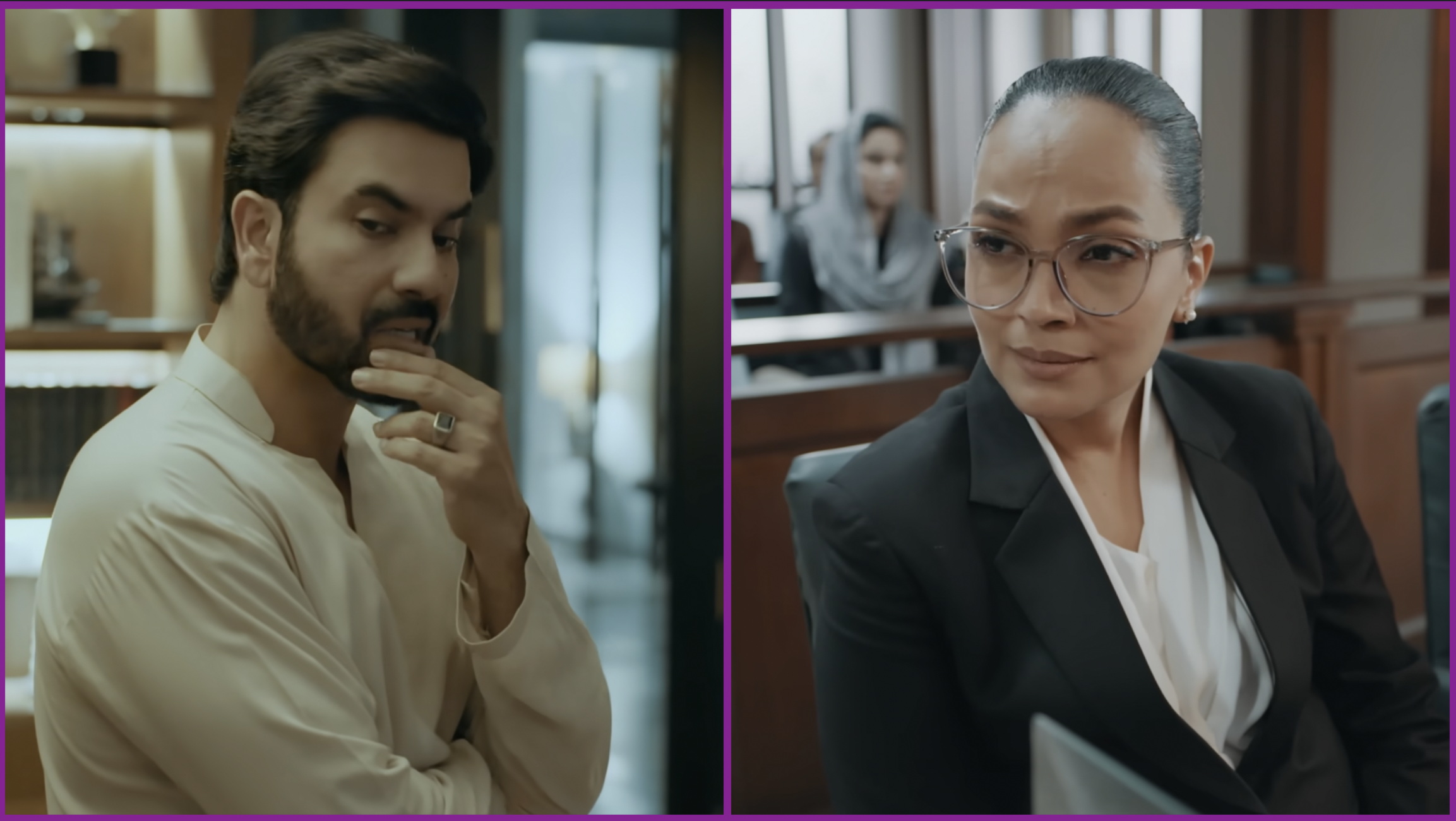
Manisha’s efforts to support Sehar bear fruit as she secures a strong lawyer, Beenish (Aamina Sheikh). Beenish is a determined and capable woman who takes on Sehar’s case despite the odds being stacked against her. The delayed medical examination and FIR filing have weakened the case. Yet, Beenish is undeterred.
Meanwhile, the police investigation is compromised from the start. Inspector Shafiq (Gohar Rasheed) is a corrupt officer who sees Sehar’s case as a chance to line his own pockets. He informs Kamran about the accusations, giving him an opportunity to interfere with the investigation.
The Law Is Not Neutral — It Sides With Power
Meanwhile, Kamran can afford to hire a seasoned lawyer Bukhari Sahab (Noor ul Hassan). While he does his job effectively, there are moments where his actions seem to cross the line from professionalism to vindictiveness. This raises questions about the ethics of the legal system, where lawyers may prioritize winning over seeking justice. The contrast between Beenish and Bukhari highlights the challenges faced by victims of sexual assault in Pakistan’s justice system.
Media as a Weapon — and a Lifeline
Beyond the courtroom, the drama also highlights the danger of media trials. Initially, Kamran uses social media to spread false rumors about Sehar, attempting to sway public opinion and undermine her case. This showcases how social media can be misused to manipulate and harm individuals, particularly vulnerable victims of sexual assault.
In this case, Sehar leverages social media to raise her voice and counter the propaganda against her. This demonstrates the power of social media as a tool for marginalized voices to be heard and seek justice. The inclusion of real-life human rights activists like Shahzad Roy and Jibran Nasir, who use their platforms to support survivors is a reminder that influencers can shape public opinion and promote justice.
The question is how many survivors can get media attention? Is media attention the currency of justice?
Who Gets a Platform — and Who Gets Disbelieved
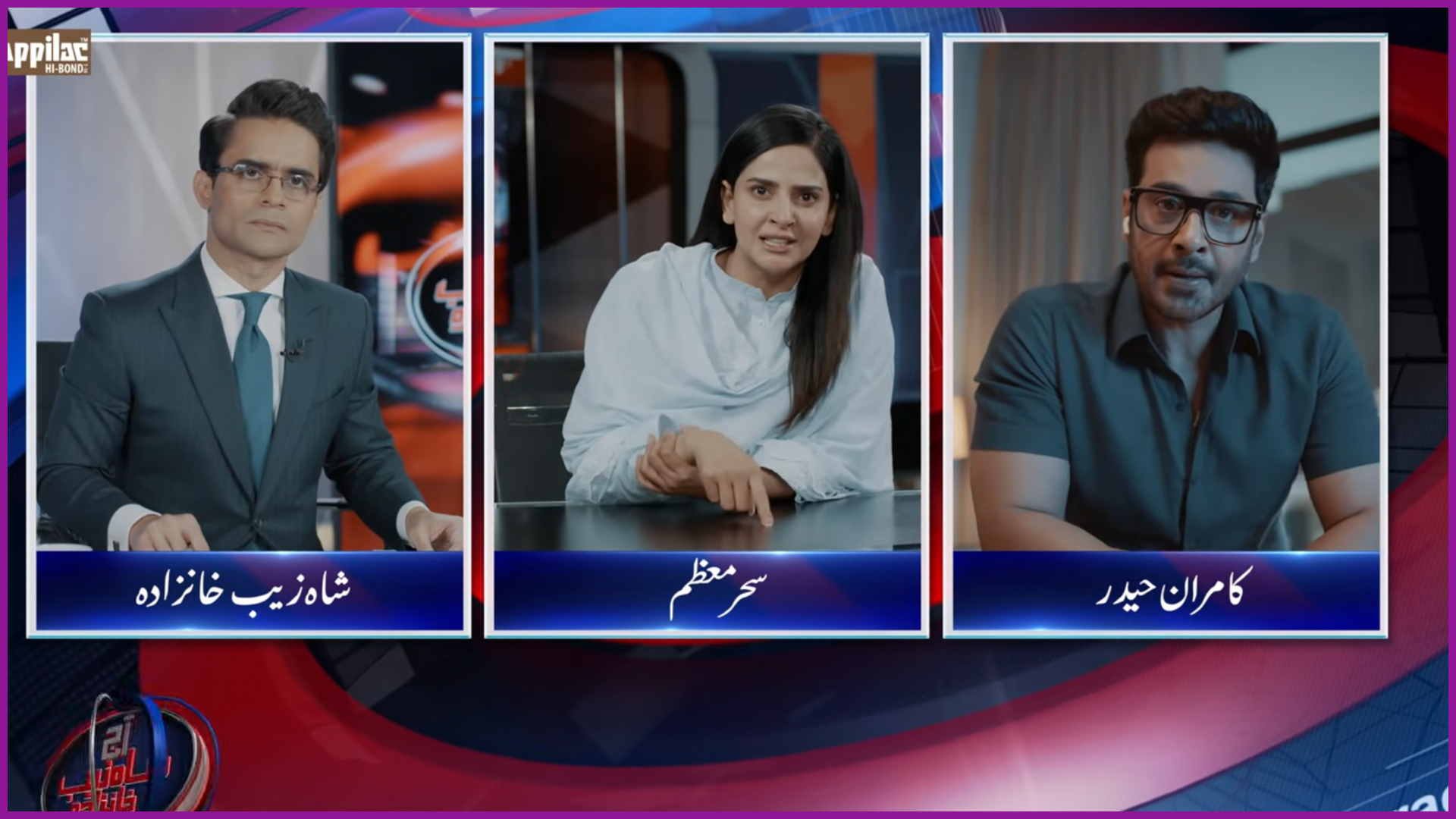
The drama also explores how traditional media, like news channels, can be used to either perpetuate harm or promote justice. The character of the news anchor (Yasir Hussain) who gives airtime to Kamran to spew venom against Sehar highlights the dangers of biased reporting and sensationalism. In contrast, Shahzeb Khanzada’s character as himself, using his own show ‘Aaj Shahzeb Khanzada Kay Sath’, provides a platform for Sehar to share her story and present evidence, essentially turning it into a media trial that sheds light on the truth.
While some argue that his presence was self-serving, making the drama a vehicle for himself, Shahzeb Khanzada’s involvement adds a powerful voice to the drama. Fiction and reality melt as we see a journalist amplify Sehar’s story and the potential impact of primetime justice.
When a Wife Breaks the Patriarchal Contract
The drama’s climax is marked by a powerful final twist: Kamran’s wife, Kiran finally finds the courage to stand against her own husband, providing crucial evidence that could seal his fate. This moment is a testament the strength and resilience of women, even in the face of personal adversity.