
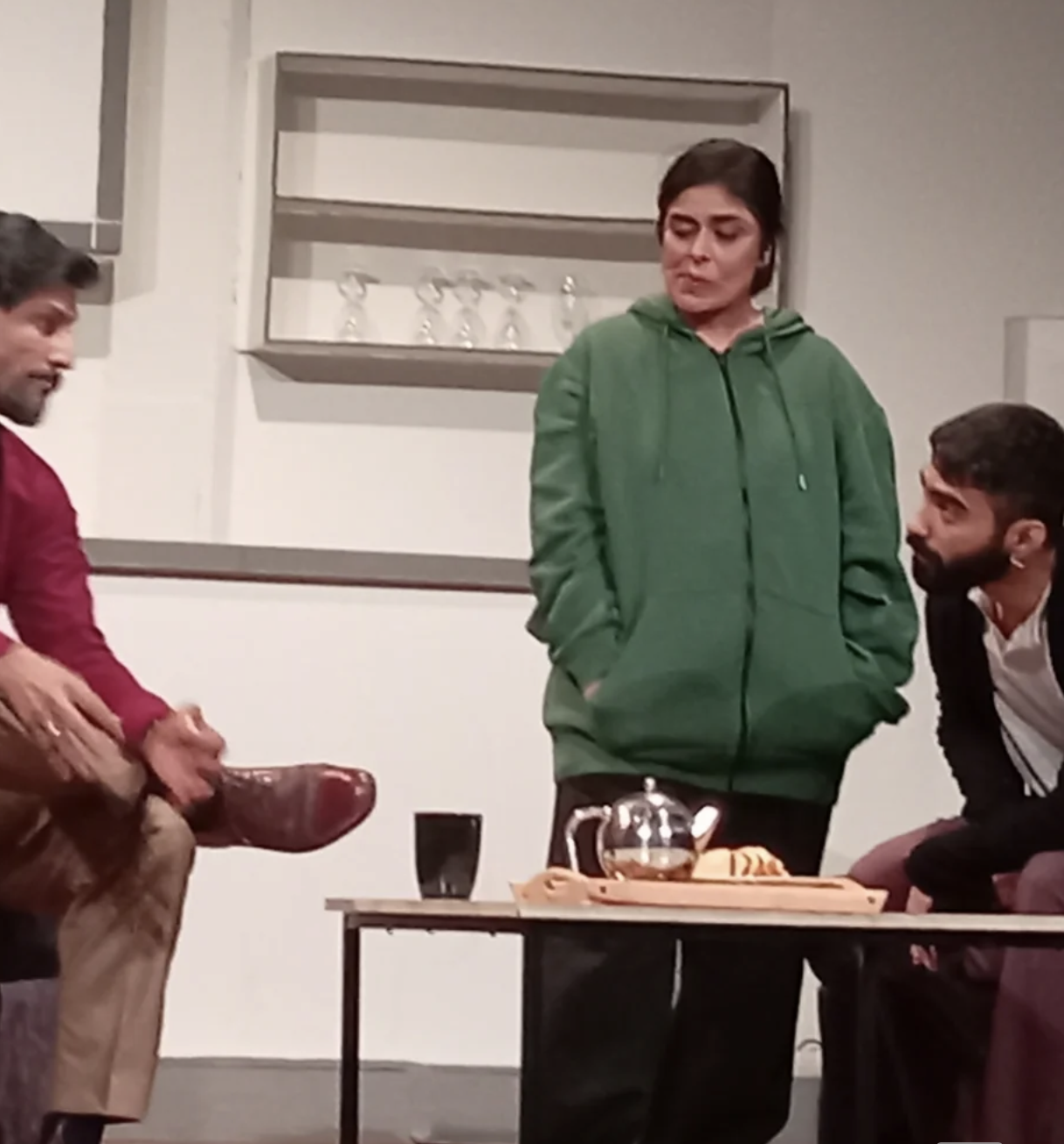



There are no villains in Usama Khan’s “The Mother”, only a slow suffocating absence.
Absence of attention, of purpose, of being seen. An ordinary seeming day in an ordinary family reveals the cracks beneath the surface. A woman waits, a husband comes, a son does not call, a daughter is ignored. In these silences, life disappears.
Originally by French playwright Florian Zeller, The Mother is part of a trilogy, including The Father and The Son, that examines family and mental health. Director Usama Khan seamlessly translates the spare, unsettling style into a Pakistani context, revealing the universality of the family experience. The story feels achingly intimately familiar.
Nimra Bucha leads the cast as Haleema delivering a performance that is dynamic and delicate, never edging into parody despite the somewhat cliched aspect of the character. The plot is deceptively simple. When Haleema’s husband Saad (Sonil Shankar) comes home from work, she asks about his day. She complains that her son Arsalan (Ashmal Lalwany) never calls, never visits. This happens again and again. This repetition has a purpose. Haleema’s days are static, monotonous, circling the same thoughts, the empty white room.

Scenes replay in multiple versions that overlap and blend into each other, blurring reality and anxiety.
Is she angry and accusatory towards Saad because he is having an affair, or is he having an affair because of her constant accusations. Or is he actually not having an affair at all? Try to keep up with her rapidly spiraling thoughts.
Does Arsalan distance himself because his mother is overbearing. Or does Halima cling to every moment she has with him because he is so evasive. Why is absent daughter Sara, dismissed by all three family members? There are no clear answers, no correct way to behave that prevents collapse.
Rather than rely on melodrama The Mother applies a lens on clinical depression, particularly within motherhood.
A world that encourages women to cede their own well-being in favor of their children, offers no guidance for who they are meant to be afterwards. As a father Saad has still has a job, perhaps an affair, certainly a life outside the home. Arsalan has a relationship with Sana (Eshah Shakeel) and a whole future ahead of him. Meanwhile, Haleema rearranges furniture. She rearranges memories. As meaning drains away, time loses shape.
Depression’s defining feature is that it isolates. The more she cries for help, the more people retreat. The lonelier she becomes, the more she pushes them away, wishing desperately they would stay.
The play’s most poignant moment captures this sense of aloneness. Haleema sets out two glasses and a bottle of wine on the table for Saad and herself. She hesitates, puts the bottle in the fridge and places both glasses on the counter. When Saad finally arrives, he grabs one glass pours himself a drink and returns the bottle. Haleema wordlessly picks up the remaining glass and puts it back in the cupboard.
What happens when you think of everyone, but no one thinks of you?
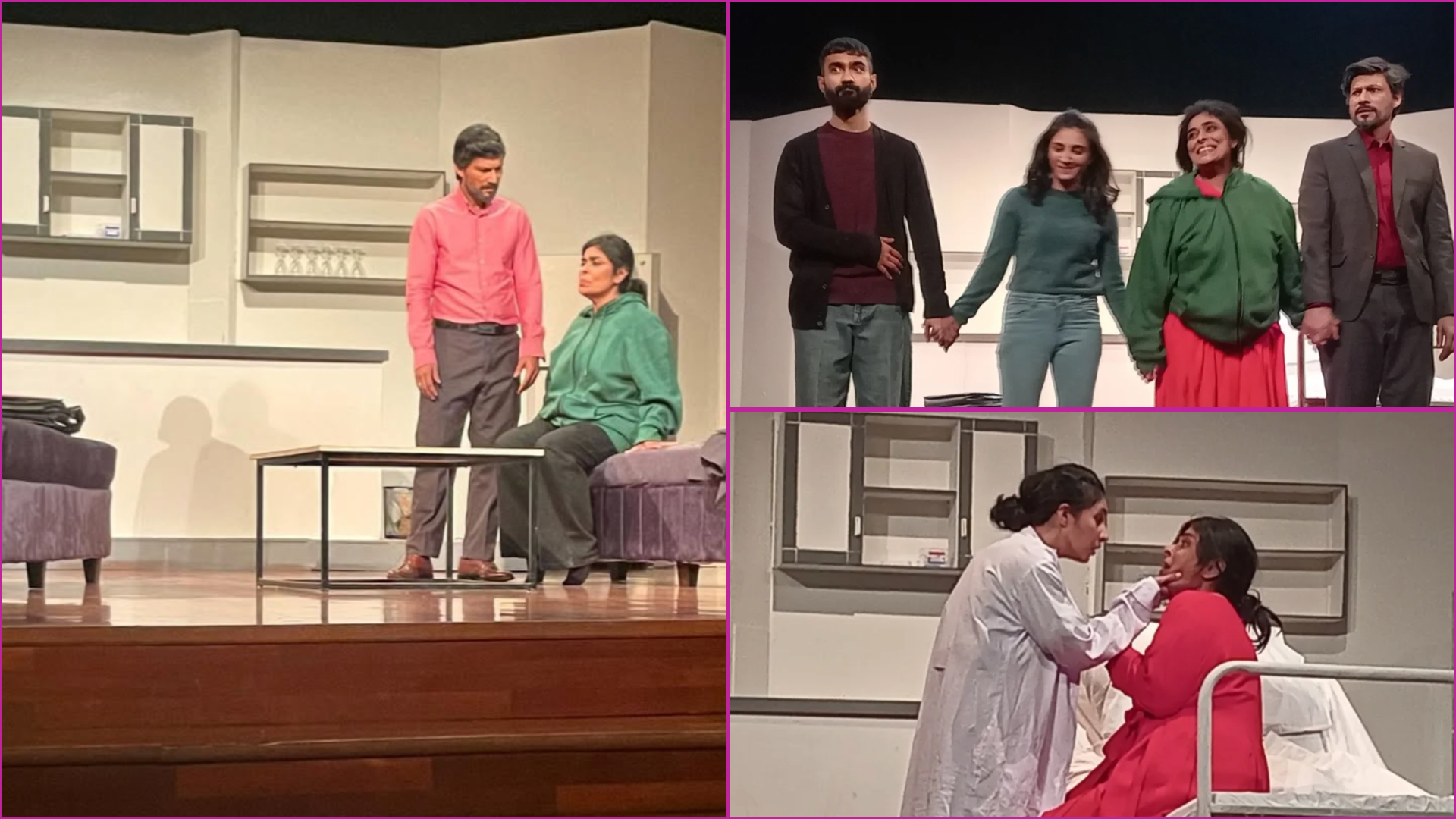
The Mother melds truth and mania, tenderness and cruelty, humor and dread. Chekhov’s sleeping pills linger ominously in the background. Bucha’s Haleema is sometimes joking, sometimes unbearable, sometimes terrifyingly clear.
The result is a play that does not offer solutions but starts a conversation. Pay attention to the people around you, especially the most self-sacrificing. Being needed cannot be the only thing that makes a life worth living.