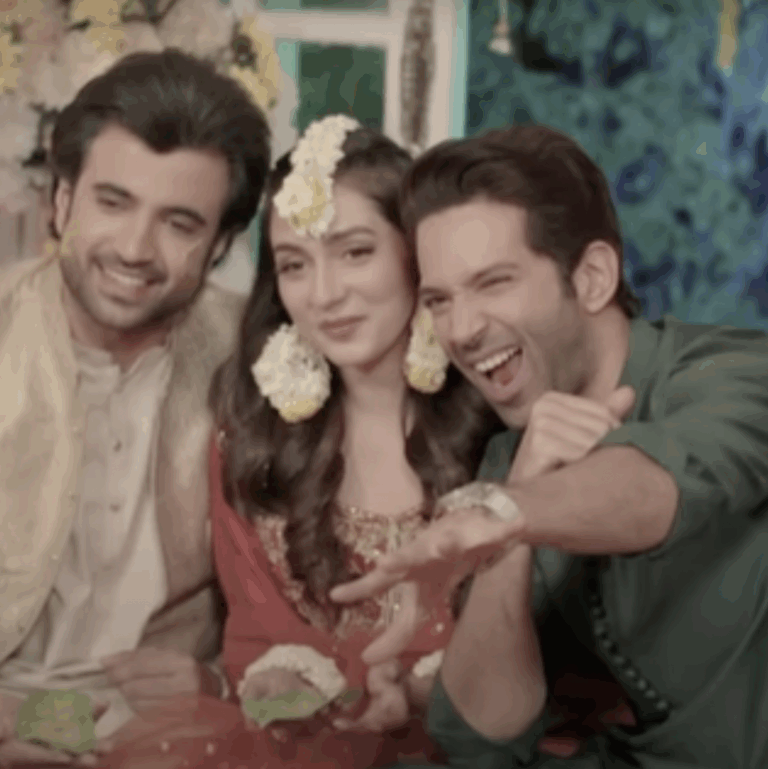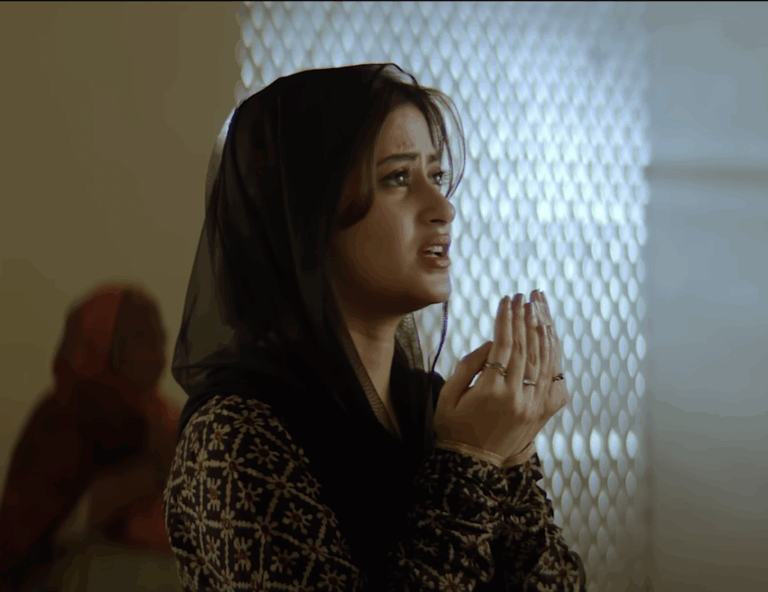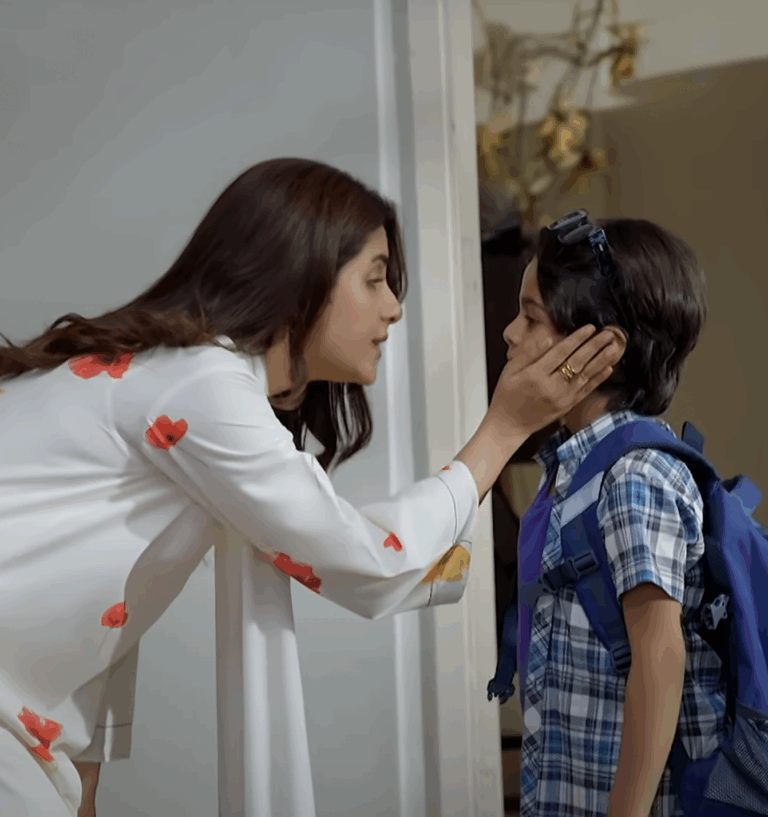
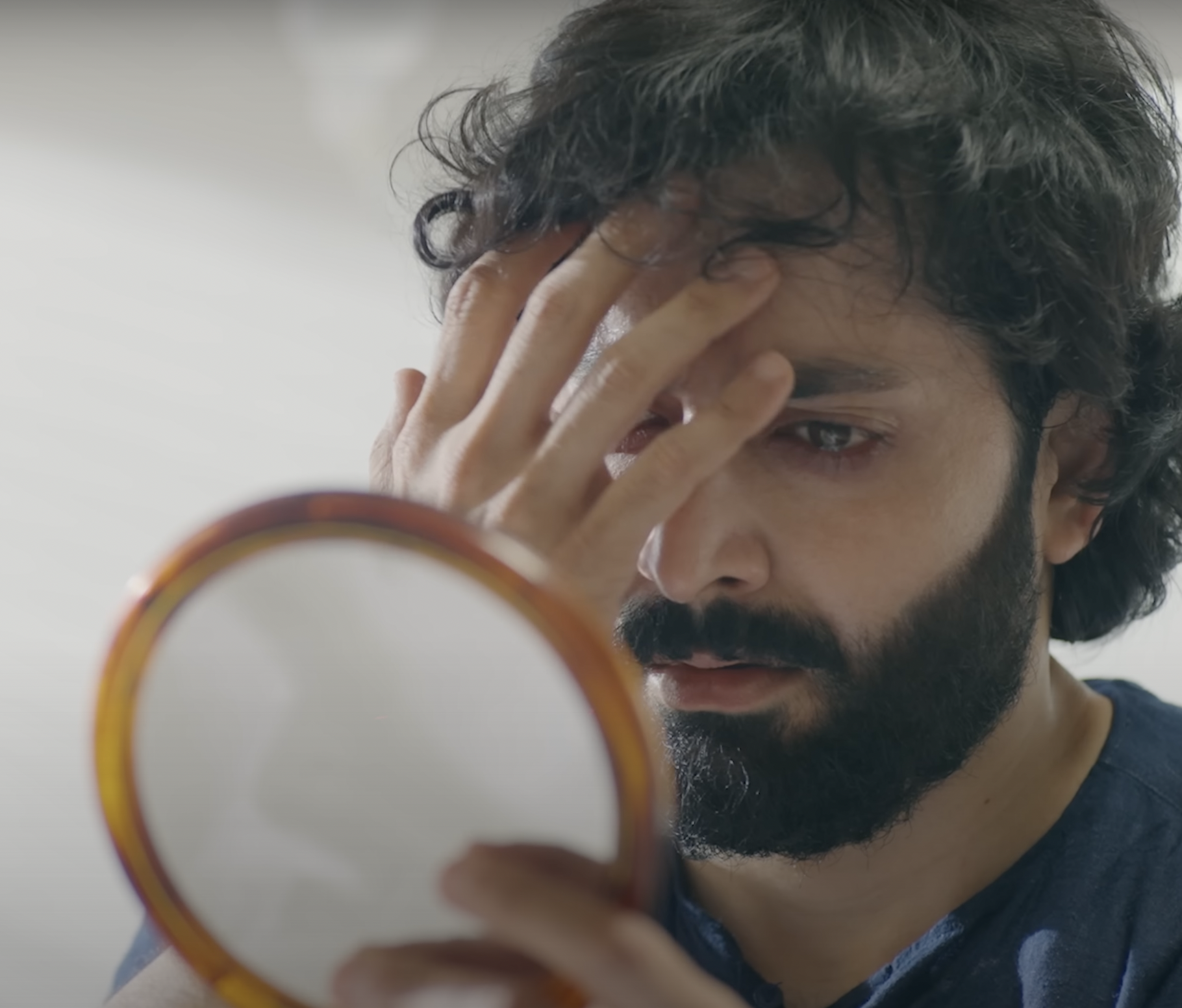



In Sher, women are not just background figures; they are power players, gatekeepers of grief, and often, each other’s harshest judges. They navigate patriarchal power structures, family, betrayal, and the blurred lines between psychological diagnosis and social perception. Munazzah’s quiet strength, Bari Begum’s hunger for love disguised as control, Fajar’s psychological insight, and Arjumand’s weaponized bitterness reveal how layered, flawed, and real Pakistani women can be.
The brightest souls—those who see clearly and use their power to create change—are often the most tested.
As Allah reminds us, He tests those He loves.
In ARY’s Sher, the central lead, played by Danish Taimoor is not a product of his toxic surroundings. No one but he can run the family the way he does. The credit for that goes to his mother, whose positivity, quiet intelligence, and ability to affirm her love have shaped him.
As women, we are often taught to compete, complain, and strategize in household affairs.
Sher’s stepmother Naeema aka Bari Begum’s (Atiqa Odho) has valid desires. Her husband, Rais Shazaman (Yousuf Bashir Qureshi) loves her but she wants love. Love like he has for his second wife, Tehmina (Munazzah Arif). Any woman can understand how it feels to see her husband in a healthy, peaceful, and close relationship with his second wife.
However, it is hard to hold empathy for Bari Begum. She did not receive love due to her own calculating mind and craving for validation, control, and supremacy. She is not wrong, considering she was never pleased with the second marriage, which was arranged because they didn’t have a son. It is unfair, and it hurts her to see her husband so close to someone else. Yet, as an individual, her personality is sharp and unforgiving. She refuses to be vulnerable, shuts everyone out, and, unfortunately, love does not open doors to that energy.
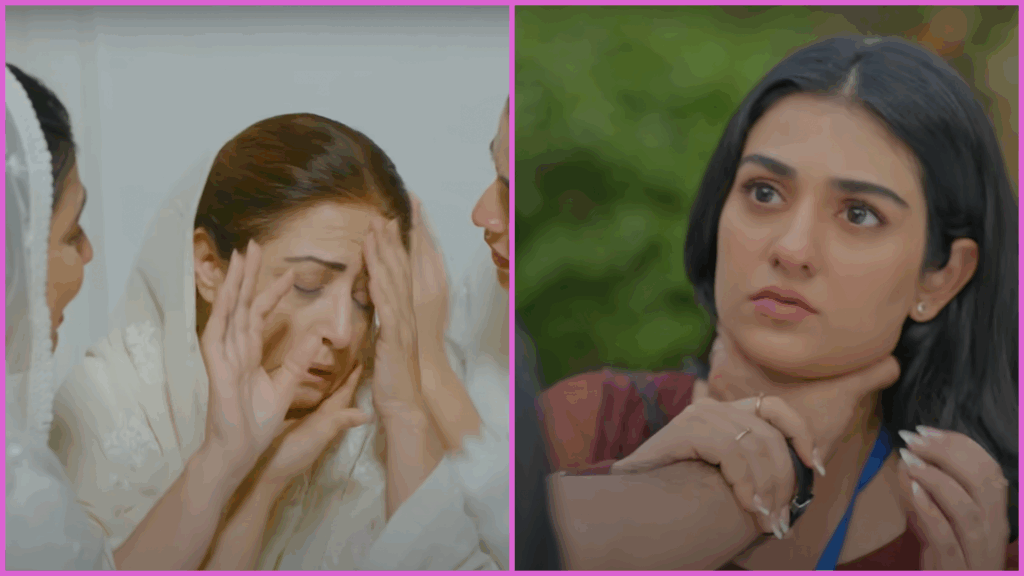
Two wives lose one husband
All sympathy for Bari Begum fades in the scene where she turns to revenge. When she found out about her husband’s death, her demeanor slips in a rare moment of vulnerability. However, she then turns that pain into a quest to control Tehmina (Munazzah Arif), directing her bitterness and jealousy at someone innocent. Her lack of empathy for Sher, who was battling for his life in the hospital, further proves that her selfishness. She victimises herself for her gain and can never take accountability. She doesn’t have the courage to admit that her so-called strength is rooted in unblossomed love.
Unfortunately, even with the worst heartbreaks, what you choose to become because of love—despite its brutality—defines your character.
Tehmina, on the other hand, is a direct reflection of a loving, powerful woman who knows how to stand up for herself without harming others. For instance, when Bari Begum tells her to wear white and act like a widow, Tehmina removes her jewelry and complies out of respect. But when Bari Begum tries to stop her from going to the hospital, Tehmina firmly asserts that she will go. Even in her lowest, most vulnerable moment, she refuses to let herself be stepped over. Credit for this goes to herself, but also to Sher and her late husband, Rais Shazaman, who gave her the confidence, respect, love, and power to face the world with her shoulders held high. This is exactly why she does not wear white clothes but instead honors her husband by wearing the necklace he loved seeing on her. Bari Begum does not understand her non-performative grief.
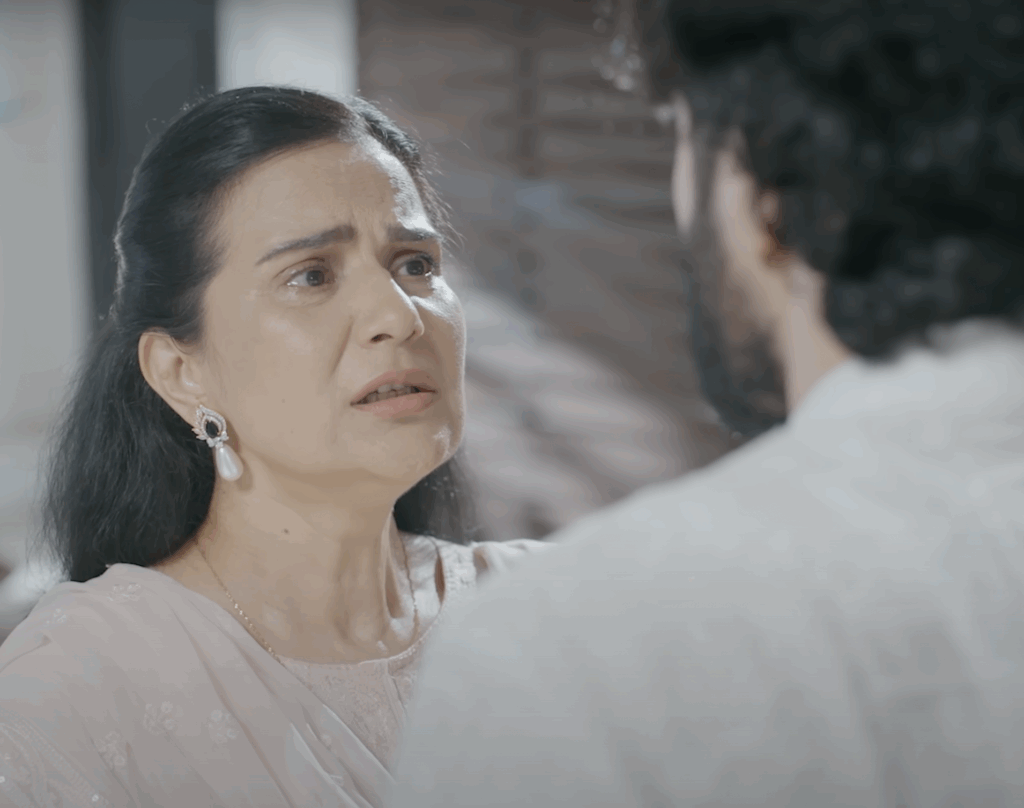
Cycles of Violence and love
ARY’s drama Sher explores family and relationship dynamics with depth. Tehmina (Munazzah Arif) and Rais Shazaman (Yousuf Bashir Qureshi) share a rare, respectful love story. They speak with care and honesty, modeling healthy communication that shapes Sher (Danish Taimoor) into a confident, vocal, and principled man. This upbringing teaches Sher to value respect, even when it means disagreeing with his family. For example, when Rais Shazaman defends his nephew for eloping with Fajar (Hiba Bukhari), Sher stands up for what he believes is right.
Sher’s relationship with his father isn’t perfect. Rais Shazaman, focused on business, sends Sher abroad, leaving him isolated for years. Sher could have become bitter, but he transforms this pain into strength
Herein lies a lesson: it is better to disappoint your parents than to resent them while abiding by their choices for you.
Sher does not let his heart turn cold; he makes choices he believes are right, even if they disappoint his father. Ultimately, these choices reflect his character and eventually make his parents proud.
Being the one to break toxic cycles in the family comes with it’s own challenges. Sher’s own chachu and first cousins attempt to assassinate him, accidentally killing his father in the process. Can blood relations do this to one another? Is this realistic? Yes, we live in a world where brothers kill sisters in the name of honor, and even when violence is not physical, the deepest wounds often come from our own family.
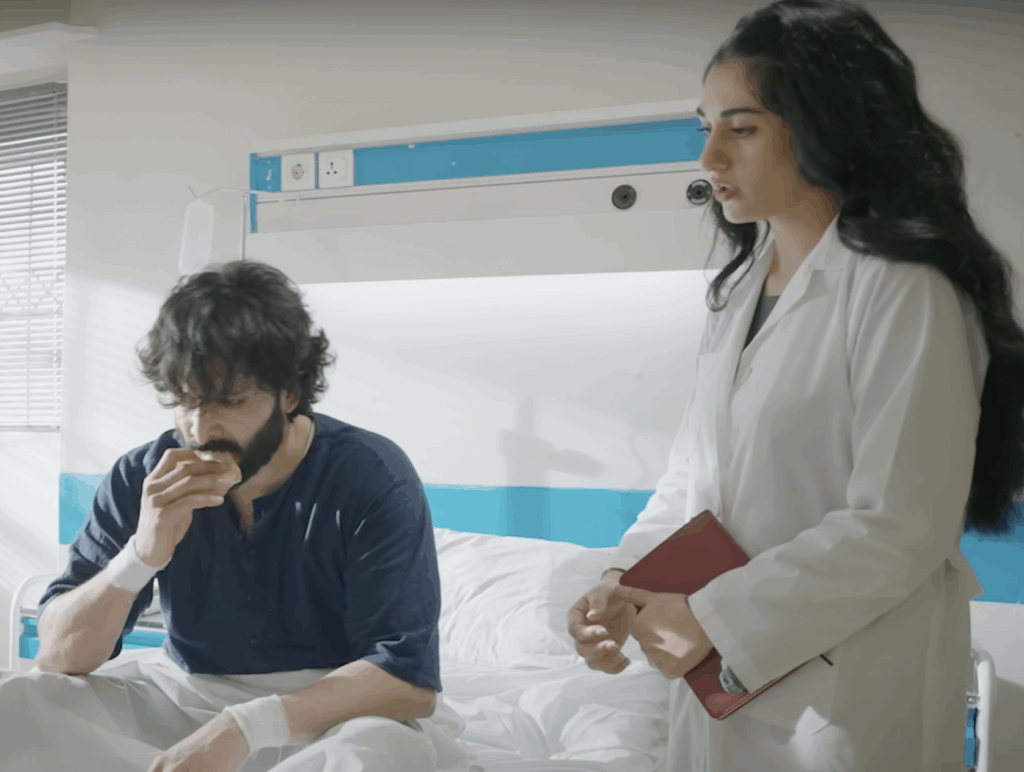
A confusing descent into madness
Sher survives, but his chachu has him drugged, making him appear unstable and unable to manage the family affairs. For the audience, it becomes a blur: Is Sher experiencing side effects from the wrong medication, or is he truly aggressive? When he lashes out at his cousin for taking photos of his sister, is it normal protective behavior intensified by the drugs, or is it truly madness? The latest episodes showed Sher in a mental asylum for over a year, raising many questions: How did no one on the medical team realize he was having side effects? Why didn’t psychiatrists order fresh blood work to assess him properly? Why did the medical team ignore Sher when he was confessing and recalling his father’s murder?
Despite coming from money, Sher is neglected. This reflects the truth of the medical system universally, not just in Pakistan, especially regarding mental and psychological health. Psychology is still an evolving field when it comes to correct patient treatment. Historically, asylum patients underwent inhumane treatments—misdiagnoses, restraints, poor conditions, and experimental practices. Modern systems have their own injustices, like Sher’s misdiagnosis, which can completely alter a person’s life.
Meanwhile, the potential romantic dynamic between Fajar and Sher, a psychologist and a patient, raises concerns about credibility and professionalism. Even more confusing, since was Sher drugged, does this make space for a love story in such a vulnerable context? Hopefully, the script won’t romanticize suffering for a cheap storyline, as it has the potential to challenge societal perceptions in a meaningful way.
Is Sher a cry for help?
This drama touches on a delicate reality, and with empathy for how serious mental health is, there is hope the script does not romanticize suffering for a cheap love story. It holds the potential to challenge societal perceptions powerfully.Those who need psychiatric evaluation, like Sher’s chachu, remain unchecked, while those reacting to injustice are institutionalized
Sher exposes complex characters, reflecting the unspoken reality of many Pakistani households, where family often becomes a power play and so much happens with so little accountability.
Sher carries hints of Parizaad—one of Pakistan’s most powerful dramas. Like Parizaad, Sher is rare, dynamic, and different. The question remains: Will Sher overcome the trauma he is being subjected to? Can he teach us something or will he be reduced to an unrealistic cliché? Will Sher be a man of integrity, or the typical hero who saves the day and gets the girl?