


Parwarish is most relatable portrayal of Pakistani family dynamics on TV today, eschewing melodrama and moral binaries to show the small choices that shape entire lives
Parenting is not just a background detail here it’s the emotional engine of the story. From suffocating patriarchs to quietly radical mothers, the series paints a multigenerational portrait of what it means to raise (and sometimes fail) children in a society weighed down by tradition, ambition, and fear. These parents aren’t archetypes—they’re deeply flawed, sometimes heroic, often infuriating, but always recognizably real. This list isn’t about who’s “good” or “bad” in the abstract. It’s about impact: who creates safety, who breeds fear, and who, despite everything, tries to break the cycle.
So here it is: a definitive ranking of the show’s parents, from the worst offenders to the quietly revolutionary.

9.
Shaheer (Nazar ul Hassan)
Children: Maya, Mishal
Parenting Style: Authoritarian patriarch
Maya’s father represents the unchecked patriarch whose every action is justified by his own sense of honor (which usually translates to ego). His parenting causes generational trauma, forcing Maya’s mother into complete inaction, Maya into appeasment, and Mishal into a quiet rebellion. It’s only when his authority is publicly challenged that the illusion cracks. But even then, we’re left wondering: is it regret, or simply wounded ego?
Nazar ul Hassan brings a terrifying realism to the role. His performance is deeply triggering for anyone who has faced this kind of emotional and physical tyranny.
Worst Moment: Slapping Maya after Waleed insults and berates him, an act that horrifies the entire family. This is a culmination of his years of controlling behavior, financial stringency, and obsession with reputation.
Best Moment: He hasn’t had one yet but we can hope.
Impact on His Children: Both Maya and Mishal walk on eggshells around him. Maya internalizes her fear and initially agrees to a toxic engagement to avoid conflict. His unpredictability is the scariest part, when he gets his way, his tone becomes gentle and he heaps praise on his daughter. The minute he feels control slipping, he accuses his family of being wasteful and ruining his life. His presence makes the home feel unsafe and suffocating.
8.
Jehangir (Nauman Ijaz)
Children: Wali, Anya
Parenting Style: Manipulative provider, wannabe authoritarian
Jehangir is the kind of parent who confuses control with care. On the surface, he’s generous the house is full of gifts, clothes, and gadgets as long as no one questions his authority. Every present comes with a price: obedience. His version of care is transactional—he buys devotion, not love. He uses guilt as currency and often tells his wife and children that because he provides everything, he is owed submission. His children grow up in a golden cage materially comfortable, emotionally stunted.
Played with chilling subtlety by Nauman Ijaz, Jehangir’s emotional withholding is a way to remind his family who holds the power, and who pays the bills. His definition of a good child is one who stays quiet, looks grateful, and never challenges him. His version of masculinity: aloof, commanding, unyielding, becomes a blueprint his son struggles to break away from.
Worst Moment: Telling Wali that the only reason he got into medical college was because Jehangir pulled strings. Just a few episodes ago Jehangir slapped Wali for getting into a car crash but the physical violence pales in impact to this cruel reinforcement that Wali is worthless without his father. Instead of trying to understand his son, Jehangir responds with rage reinforcing the idea that his love is always conditional.
Best Moment: When Anya has a panic attack after school, Jehangir sits by her side and comforts her. It’s one of the few glimpses of him being tender and concerned. But the moment is undercut when we are reminded that the reason Anya is so scared is because she sees Jehangir’s treatment of Wali.
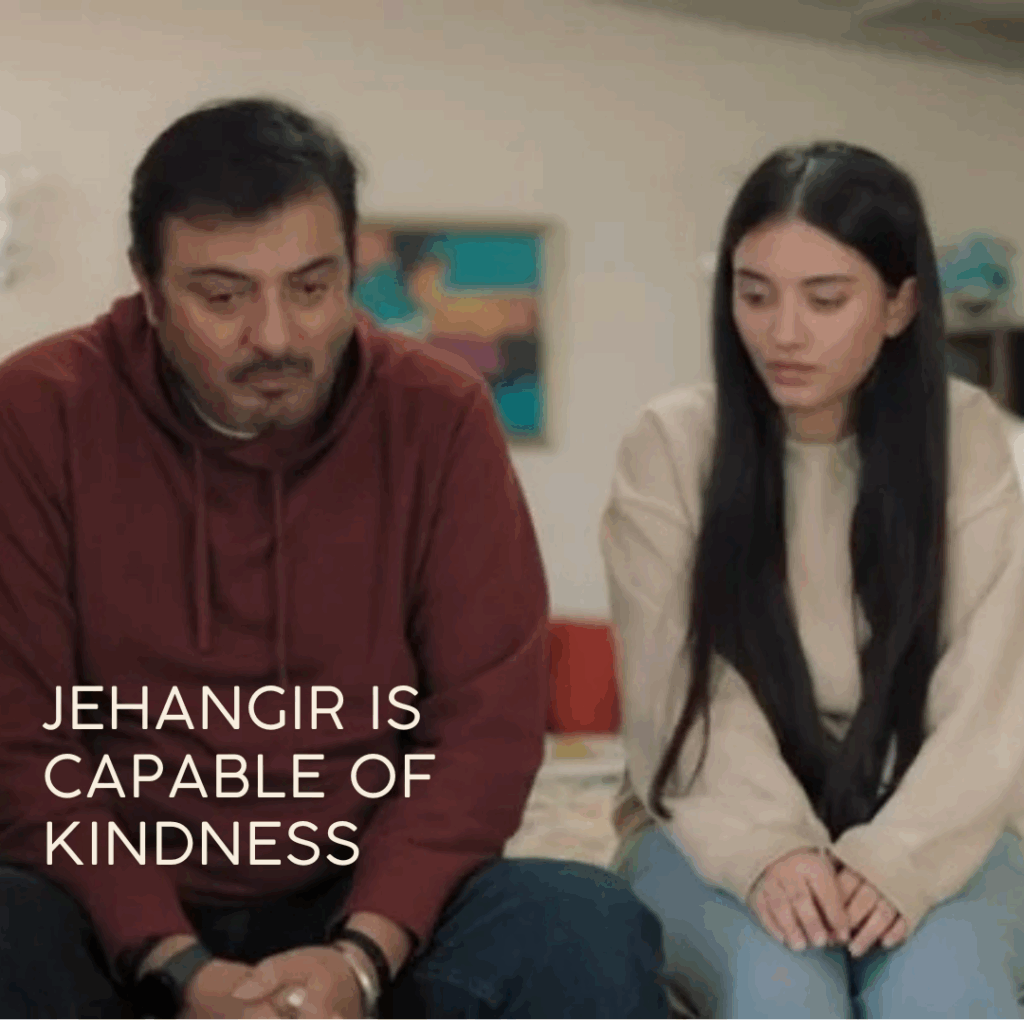
Impact on His Children: Wali and Anya are dependent and emotional exhausted in different ways. Wali retreats furious, frustrated, and full of self-doubt. He’s constantly hiding, self-censoring, playing music in secret. He hides his real passions and distances himself emotionally, knowing any honesty could cost him his father’s approval or worse.
Anya, on the other hand, internalizes the pressure. She becomes anxious and perfectionistic, afraid to make mistakes or express emotion lest it upset her father’s fragile sense of control.. She remains obedient, but is tightly wound wanting to please her father but never feeling like it’s enough. She rarely confides in either parent, instead leaning on Wali or Amal for comfort.
Both siblings live under constant surveillance and Jehangir’s version of love is smothering: no boundaries, no privacy, no respect. He monitors his family under the guise of care and is especially punitive when anyone challenges him. He tells his father that he moved from America to Pakistan to protect his children. But he doesn’t care about their safety or well-being. All he means is that in America young people might assert their independence and autonomy and he sees his children as extensions of himself.
7.
Waleed’s Mom
Children: Waleed + 2 or possibly 3 other brothers we don’t meet)
Parenting Style: Competitive, status-obsessed, emotionally unavailable
Waleed’s mom isn’t a fully fleshed-out character, but she represents a crucial societal reality: toxic in-laws who treat marriage like a business transaction. She collects “doctor bahus” like trophies with no intention of ever letting them practice.
Worst Moment: Her few scenes are mostly focused on conflict or performance. Despite limited screen time, the actor leans into caricature and it works. Her shrillness and social ambition make her a stand-in for aunties everywhere.
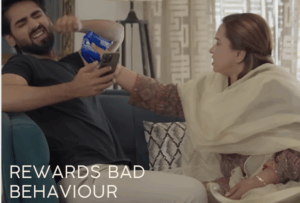
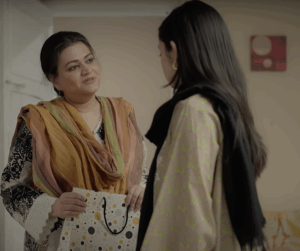
Best Moment: While not the best for her but the most satisfying moment was when she came to Maya’s house with the express goal of humiliating the family. The tables were turned on her when Maya’s mother in a refreshing show of strength returned all her gifts and slammed the door in her face
Impact on Her Son: Waleed has grown up seeing women as property not equals. He finds out Maya’s schedule, stalks her relentlessly, and assaults her in her own home. His entitlement and lack of empathy are a direct result of his mother’s conditional love and image obsession.
6
Dado (Shamim Hilaly)
Children: Jehangir, Suleiman
Parenting Style: Traditionalist, nostalgic disciplinarian
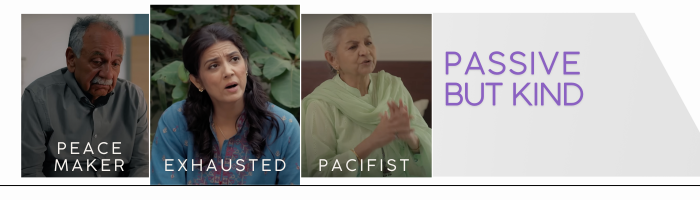
Dadi is the touchstone for the older generation, and while she means well, her inability to adapt harms more than it helps. Her worldview is shaped by a deep reverence for the past. She insists on old-school parenting styles, viewing modern perspectives with suspicion, and undermining emotional openness with guilt trips. She is not malicious, she truly believes she’s doing the right thing. But her refusal to acknowledge that times (and children) have changed makes her more of an obstacle than a guide. Her affection is real, but filtered through rules and rituals.
Shamim Hilaly plays her with great nuance. Her tone is rarely harsh, exerting influence not through anger, but through moral pressure and expectation. This performance subtly conveys how often a ‘loving matriarch’ becomes an unintentional enforcer of patriarchy.
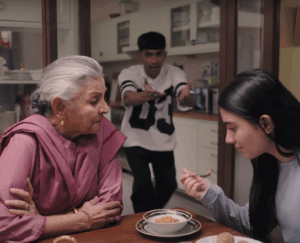
Worst Moment: When Mahnoor brings home a roti-maker to ease Panah’s kitchen workload, Dadi interprets it as a moral failing rather than a practical solution. Her reaction—going on a hunger strike and accusing modern parents of lazy parenting—signals to everyone that suffering is virtuous, and any deviation from tradition is dishonorable. It’s emotional manipulation at its best.
Best Moment: Her soft conversations with her grandchildren where she makes them special treats show that she is full of warmth and understanding. In those moments, she’s less gatekeeper and more the grandmother she believes herself to be. Unfortunately, even these instances ignore Anya’s allergies and undermine Mahnoor’s parenting.
5.
Mahnoor (Savera Nadeem)
Children: Wali and Anya
Parenting Style: Protective realist, emotionally attuned but constrained by circumstance
Mahnoor is a deeply empathetic mother who operates in survival mode. She is unwaveringly on her children’s side, but years of living under Jehangir’s control have made her cautious and emotionally frayed. Played with quiet intensity by Savera Nadeem, Mahnoor radiates maternal warmth, but you always sense a low-grade exhaustion beneath her eyes.
What makes Mahnoor compelling is her internal conflict. She knows something is wrong in her marriage, Jehangir’s manipulation, the stifling atmosphere, but she has convinced herself that staying is better for the children. It’s a lie patriarchy sells to many women: that a bad father is better than no father. The result is emotional harm disguised as family unity.
Worst Moment: When she first moves into the house, she refuses to make her daughter Anya’s vegetarian meals herself, instead shifting the responsibility to Panah who is already doing so much. She is practical but lacks diplomacy.
Best Moment: Joining Anya’s school as a teacher against Jehangir’s wishes. She finally makes a decision based on what is best for herself and her daughter instead of what Jehangir wants.
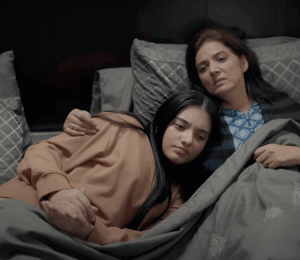
Impact on Her Children: Mahnoor and Jehangir’s constant arguments cause Anya’s anxiety to spike. She loves her father but is scared of him. And while she is closer to her mother, she has never really learnt to confide in her either. Wali, despite his estrangement from his father, knows his mother is always on his side.
Her parenting is emotionally intelligent, but compromised. She listens and tries to understand her children but that love is often weighed down by powerlessness. Mahnoor cares about them, but her inability to set boundaries with Jehangir limits how safe her children truly feel.
4.
Dada (Arshad Mehmood)
Children: Jehangir and Suleiman
Parenting Style: Gentle patriarch, bridge between generations, emotional anchor
Dada is a rarity on Pakistani TV: an elder male figure who isn’t overbearing or emotionally distant. Played with quiet warmth and measured grace by Arshad Mehmood, he acts less like a parent in charge and more like a family member who listens. He is observant, patient, and wise, adapting to changing times without defensiveness. His parenting philosophy is simple: love first, control never.
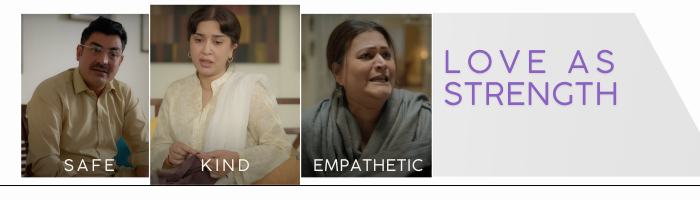
Dada is the steady heart of Parwarish, he doesn’t issue commands or enforce hierarchy. Instead, he listens, nudges, and trusts that love not fear is what holds a family together. In a household full of people jostling to be heard, Dada’s power lies in his calm.
Worst Moment: While not overtly harmful, his biggest flaw is passivity. He doesn’t always confront Dadi’s more regressive ideas directly—especially when it comes to Panah and the labor expected of her. In his desire to keep the peace, he sometimes lets discomfort linger too long. He is someone who waits for others to come to their own realizations rather than intervening directly. That’s a strength, but sometimes, a limitation.

Best Moment: Secretly buying guitar strings for Wali after realizing his passion for music. It’s a small gesture with a big impact—a quiet rebellion against Jehangir’s authoritarianism, and a signal to Wali that someone in the house sees him for who he truly is.
Impact on His Children and Grandchildren:The contrast between Dada’s two sons reveals the limits and reach of his influence. Suleiman, who lives with Dada and has been immersed in his father’s quiet strength and familial ethic, reflects his values: simplicity, service, and emotional generosity. Jehangir, on the other hand, has built his life in America and his contribution to the family has only been financial. His distance, both physical and emotional, has made him more susceptible to the rigid notions of tradition without absorbing what family values really are.
For the grandkids, Dada is a safe harbor. He’s who they go to when they can’t go to their parents. His impact is most visible through how often the youngsters choose to confide in him.
 3
3
Sadia (Bakhtawar Mazhar)
Children: Maya and Mishal
Parenting Style: Conflict-averse nurturer turned slow-burning revolutionary
If I made this list a month ago Maya’s mother would be dead last. Sadia begins the show as a woman so used to enduring abuse that she has internalized submission as safety. Her parenting is shaped by fear of her husband. She doesn’t scream, doesn’t resist, just gently steers her daughters to “adjust,” believing passivity is protection.
But as the show progresses, she transforms. Slowly. Painfully. And powerfully. Played by Bakhtawar Mazhar with aching vulnerability, she is a mother who loves her daughters deeply, but for much of their lives, that love has been expressed through silence and sacrifice. She teaches Maya to appease rather than assert — not out of cruelty, but because it’s all she’s known.
Yet the brilliance of her arc lies in how that very love forces her to grow. When she finally recognizes that her complicity is enabling harm, she does what so few in her position manage: she changes.
Worst Moment: Telling Maya to go ahead with the engagement to Waleed, despite her obvious discomfort. Her justification, at least you can study medicine for 5 years, reveals how warped her sense of safety has become.
Best Moment: Standing up to Shaheer when he slaps Maya. For the first time, she puts herself physically and emotionally between her daughter and the man she has feared for decades. It’s a turning point not just for her character, but for the entire family dynamic.
Also iconic: Throwing Waleed’s mother’s gifts back in her face. A moment where she finally prioritizes her daughter over social diplomacy.
Impact on Her Children: Maya inherits her mother’s gentleness but also her habit of self-erasure until she witnesses her mother break the cycle. By the midpoint of the series, Sadia has become one of the most hopeful figures: a parent who may have failed early on, but refuses to fail again. Her redemption is gradual, realistic, and all the more inspiring for it.
2.
Panah (Saman Ansari)
Children: Amal, Sameer
Parenting Style: Emotionally attentive, diplomatic nurturer
Panah is the emotional anchor of the Siddiqui household. She brings the family together with quiet strength, offering support without needing attention. Where others control through fear or tradition, she leads through care. She listens to all the children and advocates for them while maintaining peace in a crowded, multigenerational home: ensuring Amal gets the quiet and time she needs to study for her medical degree, or that Sameer is not forced to sleep on the couch to make room for Wali. Her small, firm boundaries show a deep understanding of her children’s needs
Though deeply compassionate, Panah often silences her own needs to avoid conflict especially with Dadi. This habit of self-sacrifice, is one she unknowingly passes down to Amal, who looks after everyone else while neglecting her own desires.
Worst Moment: When Mahnoor gifts her a roti-maker to reduce the kitchen workload, Panah quietly hides it to avoid upsetting Dadi, choosing family harmony over personal relief and sisterhood.
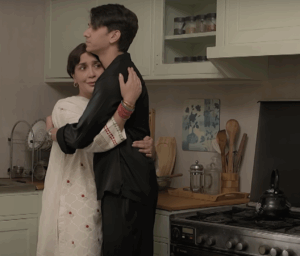
Best Moment: When Sameer confides in her after Anya’s breakdown at school, Panah responds with warmth and wisdom. She listens carefully as he explains how Anya forged her parents signatures and panicked when confronted. Rather than scolding or dismissing him, Panah reassures Sameer it wasn’t his fault, validates his concern, and comforts him with a hug. It’s a beautiful moment of trust and emotional alignment.
Impact on Her Children: Panah’s deep empathy fosters open communication. Sameer and Amal feel secure in trusting her with their worries because they know they’ll be met with compassion, not judgment. Amal, especially, mirrors Panah’s quiet strength and responsibility—but also inherits her self-denial. Unlike Wali and Anya, who hide their struggles, her children reach out for support. Panah models the kind of parenting that makes honesty feel safe. Her calm, consistent presence is a radical form of love.
1.
Suleiman (Saad Zameer Fareedi)
Children: Amal, Sameer
Parenting Style: Emotionally present, quietly strong, values-led
Suleiman is the emotional backbone of the family and the gold standard for parenting in Parwarish. He leads with empathy, not ego, and understands that being a good father means showing up not just financially, but emotionally and morally. He’s not flashy, but dependable, present, and quietly wise.
He strikes a rare balance: grounded in values without rigidity; supportive without overstepping; protective without being overbearing. Where Jehangir sees children as extensions of himself, Suleiman sees his children as individuals to be nurtured, not molded.
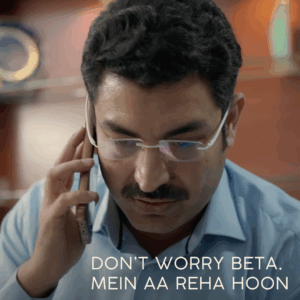
Worst Moment: None so far — the only times he’s upset are when protecting his loved ones, and he quickly makes things right.
Best Moments:
- Supporting Panah during the “roti-maker” incident. When Dadi ridicules a gift meant to ease her burden, Suleiman steps in to affirm that caring for caregivers is worthy even if it challenges tradition.
- Going to pick up Sameer and Wali when they find Anya trapped at school, showing calm decisiveness and reliability in a crisis.
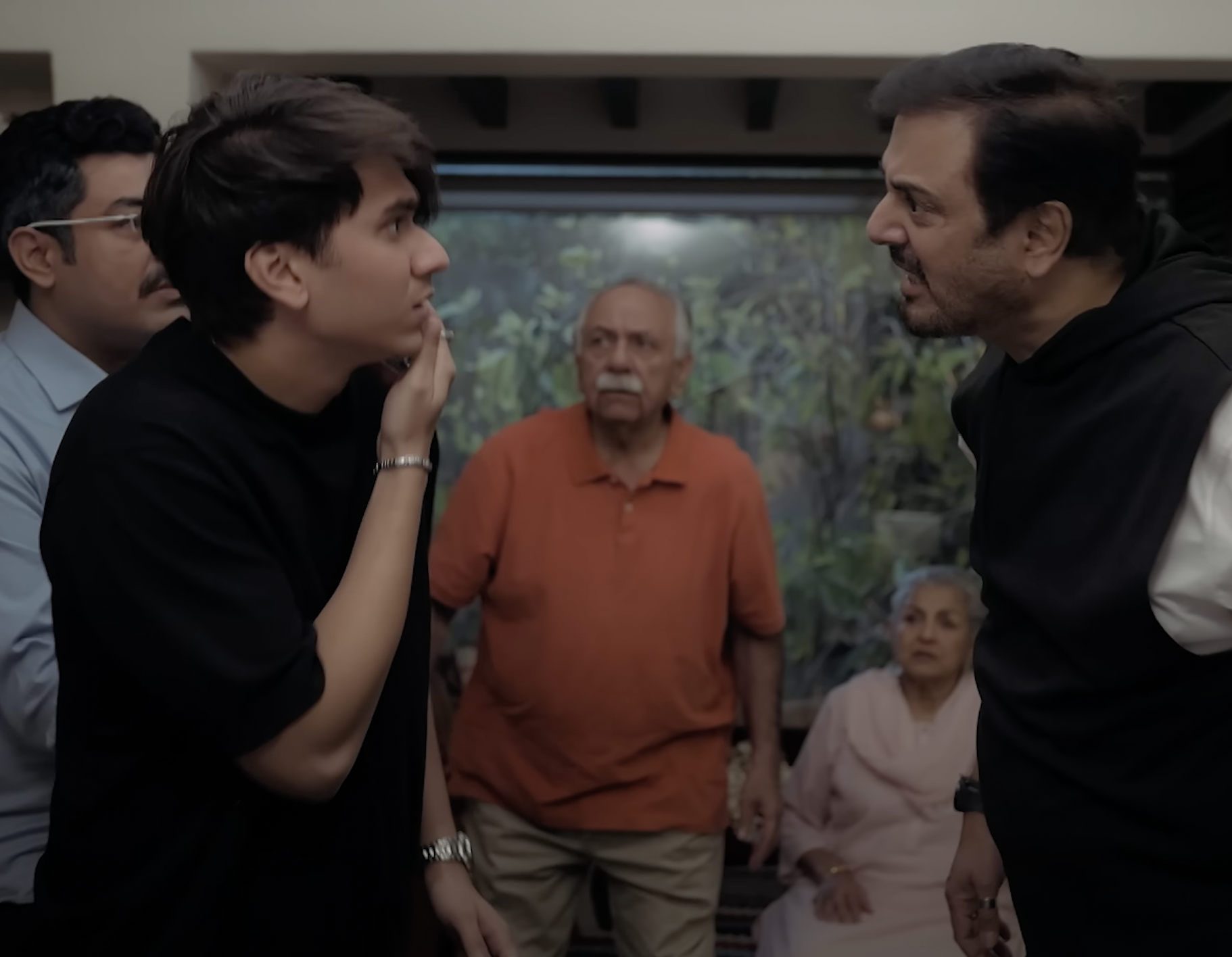
- Saving Wali from a mob after a car accident, trying to comfort him and then later standing up for him against Jehangir, protecting his nephew physically and emotionally in the standoff.
- Supporting Amal and prioritizing her education and future independence over societal expectations
- While he can’t afford to buy his parents new cars or fancy i-phones but in the scene where we meet him Sulaimaan he is carefully picking out guavas for his father at the exact doneness he prefers. His gifts are not flashy but thoughtful.
Impact on His Children:
Amal and Sameer are emotionally mature and confident – traits that reflect Suleiman’s parenting. They don’t hide their struggles, and they don’t fear coming to him with concerns. They mirror his quiet strength and empathy. His steady presence helps his children feel safe enough to trust that they are not alone. He models a kind of masculinity rare in Pakistani dramas: emotionally intelligent, quietly principled, and deeply respectful of his family’s autonomy.
Parwarish resonates because it does not fall into black-and-white portrayals of “good” vs. “bad” parents. Instead, it depicts emotional nuance. The healthy parents here lead with presence, empathy, and humility. The worst hide control behind tradition or generosity. But even the flawed ones are given moments to change.
What Parwarish understands—and so few shows do—is that parenting is legacy work.
The adults in this story pass down more than just values; they pass down silence, self-worth, trauma, resilience. No one escapes untouched, and no one is beyond redemption. In a world where control often masquerades as care, and tradition becomes an excuse for cruelty, the most revolutionary act a parent can do is listen.
Parwarish interrogates the very nature of parenting in our homes. And in doing so, it recognises those of us who have struggled in these households and maybe still carry a parents voice in our heads.