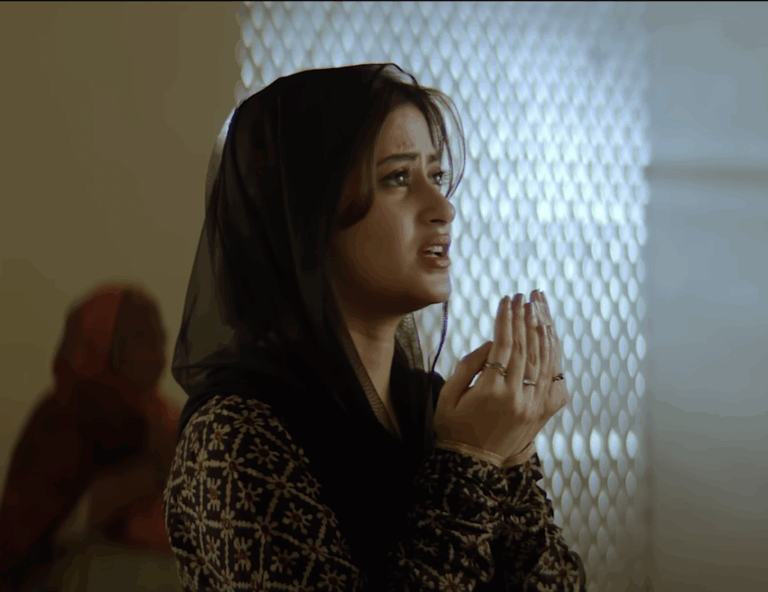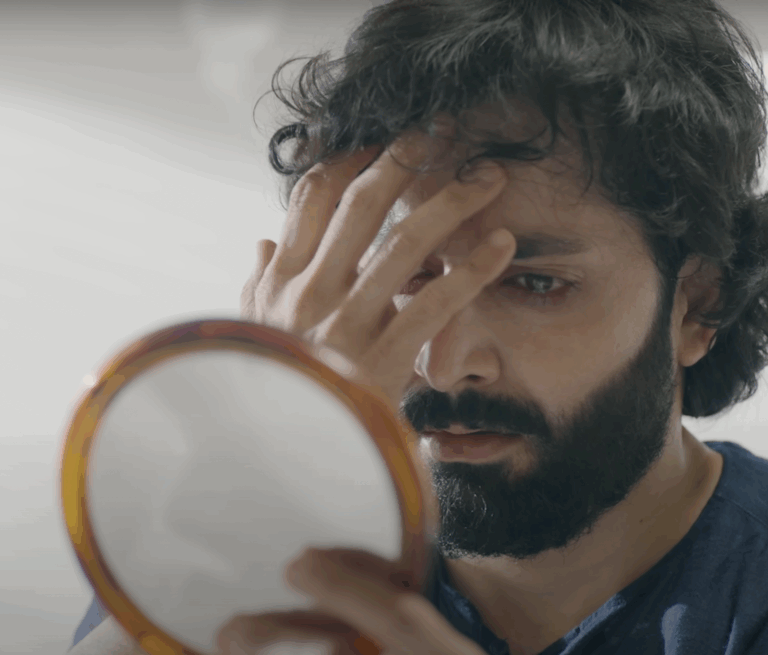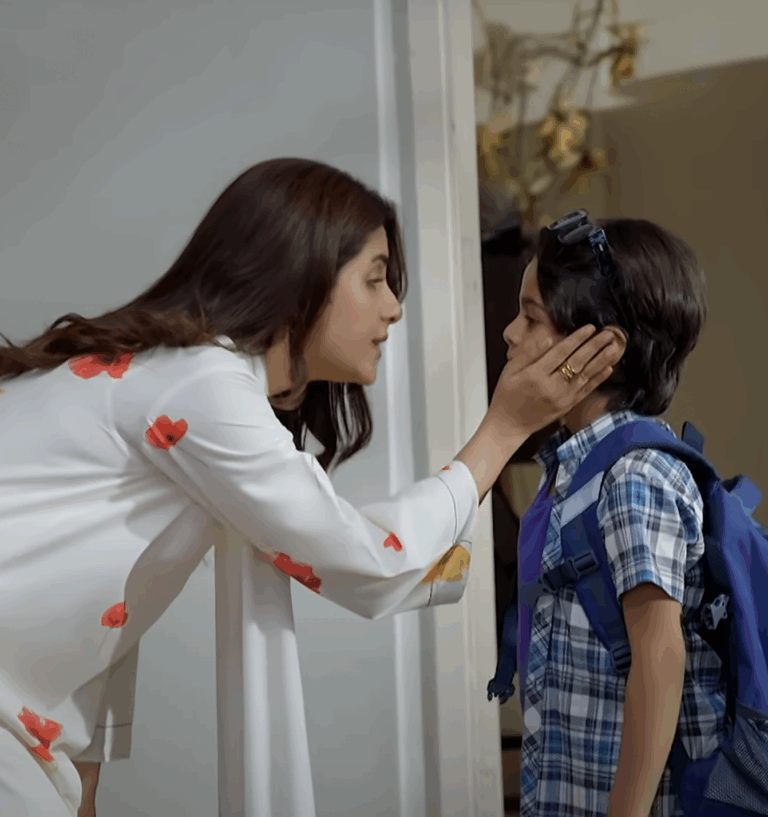



You could easily hate Zeba for being this foolish in Kafeel.
What kind of woman falls in love after a two-minute conversation?
Who leaves a scandalous love note lying around?
Who agrees to getting married without even finding out who the groom is?
The bumpy storytelling sets up the audience to dismiss her as an unlikeable dimwit.
Let’s give her the benefit of the doubt for a moment and look instead at what Kafeel is trying to do.
Expectations were sky high.
A return to ARY for director Meesam Naqvi after Parwarish. A script by Umera Ahmed, whose work has long shaped how Pakistani television talks about women, marriage, and moral compromise. And Sanam Saeed, an actor whose presence adds gravitas. Add to that a subject as urgent as financial abuse within marriage, and Kafeel arrived with real promise.
Unfortunately, the first few episodes test even the most loyal viewer’s patience.
We follow wide-eyed Zeba (Sanam Saeed) through a series of naïve and increasingly indefensible choices. But to read her simply as foolish is to misunderstand what Kafeel is attempting. Zeba’s mistakes are not random; they are the predictable outcome of misogyny and patriarchy so deeply embedded in everyday life that they pass for normal behaviour.
Pakistani television has explored emotional and physical abuse for decades. Financial exploitation, however, remains far less examined, especially when it comes from a suitable rishta from a shareef family.
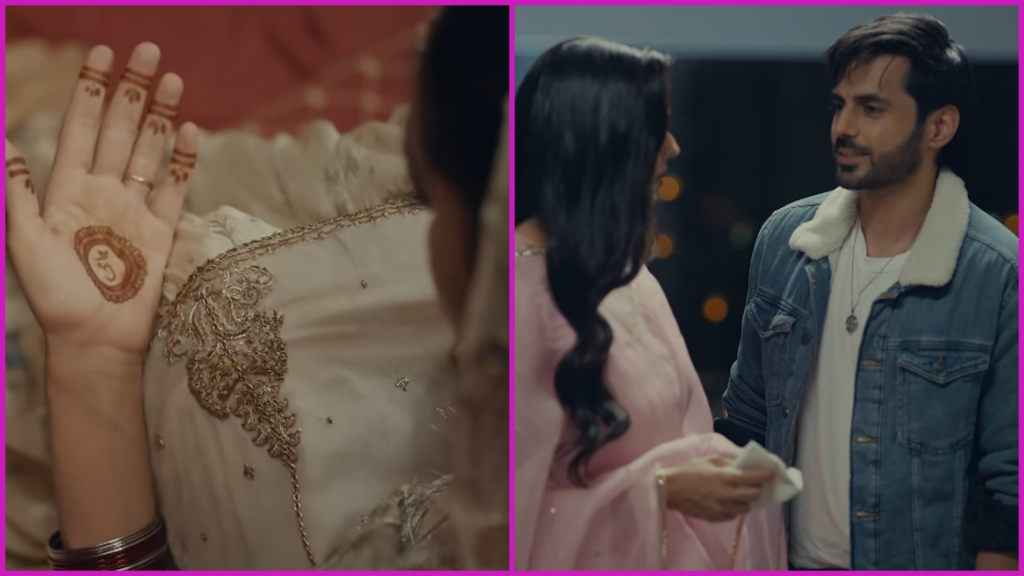
Kafeel attempts to show how a sheltered woman becomes uniquely vulnerable: flattered by any attention, rushed into marriage without real consent, and expected to fold the moment money enters the conversation. The frustration viewers feel toward Zeba is not accidental. She is a product of a system that trains women to acquiesce, to accept, adjust, and stay agreeable at all costs.
Zeba’s romantic awakening arrives at a friend’s wedding. She meets Jami, a charming stranger who offers little beyond polite attention, clumsy flirting, and a theatrical flourish: his phone number scribbled onto a handkerchief. That’s enough to mesmerize her.
As silly as it looks from the outside, this is the most passionate experience of Zeba’s life—one she replays in her head again and again. When affection has been rationed all your life, the first admiring gaze feels validating.
What happens next is entirely predictable.
The handkerchief is discovered. The verdict is swift: “larki bigar gai hai.” A minute-long interaction is declared a moral failure, and only one solution is offered. A quick marriage will restore honour. The consequence will last a lifetime.
Zeba agrees without resistance.
Then comes the fatal coincidence. When she hears the groom’s name is Jami, relief floods her face. The possibility that they could be two different men never fully registers. She has already been taught that asking questions is unnecessary and dangerous.
This is the plot point that has drawn the most criticism from audiences. I tend to agree. The mistaken identity adds little to the larger narrative. It doesn’t deepen the mystery or complicate the stakes. Its sole function is to underline how desperately Zeba wants to believe her happily ever after is already in motion and how much that belief will cost her.
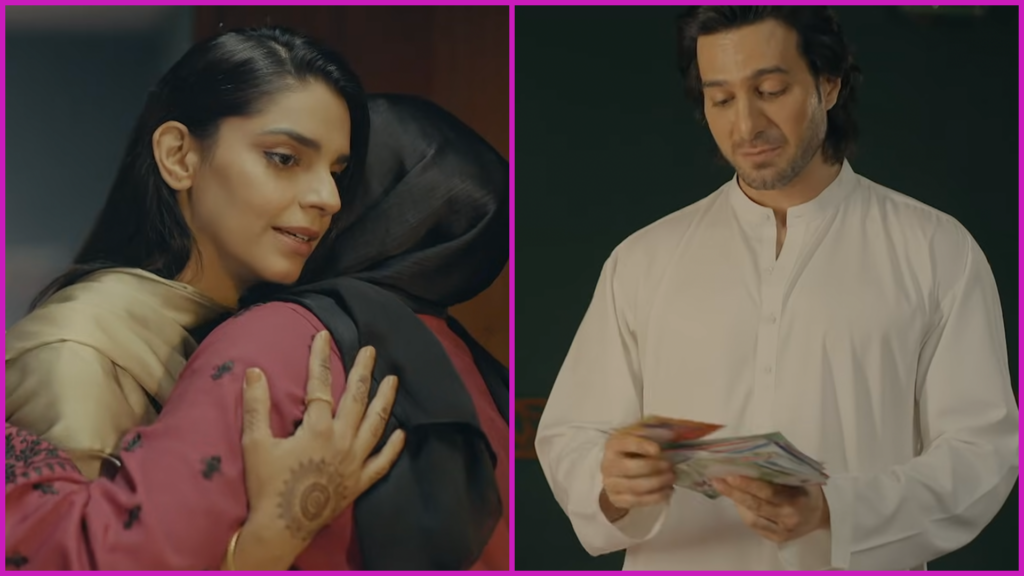
The real conflict begins after the wedding.
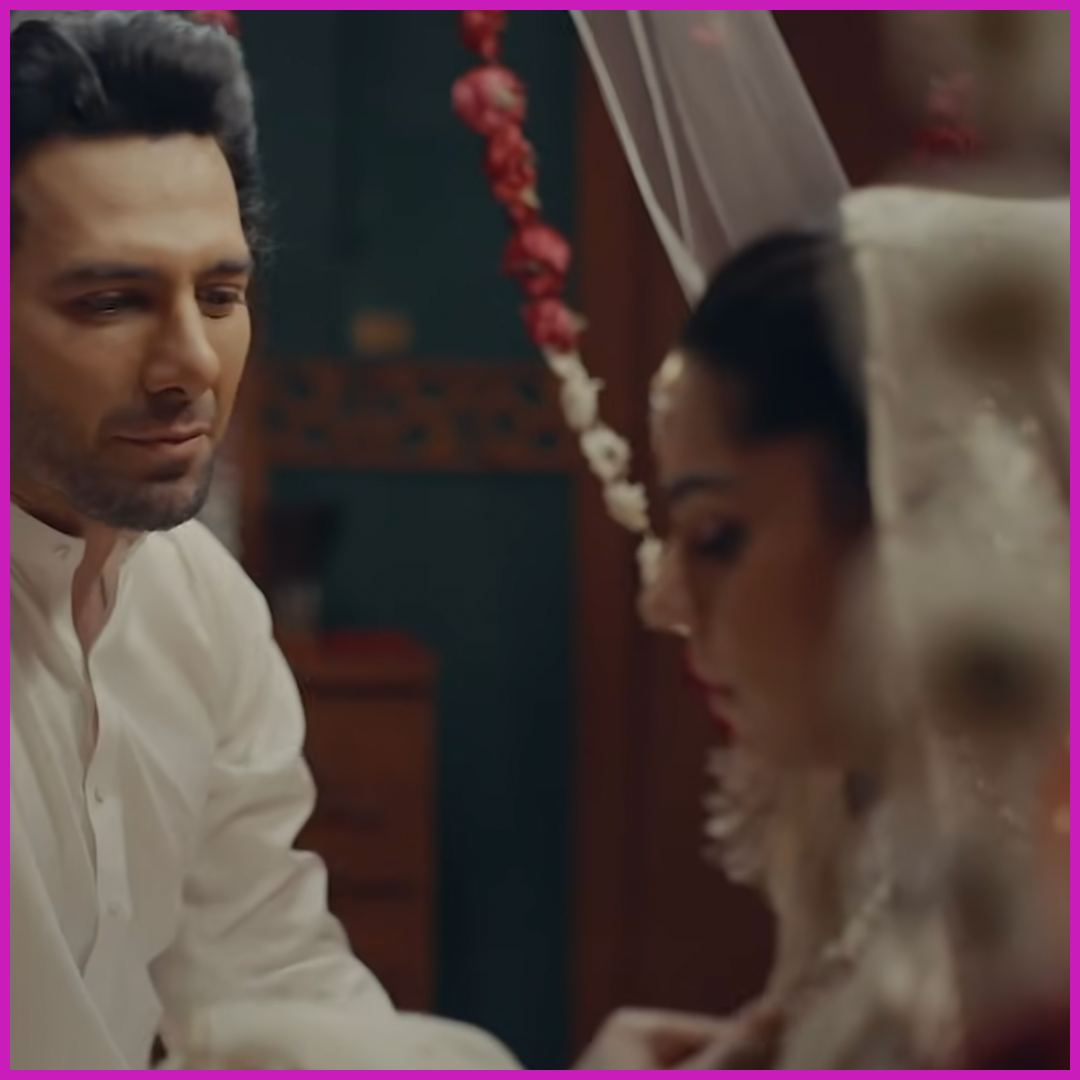
We meet the real Jami (Emmad Irfani) on their wedding night, attractive, smooth, and publicly well-mannered. He’s a pomous show-off but we learn that is just the tip of the iceberg. He never explicitly asks for a dowry. He doesn’t have to. Zeba is slowly gaslit into compliance. He hints, “Of course furniture will be sent.” After all that’s what good families do. That’s how daughters are married off respectably. No one calls it dowry, but everyone understands the obligation.
This is how dowry survives: not demanded, but extracted. Jami speaks only of “practicalities.” Of how a home needs to be “set up properly.” Of how certain pieces of furniture are simply expected. When his own sister questions him, he twists the sitaution forcing Zeba to apologize for making up stories. Jami gaslights the entire household into believing that these expenses are not demands at all, but loving contributions. What makes this manipulation so effective is its respectability.
As a viewer, this is where the story starts for me, where Zeba’s life on eggshells begins.
The first episodes have laid the groundwork for a sheltered woman who learns to drown her dreams. Was the pacing off? Yes, but this stellar crew still has me hooked to a heartbreakingly relatable story that surrounds us all.
Can we reexamine the ideal woman
I will be watching as Zeba watches Jami’s faces more closely. Replaying conversations in her head to check what she said wrong. Every interaction becomes a calculation: When will he get angry? What will trigger it? How do I stay one step ahead?
Pakistani television has been telling stories of women who have been editing themselves preemptively. Shrinking their needs to absorb discomfort so the house can remain “peaceful” as if it’s a good thing. Perhaps Kafeel can remind us that a sheltered woman who silently accepts the status quo is not the ideal after all.