




There’s a pattern in Pakistani media that’s hard to miss. Whenever entertainment challenges social norms (especially around gender, romance, or personal agency) the response is immediate and moralistic. Outrage spreads, accusations of being “un-Islamic” or “Western” fly, and regulators or social media users complain.
The question is rarely “Why are we so uncomfortable?”
Instead, it’s almost always framed as: “Is this appropriate?”
The latest flashpoint in this dynamic is Lazawal Ishq, a YouTube reality dating show hosted by Ayesha Omar. The trailer for the show is reminiscent of Love Island and Too Hot to Handle. Singles navigate romance, challenges, and eliminations.
It immediately became a target for moral panic.
Social media lit up with criticism of the show’s foreign locations, glamorous outfits and the shocking premise of young men and women living together. In a country obsessed with shaadi as the ultimate social milestone, a romantic reality show could be exciting – but was the show now Pakistani enough?
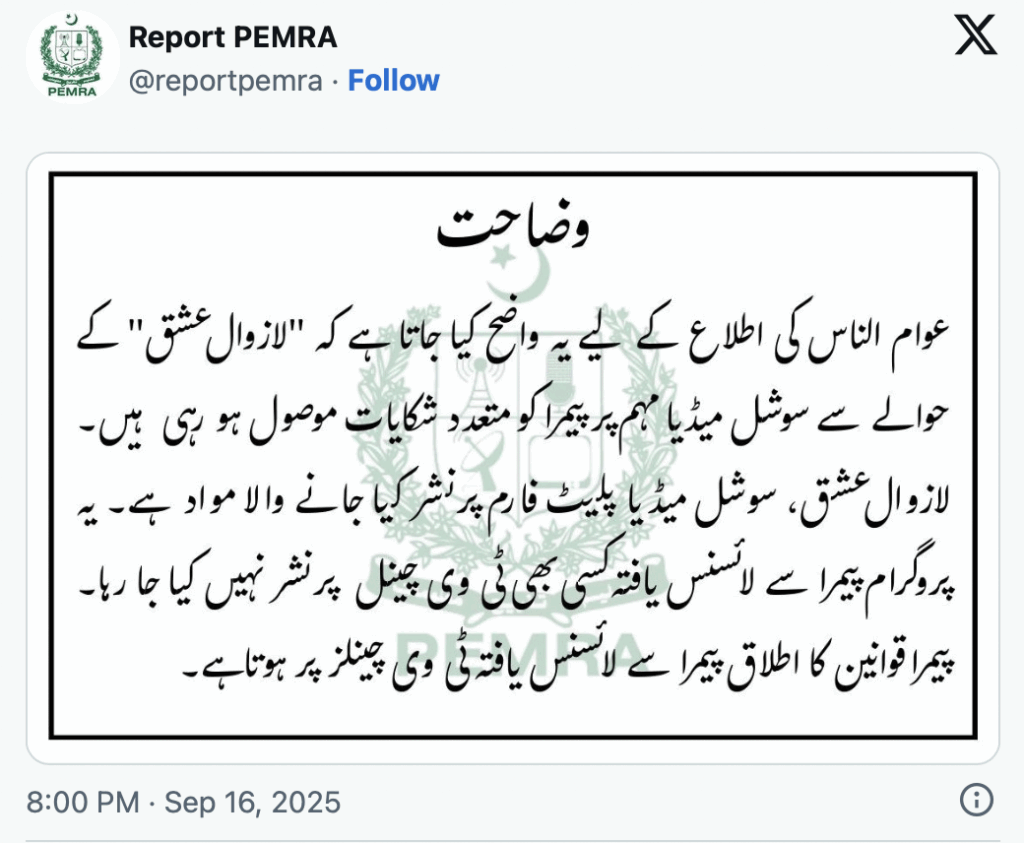
Hundreds of complaints were reportedly filed with Pemra.
The regulator’s response was measured: “Pemra has received several complaints regarding the social media campaign of Lazawal Ishq. However, the programme is being streamed on social media platforms and is not being broadcast on any Pemra-licensed television channel.”
Lazawal Ishq Challenges Norms, Triggers Moral Panic
That statement highlights a tension that has defined Pakistani media. Traditional broadcast is heavily regulated; digital media is more free but certainly not immune. Public sentiment then functions as an informal censor, policing morality even in spaces that technically lie outside Pemra’s authority. And yet, this isn’t the first time reality formats have existed in Pakistan. Shows like Veet Miss Super Model and Shadi Online were successful, and relatively uncontroversial, precisely because they framed ambition, romance, and courtship within socially approved narratives.
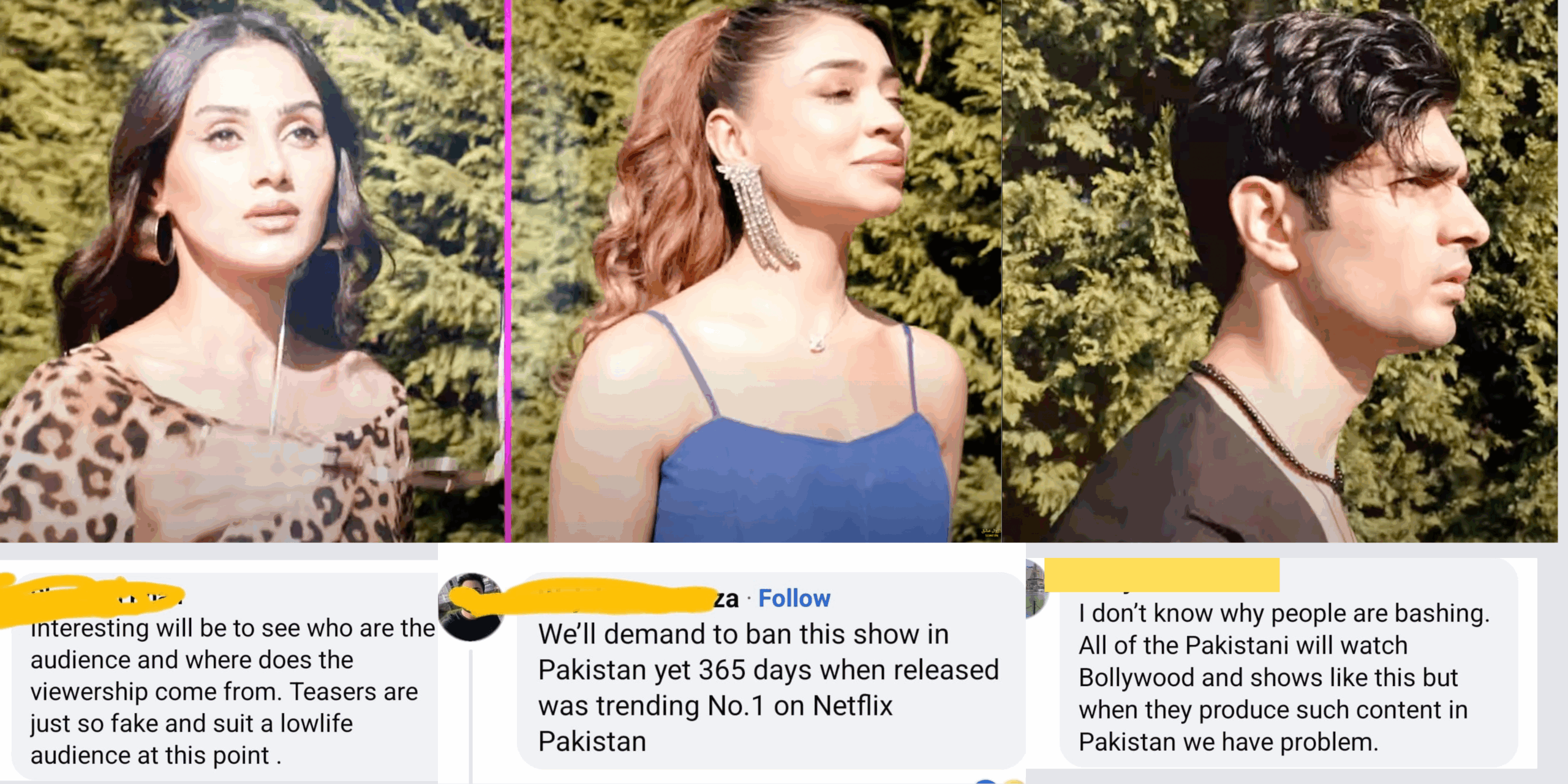
To be clear, reality dating shows are hardly progressive. They prize marriage, conventional standards of beauty, and superficial attraction over meaningful intimacy. Netflix’s Indian Matchmaking reduced compatibility to a biodata, while shows like Love Island or Too Hot to Handle hinge on looks and flirtation. Lazawal Ishq seems tofollows the same template
But the debate around Lazawal Ishq is about more than one show. The backlash illustrates the clash between hegemonic norms and modernity.
What are we really afraid of? A generation of young viewers fluent in global entertainment is curious and eager to see themselves reflected on screen. Others are quick to frame anything unfamiliar as a moral crisis.
Mainstream dramas have carefully followed the line of what is acceptable: middle-class morality, heteronormative relationships, and tightly controlled depictions of romance or female agency. Deviate even slightly, and the story signals that something is wrong. Lazawal Ishq doesn’t just deviate; it throws the whole rulebook out.
This is not new. Pakistan has always punished those who claim the space to be themselves.