
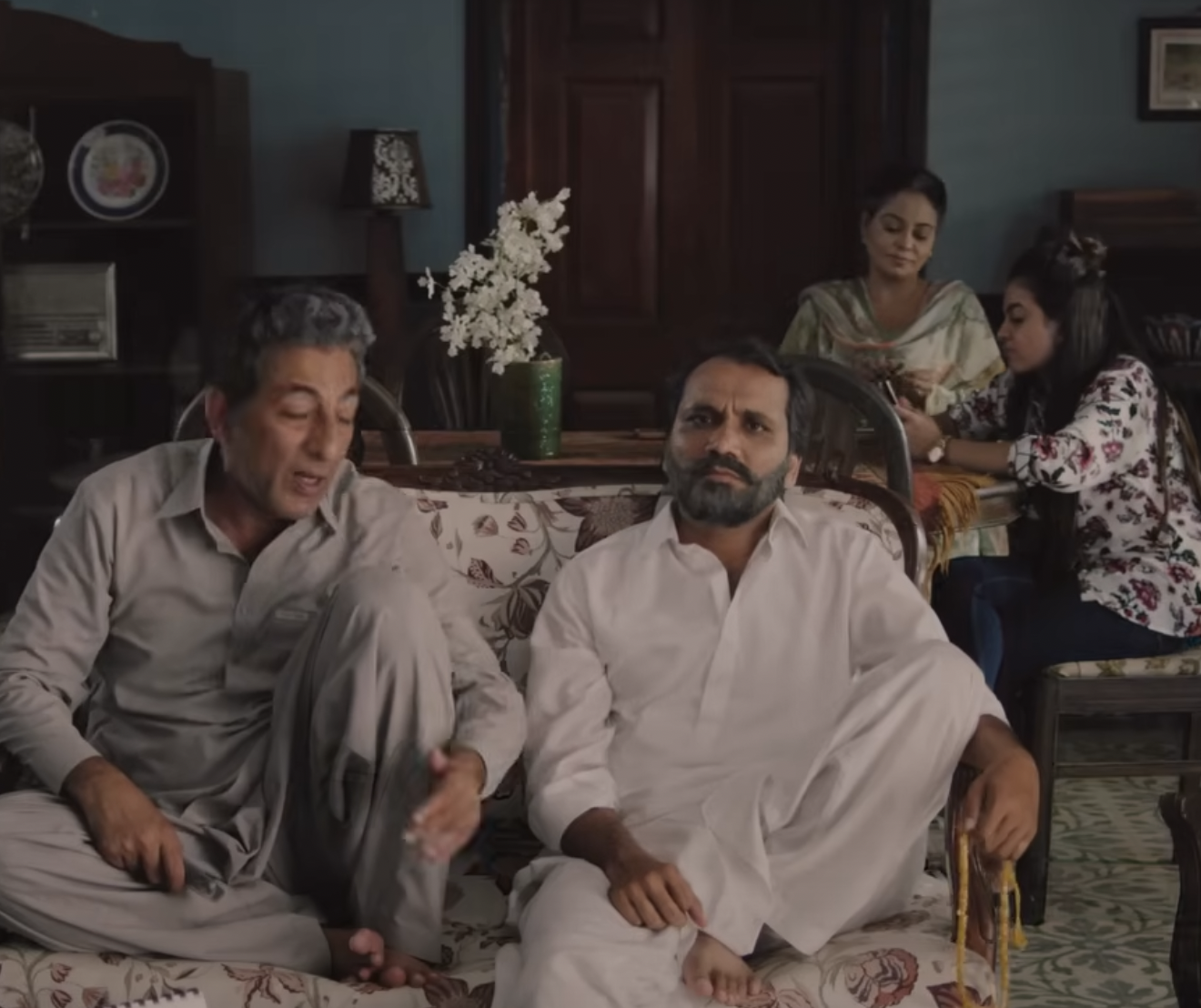



Intezar Farmaiye is a funny, painfully accurate time loop of Pakistani living rooms through the years. Load shedding persists, political grumbling gets louder, but maybe self-awareness is starting to grow. What makes the short film engaging isn’t just the sharp writing and careful art direction (though both are great); it’s that instead of moralizing or preaching, it simply holds up a mirror and doesn’t flinch when you see yourself in it. Have we really changed, or just swapped the background?
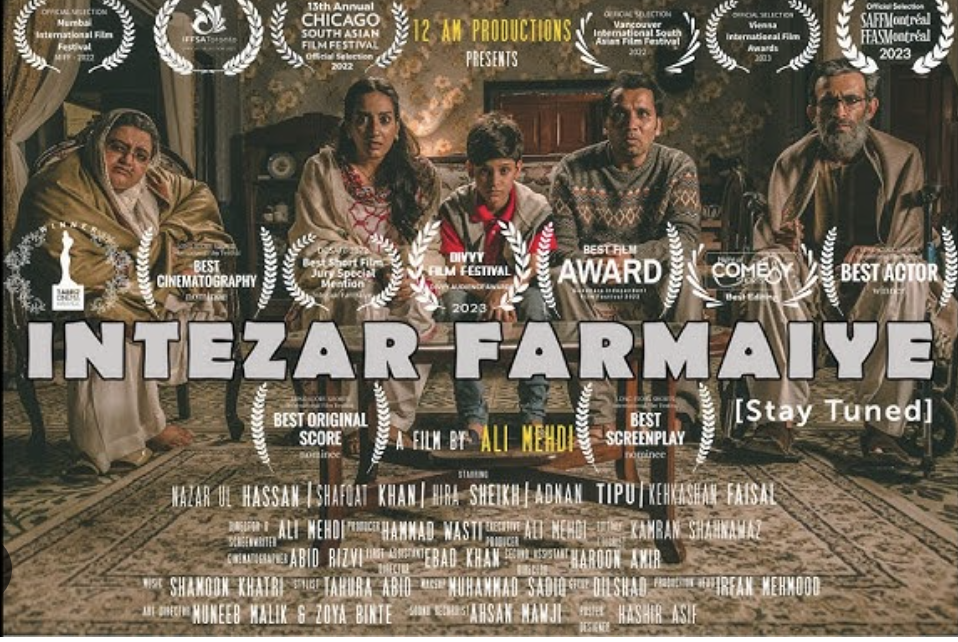
After years on the festival circuit, Ali Mehdi’s award-winning short film Intezar Farmaiye (2022) is now available on YouTube for everyone to watch and reconsider their views about patriotism, corruption, and complicity. The cast includes Adnan Tipu, Nazrul Hassan, and Shafqat Khan.
The film uses the lens of a single family to tell the story of decades of headlines, television broadcasts, and national moods.
We open in 1965 in black and white, as a family gathers around a radio while Major Ayub Khan announces the start of war. The father feels both vindicated and resigned, while his son is more resilient but cynical. This becomes the pattern for the rest of the film. As the decades pass, generations shift, haircuts change, technology develops, televisions become flat, but the conversations and blind spots remain eerily familiar.
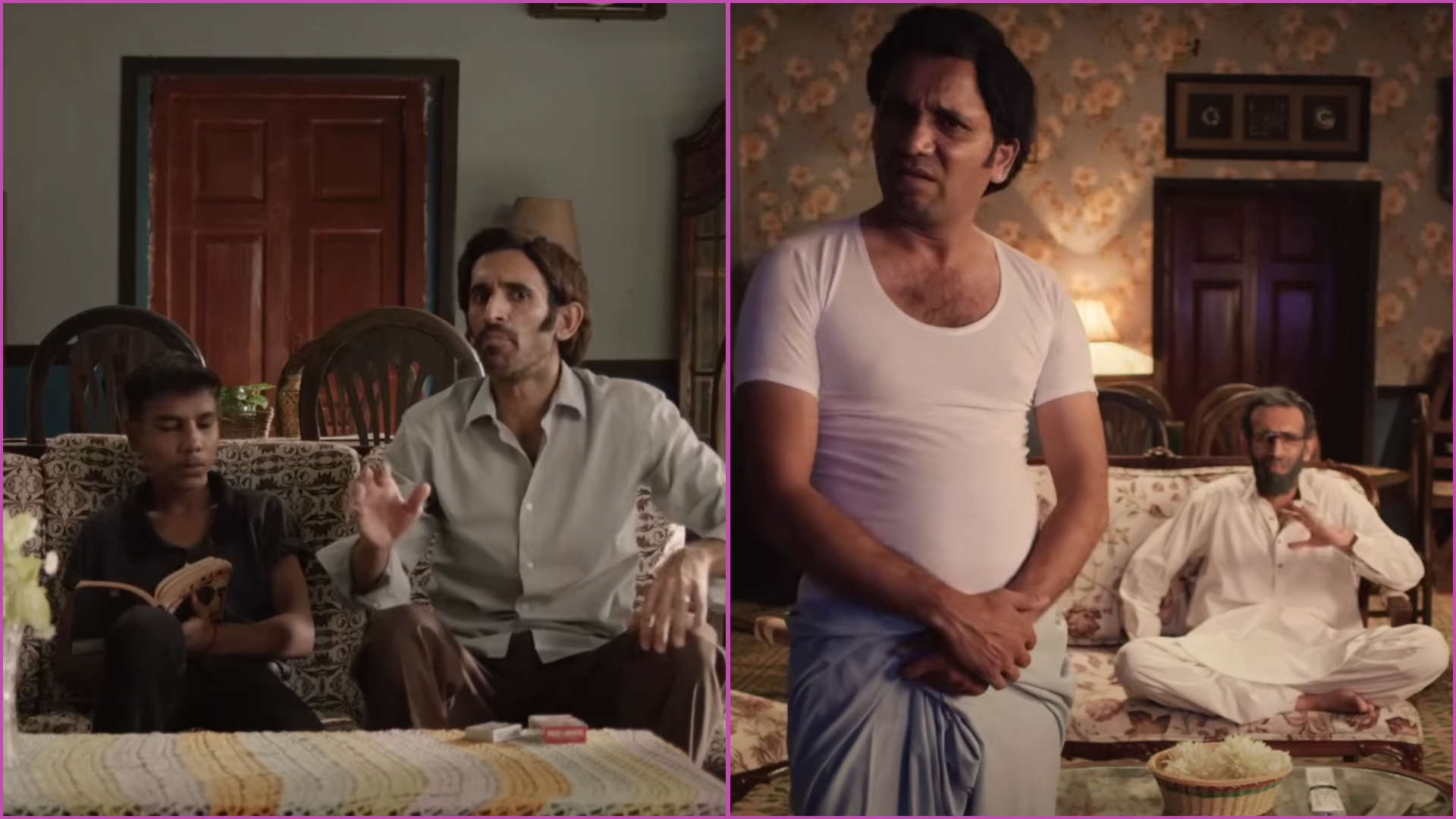
Every time the government changes, the father (and later the son) agrees: the last government was the worst, and the next one will fix everything. The mother (and later, the daughter-in-law) exists to bring food and absorb the monologues. The one exception is a reference to the 2014 Peshawar School Massacre, where a mother’s tearful prayer is particularly heartbreaking. Children roll their eyes and get on with their lives until they too grow up to watch the news incessantly and complain about it. The remote control becomes the most powerful object in the house… until the electricity goes out and everyone comments on it.
The dialogue is relatable and captures the disillusionment of living in spectator mode, watching the country crumble through military take-overs, lock-downs , and assassinations – all while sitting on the same sofa as family members migrate to other countries and start new lives. The masterful editing by Kamran Shahnawaz pulls this story of decades into a neat 20 minute package that feels both tragic and bright.
An attempt to break this complacent cycle of hopelessness comes from the original protagonist’s granddaughter, who has returned from the USA. “Why do we keep waiting for the ‘right politician’ to save the country?” she asks. “Why don’t we become better people so that the country can improve with us?” This feels like a step in the right direction compared to previous generations who complained about corrupt politicians only to teach their own children to bribe the police. Staying apolitical is not just unwise; it is unrealistic. We can no longer switch off the TV and feel untouched by the news cycle. We are shaped by the noise we live in. Every headline, hashtag, and half-heard story is echoed, shared, and remixed by us as witnesses. Time passes, history repeats, and real change does not come from screens or slogans – it comes from us. Nostalgia for a better, simpler time is easy, but it ignores the daily lived experience in the country.
Every 14th August is a chance to rethink what independence means. Hoisting green flags and blaring patriotic songs into the night, only to resume ranting about the government and bemoaning the state of the country the very next day is not patriotism.
Intezar Farmaiye shows how we are always waiting – waiting for someone to save us, for things to get better, for the worst to be over. This is the perfect film to watch on or after Independence Day. It won’t change the world, but it might change your perspective. And until the light is back on, stay tuned.