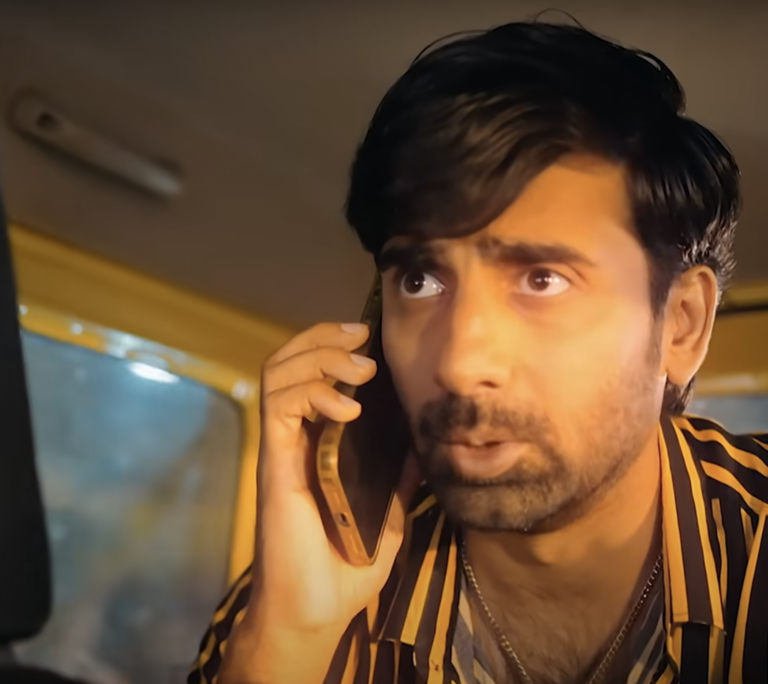
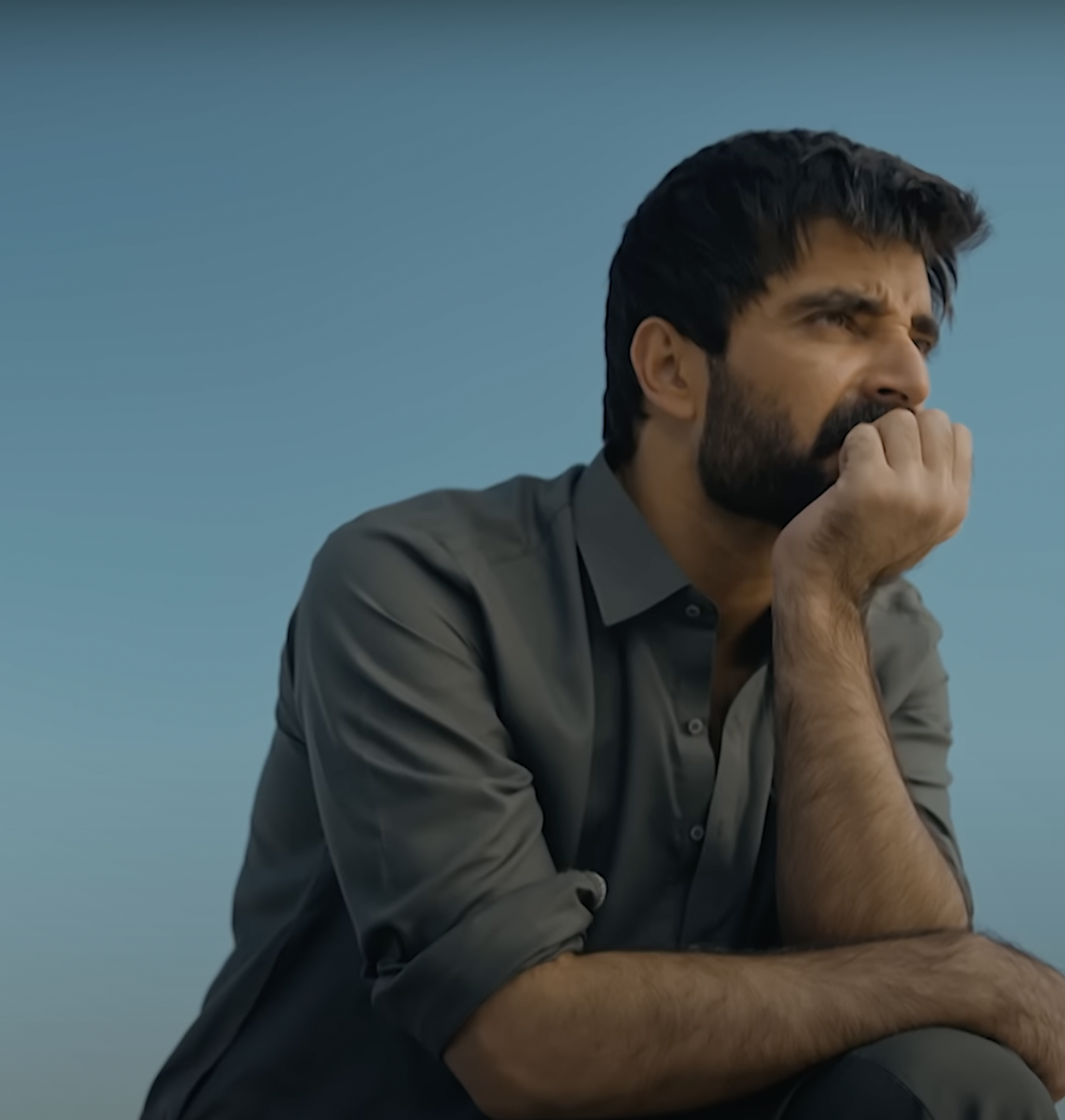



In a television landscape saturated with melodrama and moral binaries, Faraar broke out to become one of the most riveting, genre-bending dramas Pakistan has seen in years. What started as a manhunt spiraled into a slow-burning, psychologically layered thriller. Now, with the finale just days away, fans are bracing for impact.
From its earliest episodes, Faraar made clear it was not going to play by the rules. We met Fasih (Ahmed Ali Akbar), a police officer fumbling through a case that was more personal than procedural. His target: Batish (Hamza Ali Abbasi), a masked vigilante with a vendetta and a body count. Then came Mohsin Baig (Sami Khan), a fugitive with a conscience. And Nazish (Sohai Ali Abro), a woman cornered by trauma, grief, and systems built to ignore both.
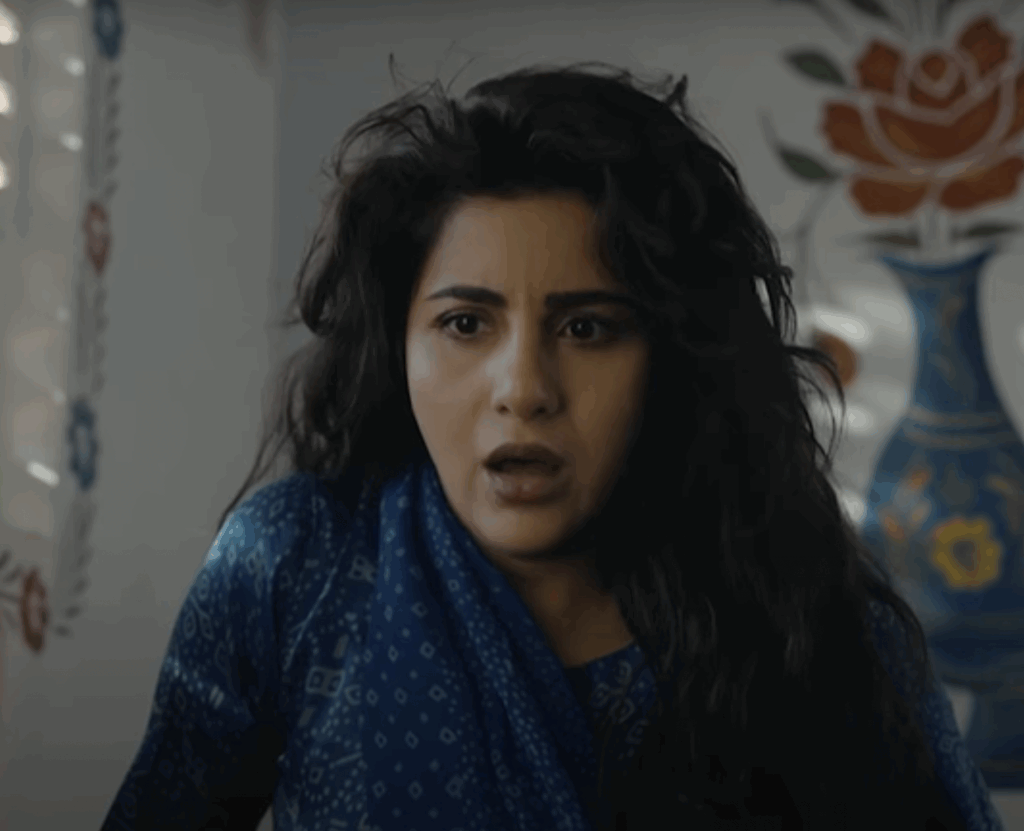
Nazish’s evolution — from silent survivor to moral compass — has become one of the show’s most affecting arcs. Initially seeking escape, she now seeks accountability, not just for herself but for a system that let her husband’s killer walk free.
Twists, Moral Whiplash, and Nobody’s Innocent
Episode by episode, Faraar twisted the narrative knife. There was no clear “good” or “evil” — just fractured people clawing for justice in a system designed to withhold it. The Malik brothers, a corrupt political dynasty, were taken out in a violent shootout. Fasih wrongly arrested his own suspects. Shakoora (Sikander Nawaz), the slippery fixer from Jandiala, kept playing all sides.
It made viewers question everything: Who deserves freedom? Who decides guilt?
The recent arrest of Jabbar for the murder of Chaudhry Akmal — based purely on a hunch — drove the point home: in Faraar, justice is elastic, selective, and dangerously intuitive.
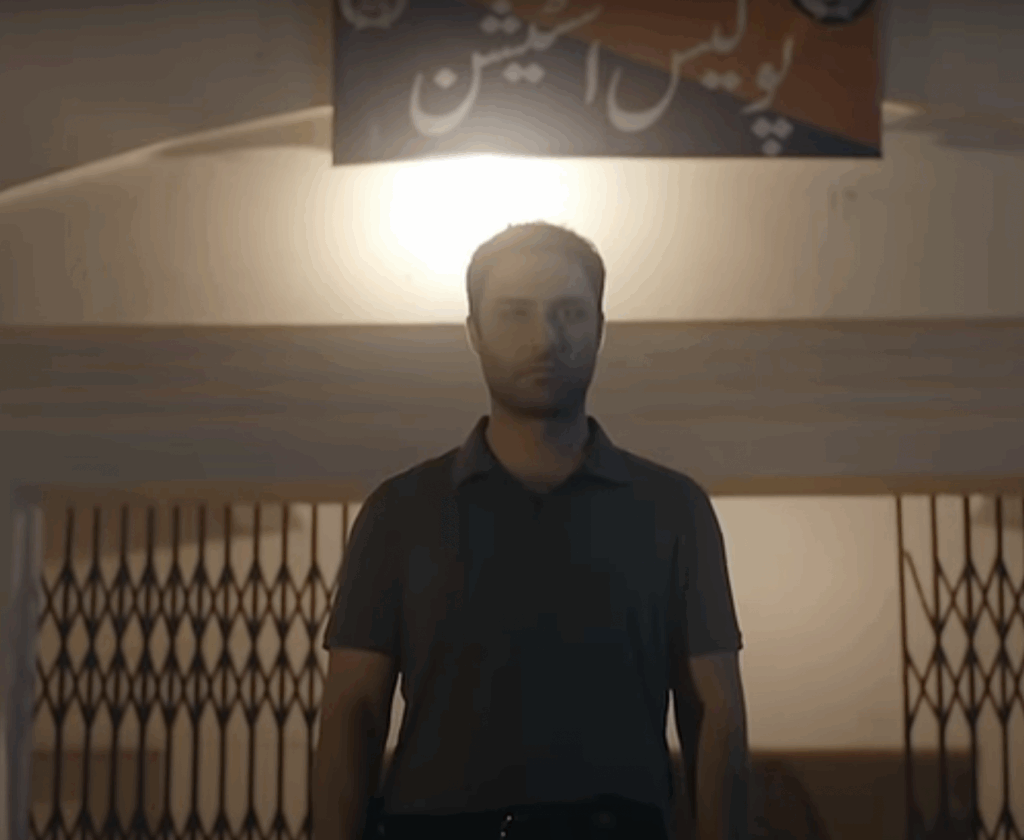
Even the so-called heroes carry heavy contradictions. Fasih, once a symbol of moral clarity, became erratic and obsessive. As his leads dried up, he began threatening Shakoora and Faraz, unraveling under the pressure of a justice system that seemed to mock its own enforcers. His descent became a cautionary tale in itself — the price of chasing righteousness in a rigged game.
And Batish? A murderer by any legal standard, yet his scenes with Nazish revealed a quiet, haunting vulnerability. Their relationship blurred the line between protector and perpetrator. He wasn’t innocent — but he wasn’t heartless either. We shouldn’t be rooting for Batish — a man with blood on his hands and a past full of shadows — but somehow, we are. Because in a world where the system is rigged and the powerful go unpunished, Batish’s brutal brand of justice feels unsettlingly satisfying. Yet, even as he inches toward accountability, the question hangs in the air: can a man who killed so many still be redeemed ?
Cinematic Grit, Grounded Characters
Even when characters appeared to find a way out — when Fasih and Mohsin were released from wrongful arrest — fate had other plans. Police bureaucracy kept shifting the goalposts. Azam Shah’s men loomed large. And just when it seemed everyone might escape — Batish and Nazish plotting a new life in Europe, Fasih closing in — a tense petrol station encounter changed the course of everything.
From there, the pace quickened. Time was running out, not just for fugitives, but for the entire façade of justice.
The show’s direction only amplified this tension. Faraar felt like watching a movie every week — noir lighting, tight camerawork, rain-slicked streets, and morally ambiguous dialogue. The visual storytelling did the heavy lifting: darker lighting as tensions escalated, long silences where lesser dramas would insert noise, stark framing that emphasized loneliness and moral conflict.
Even the action — a weak spot in many local productions — was strikingly effective. The shootouts were messy and human. The chase scenes felt urgent and dangerous. There were no invincible heroes here, just flawed people trying to outrun the weight of their pasts.
System on Trial
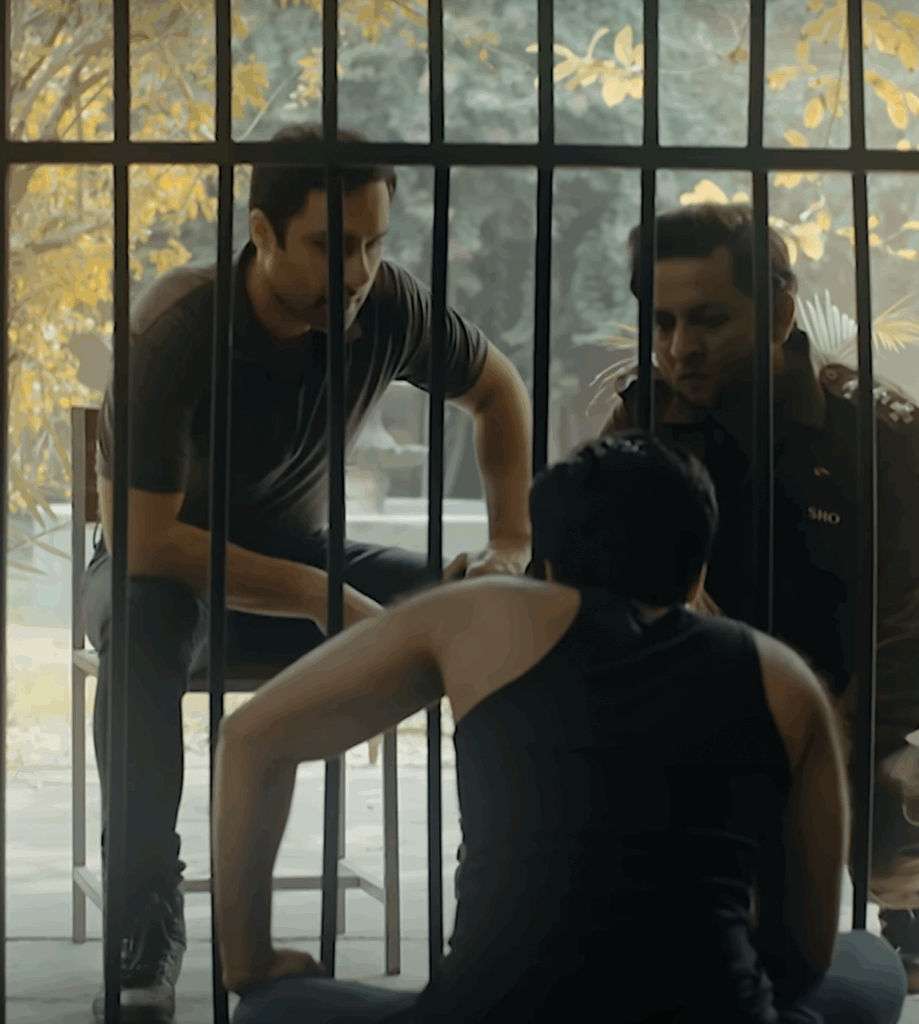
At its core, Faraar isn’t just a story about fugitives — it’s a scathing critique of the institutions chasing them. It addressed caste discrimination, gender-based violence, and internal police corruption — not with lectures, but through the lived experiences of its characters.
The DPO (Adnan Jaffar), seemingly helpful, turned evasive when pressed. The SHO in Jandiala — part clown, part tyrant — embodied the performative power that thrives in rural outposts. Justice in Faraar is not blind. It’s complicit, moody, and often for sale.
And yet, amid all this dysfunction, the show kept a tight grip on its emotional center. Nazish’s decision to surrender with Batish — to stop others from suffering for their crimes — is a turning point of quiet power. It asks the audience: in a world without heroes, can accountability still mean something?
The Final Pieces: Secrets, Surprises, and Power Plays
As the endgame unfolds, new players and long-simmering truths disrupt every plan.
Shakoor, ever the hustler, delivers Batish and Nazish to Mama’s (Nayyar Ejaz) den — the last stop before a supposed escape to Europe. But Mama’s not running a charity. His hideout becomes the setting for a final convergence of chaos.
Soon, lovers on the run — Babrik (Danyal Zafar) and Zallay (Meerub Ali) — join the mix. But Haji Janan’s informants are watching. When Zallay is spotted, it puts a price on their heads and drags the young couple back into the violent orbit they tried to escape. Their love story, once defiant, now feels doomed — a Romeo and Juliet in Swabi.
In one of the episode’s strangest turns, Batish is caught watching Babrik and Zallay while they sleep. It’s as uncomfortable as it sounds. He claims he was thinking about someone else — Sadia (Mamya Shahjaffar), the woman who now believes Batish killed her father. That’s a leap even for Batish, whose affection for Sadia has spiraled into obsession and delusion.
Meanwhile, SHO Noor Zaman (Usman Ali Chaudhry) makes his mark with a quietly terrifying performance. He serves Jabbar Malik a grotesque message — a platter of corpses — and doesn’t flinch when Jabbar tries to intimidate him. Zaman’s control is chilling, magnetic, and surgical. Usman Ali Chaudhry’s portrayal of SHO Zaman is a masterclass in finesse, exuding an air of authority that’s both captivating and unnerving.
But it’s Baggi who changes the game. Her demand for an FIR against Jabbar for her husband’s murder is a masterstroke. It gives the SHO leverage and exposes the cracks in Jabbar’s immunity. Baggi emerges, finally, as more than a survivor — she becomes a strategist.
And then comes the final bombshell: Faraz (Haroon Shahid) tells Fasih that Batish killed Jimmy not out of vengeance, but to stop him from assassinating Professor Hamdani — the same Hamdani who was later killed by the QIP. Not Batish.
After 22 episodes of chasing Batish we learn he isn’t even the main culprit. Fasih realizes Batish was never the true villain. Just another casualty of a system that devours its own.