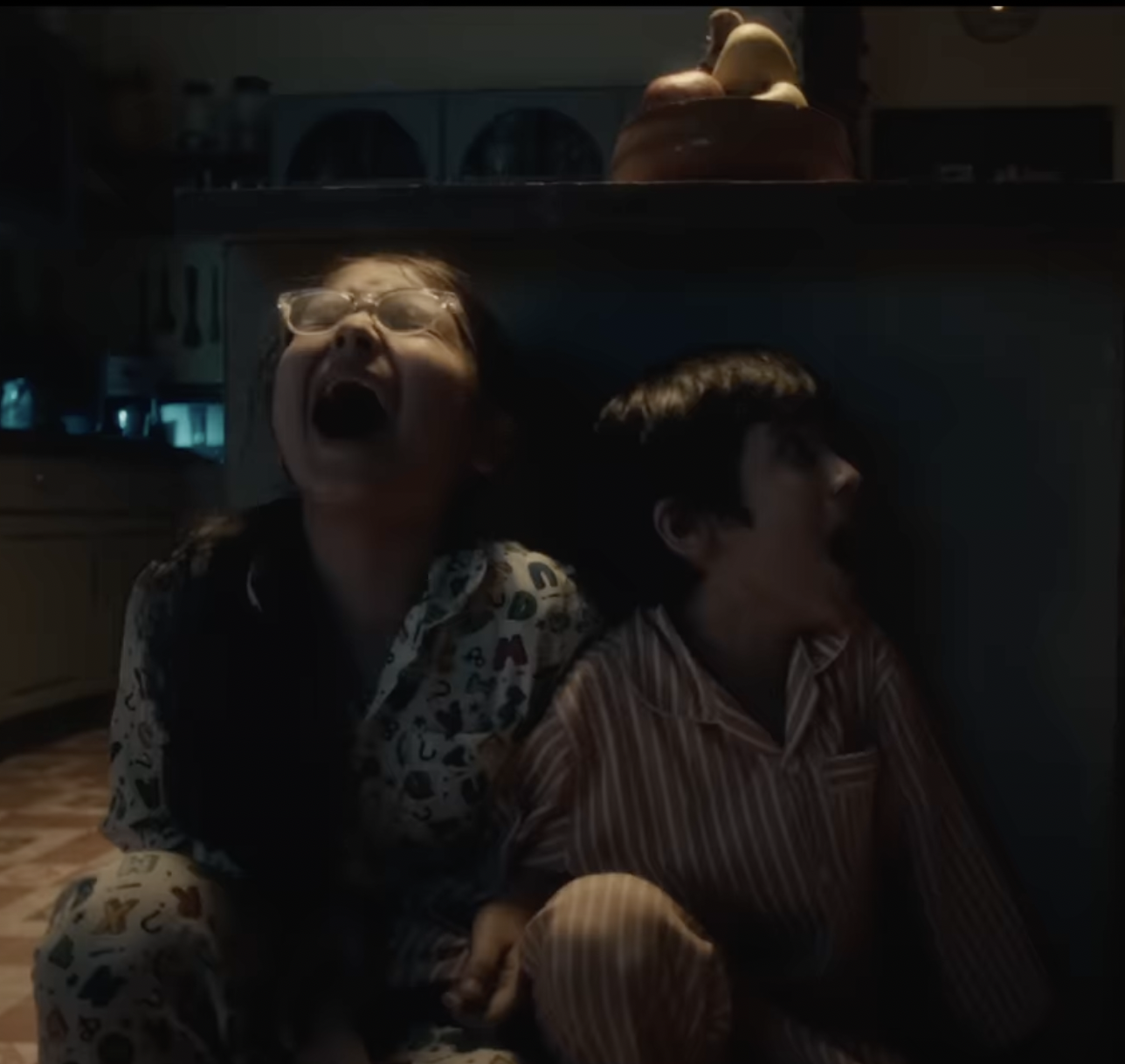



Pakistani horror has always thrived in whispered stories. We share them at sleepovers, recite them at family gatherings, and pass them down as folk tales layered with warnings and fear. Deemak takes these stories and places them in a beautiful Karachi mansion, where mosaic-tiled floors and crystal chandeliers set the stage for a film that understands a simple truth: while hauntings can terrify us, the emotional violence within families is even more frightening.
Directed by Rafay Rashdi and written by the bestselling author Ayesha Muzaffar Deemak certainly includes supernatural themes. But the real horror here lies in the fear of disease, of aging, and of secrets that fester until they consume a family from within.
What’s Really Eating This Family?
Deemak is a paranormal saas-bahu story. The tense relationship between mother-in-law Kulsoom Begum (Samina Peerzada) and daughter-in-law Hiba (Sonya Hussyn) unfolds as unexplained disturbances rattle their home. Faraz (Faysal Quraishi), the devoted son, watches his wife suffer the same patterns of control and violence he saw as a child, yet he chooses the comfort of patriarchy over protecting his family. The house begins to decay, its rotting edges reflecting the growing desperation within its walls.
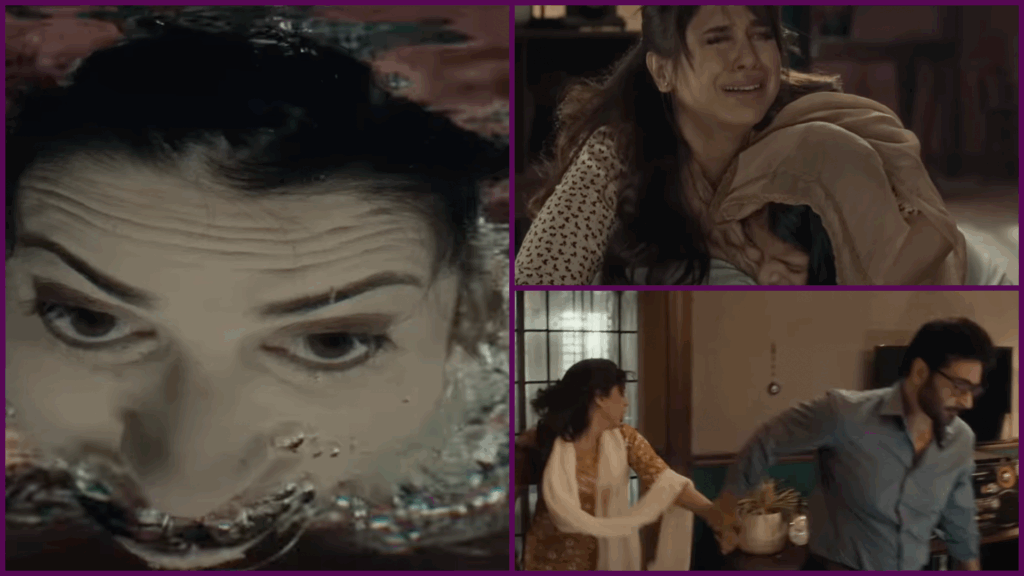
This film is not about chasing ghosts away. It is about naming the violence men allow to continue when they refuse to break generational cycles. It is about the rot we inherit—and the rot we refuse to confront. After all, what is more terrifying than losing the people we love because we are too afraid to change? The most chilling moments are when Faraz’s father almost drowns Kulsoom Begum in a bathtub, when a nurse’s fiancé threatens to leak her private photos, and when Faraz drags Hiba while threatening to take away her children. The violence against women in these scenes lingers long after the ghosts disappear.
The Metaphors Are Clever…But Incomplete
Deemak smartly connects the hauntings to the shadow of Faraz’s abusive father, but it stumbles in its resolution. After two hours of jump scares and family fights, the family simply drives away, leaving us to question what, if anything, has changed. Is the deemak -the distrust, violence, and unspoken resentments, truly gone, or is it following them into their next chapter?
The film suggests the house attracts dark energy, becoming a home for restless spirits, but it never fully explains the link between the jinn, the father’s spirit, and the termites eating away at the wood. The termite visuals hint at eroding trust within the family, but the metaphor feels half-finished.

Samina Peerzada’s performance as Kulsoom Begum anchors the film. She embodies fear, desperation, and anxiety with chilling believability. Her expressions deliver more tension than the film’s cartoonish VFX creatures ever manage. For a story built on tension and layered emotion, the filmmakers did not need over-the-top visuals.
Deemak shines in its smaller, unsettling moments—a door shutting on its own, a toy car rolling backward, a fridge door swinging, a dripping faucet in the middle of the night. These details remind us that fear often lives in the places we call home. But when the film tries to imitate Western horror with floating beds and glow-in-the-dark spirits, it loses its edge, replacing fear with spectacle.
Deemak has become the highest-grossing horror film in Pakistan, proving that stories rooted in local realities can resonate deeply with audiences. It shows that horror can entertain while forcing us to face issues we often ignore. The film challenges us to ask whether we will keep blaming supernatural forces for the darkness in our homes while ignoring the violence we allow to grow unchecked.