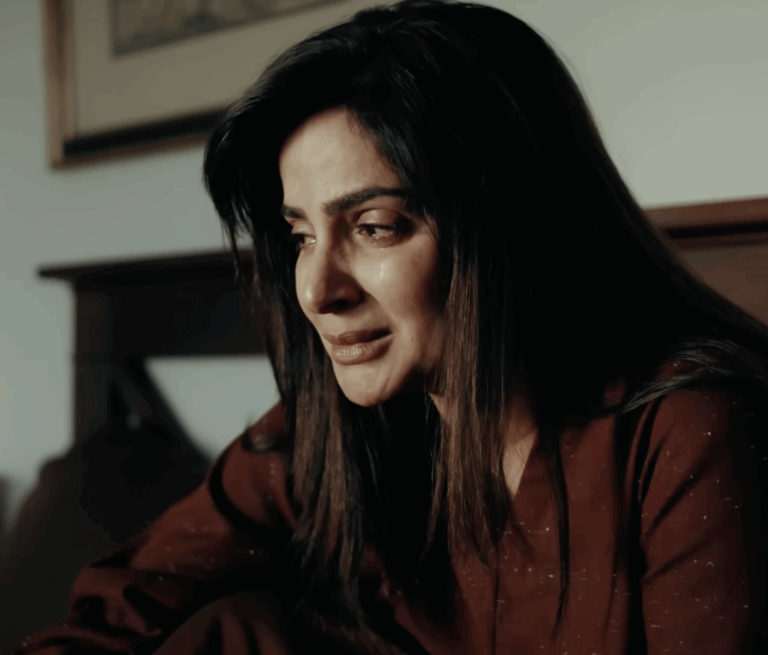
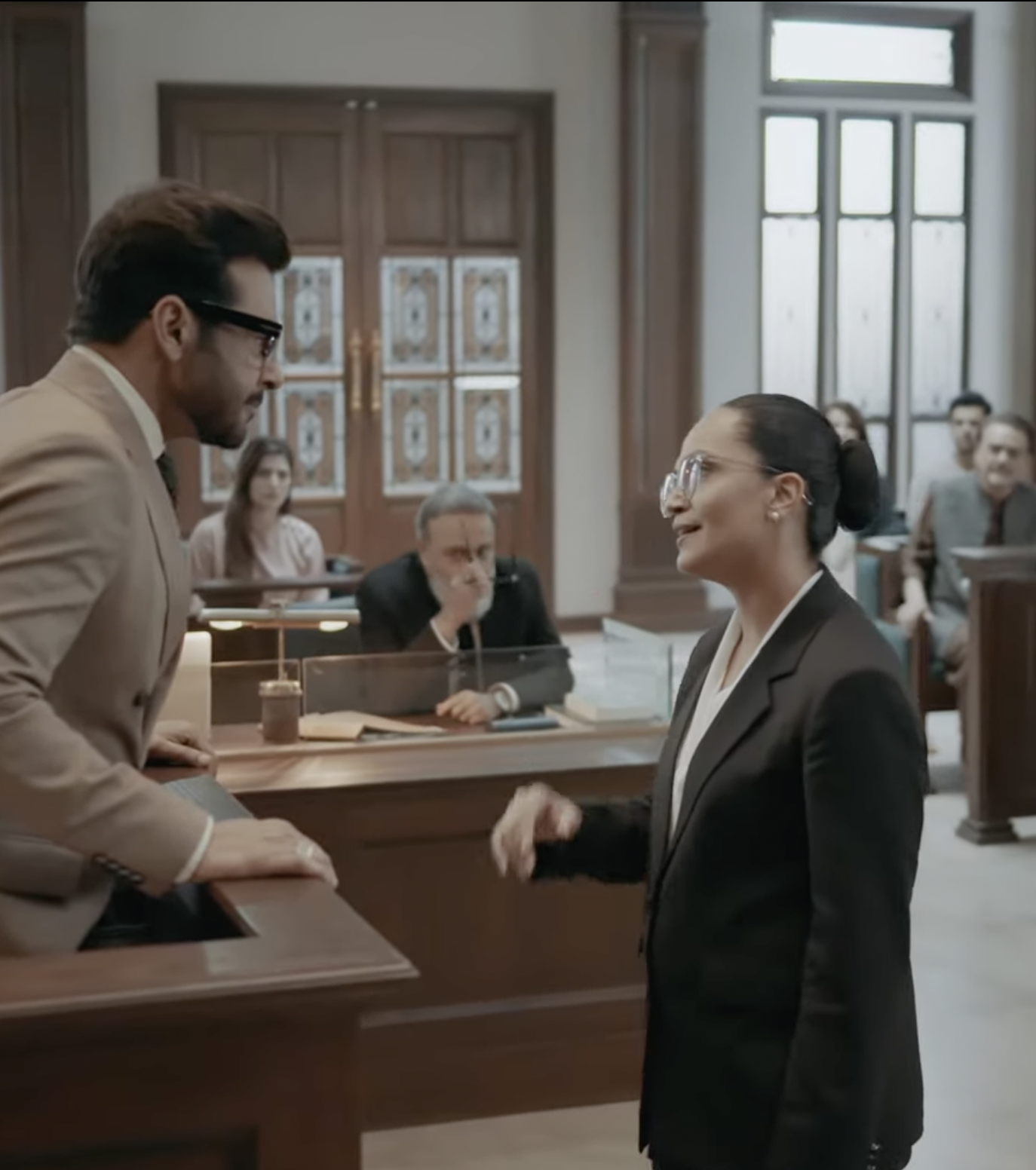



Case No. 9 forces viewers to confront an uncomfortable truth. Culture and crime are linked, and the way we talk about violence determines how we understand it. Episode 17 became the center of a digital storm after a courtroom scene went viral and then part of it was disappeared from YouTube.
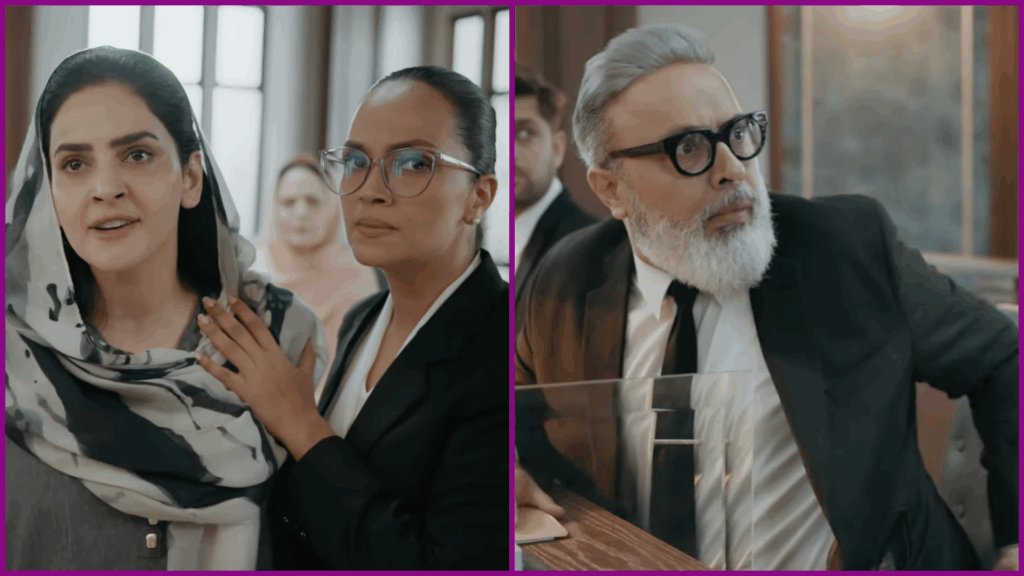
In the scene, Aamina Sheikh’s character Beenish, who is defending Seher played by Saba Qamar, cites landmark verdicts including Justice Ayesha Malik’s ruling against the two-finger test and Justice Mansoor Ali Shah’s judgment on the use of sexual history in rape cases.
But what remains is a larger discussion about what honour is and how victim blaming works in rape cases.
Let’s talk about the judgement
In the removed exchange, Beenish quotes Justice Mansoor Ali Shah and references the 26th Constitutional Amendment. She states that if the amendment had not been passed (and had not blocked his way) he would have been the country’s chief justice. Opposing counsel snidely responds with a Mirza Ghalib couplet about useless hypotheticals. The removal of the clip is a problem but let’s take a moment to appreciate the judgement that was being highlighted:
Justice Shah’s 11 page judgment in 2021 explicitly declared common expressions such as “habituated to sex,” “woman of easy virtue,” “woman of loose moral character,” and “non virgin” unconstitutional and illegal when applied to alleged rape victims.
The order stated: “No one has the license to invade her person or violate her privacy on the ground of her alleged immoral character. Even if the victim of rape is accustomed to sexual intercourse, it is not determinative in a rape case. The real fact in issue is whether or not the accused committed her rape.”
The clip aired during the television broadcast but was quickly removed from the YouTube upload, although writer Shahzeb Khanzada shared it before it vanished.
Censorship and Respectability Politics
Alongside this political censorship sits an equally dangerous self censorship.
Earlier in the series, the term “two finger test” was bleeped out entirely, perhaps naming the practice threatened the audience’s delicate sensibilities. The invasive examination, which involves a medical examiner inserting fingers into a woman’s vagina, was officially banned in Pakistan in 2021 after being deemed unscientific, undignified and internationally condemned. It is central to the trauma faced by many survivors, yet the broadcast treats its name as obscene. Sanitized storytelling may protect viewers, but it abandons the people whose realities it attempts to depict.
An honourable woman
Even as she fights for Seher, Beenish repeatedly describes her as a “bakirdar aurat,” an honorable woman. The phrase implies that a woman’s worth is dependent on sexual purity. The drama critiques abuse while reinforcing the very logic that enables it. Respectability politics are embedded in the language itself. Rape in Urdu is framed through terms such as zina bil jabr, ismatdari and abroo-rezi, all expressions that tie a woman’s body to the status of her dignity.
As she closes her argument Beenish says that even if her defendant was “badkirdar” she still has the right to a fair trial – the point may be valid. But the language is so deeply flawed that it exposes the the paradox of progressive storytelling on mainstream television.
Only certain women deserve justice. Only certain words are permitted screen time.
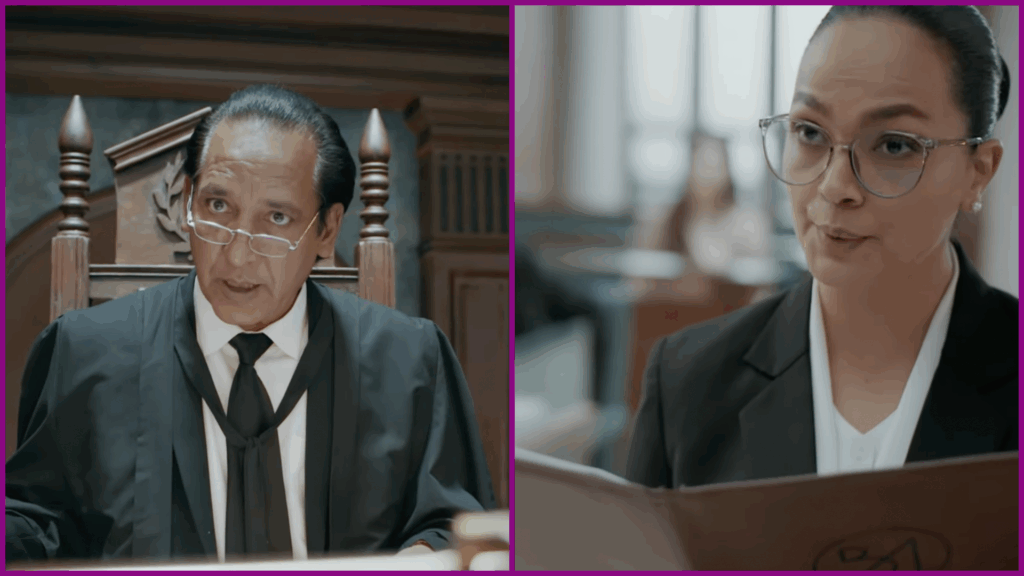
This raises a larger question about storytelling. Stories should build empathy, not deliver 10 minute long lectures with irrelevant rape statistics. Beenish’s courtroom lecture defining how rape works is intellectually insulting. The “objection” by Noor-ul-Hassan as Bukhari that she is wasting the court’s time is actually fair. But a serious court room drama this is not. The episode is peppered with emotional outbursts and creative legalese. The story is just a set-up for the public awareness message.
Despite its flaws, Case No. 9 is still being embraced by many because it is one of the few narratives that attempts to show a survivor fighting back. Unfortunately, the appeal remains largely public service message. The humiliation, doubt and emotional wreckage of reporting rape depicted in Pink and Unbelievable, is not here.
Meanwhile, rape allegations are rarely taken seriously in Pakistan, and victims are often accused of having political or personal motives. Against this backdrop, the drama repeatedly states that laws exist to protect women, but it never pushes viewers to rethink which women deserve that protection.
Genuine understanding requires discomfort.
Violence is political.
Censorship is political.
Muted language is political.
You cannot confront violence through euphemism.