
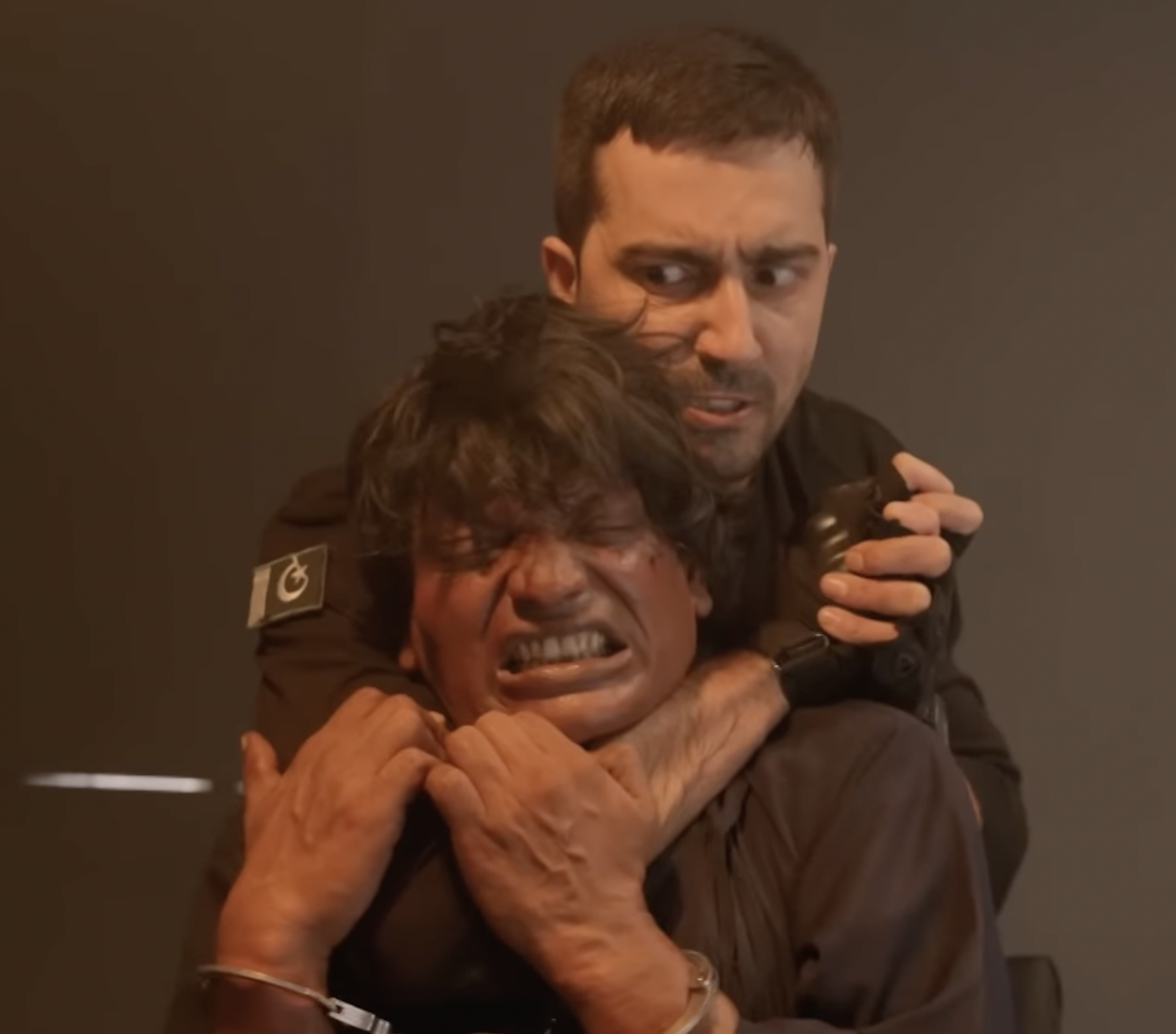



Shamoon Abbasi’s bumpy political thriller, starring Faraz Farooqi as a duty-bound officer, arrives just months after the Pahalgam attacks and right in the middle of a national conversation about narrative control.
Begunaah is unabashedly a propaganda film for Pakistan. The question is whether it’s a good one.
Released in October 2025, just six months after militants ambushed an Indian Army convoy in Jammu and Kashmir, killing 26 tourists, Begunaah lands squarely in the middle of a heated information war. India blamed Pakistan for the assault; Pakistan denied involvement, calling the accusations “predictable theatre.”
Begunaah is a film about misinformation made for a time obsessed with it.
Abbasi directs with slick confidence and no pretense of neutrality. Since Waar (2013), Yalghaar (2017), Sherdil (2019), and Ehd-e-Wafa (2019), Pakistan has cultivated a distinct genre: geopolitical dramas powered by the Inter-Services Public Relations (ISPR). Begunaah fits squarely in that lineage.
The story follows Shiraz (Faraz Farooqi), an army officer hunting an Indian spy, and Alina (Nazish Jahangir), a journalist and Shiraz’s fiancée. They’re introduced as an eager-to-marry couple, but Shiraz keeps delaying the wedding, insisting he’s “serving his country.” Alina is the ideal journalist — as long as she stays aligned with national interest. Shiraz scolds her for “sensationalizing news like Indian media” when she challenges his worldview, then later praises her as “brave and principled” once her reporting supports the state.
Together, they embody two sides of the same patriotic coin: enforcing and reporting the national narrative.
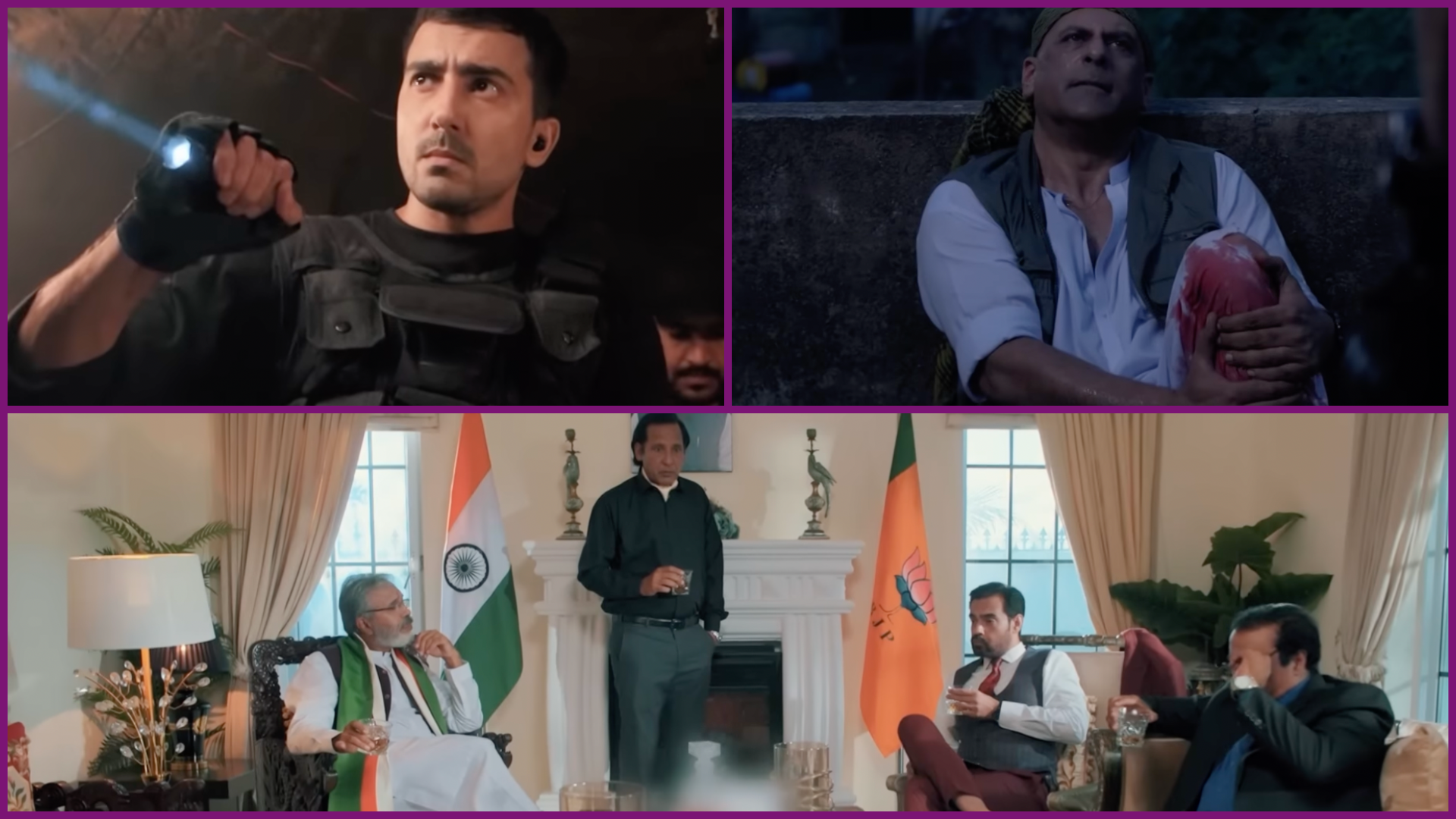
The plot pivots to Delhi, inside an “Indian political enclave” where cartoonishly evil leaders conspire to destabilize Pakistan and sway elections in Bihar for Modi. It’s political engineering 101. “Let’s cut off Pakistan’s water in the name of Kashmir to garner support,” says one diplomat. “Let’s screen a narrative-building Bollywood film,” adds another. The dialogue is blunt, but perhaps intentionally so. The film wants to reveal what it sees as India’s political logic, not obscure it in nuance.
Abbasi casts himself as Manoj, the Indian handler directing the mission. He briefs contract killers with chilling precision: “No Muslims to be hit. Only Hindu men.” The hitman replies, “Sahab, lag raha hai Pakistan ko frame kiya ja raha hai.” Subtlety is clearly not a strong suit.
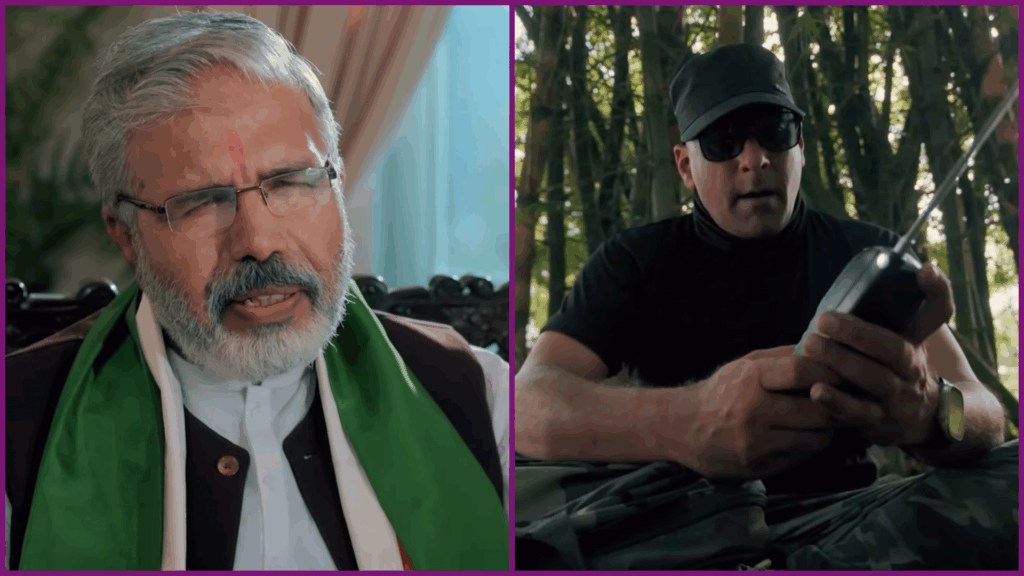
Begunaah folds conspiracy, realpolitik, and media manipulation into a single moral diagram. It seeks only to expose how Indian elites pull the levers of religion, elections, and information to orchestrate chaos across the border. The script drops real-world references, Jaish, Pathankot, Balochistan, to anchor its fiction. We see Arnab Goswami, in caricature, as he barks orders across a newsroom: “Virality over verification! Use #PakistanTerror!” Saleem Sheikh, playing a senior Pakistani officer, delivering stern monologues on Indian misinformation and national restraint. “Unlike you Indians, we have principles,” he declares.
Unfortunately the pacing falters. For all its high-stakes themes, terror, misinformation, nationalism, the film drags. Exposition swells where tension should tighten. Emotional beats feel hollow, even manipulative. What begins as a thriller unravels into a civics lecture. Begunaah is heavy-handed, jingoistic, and too eager to preach.
More revealing than what Begunaah shows is what it leaves out. Pakistani politicians never appear. There’s no cabinet, no parliament, no debate. The state, as imagined here, belongs to men in uniform and women with microphones. The film, and those who funded it, place their faith in institutions of order — not democracy.