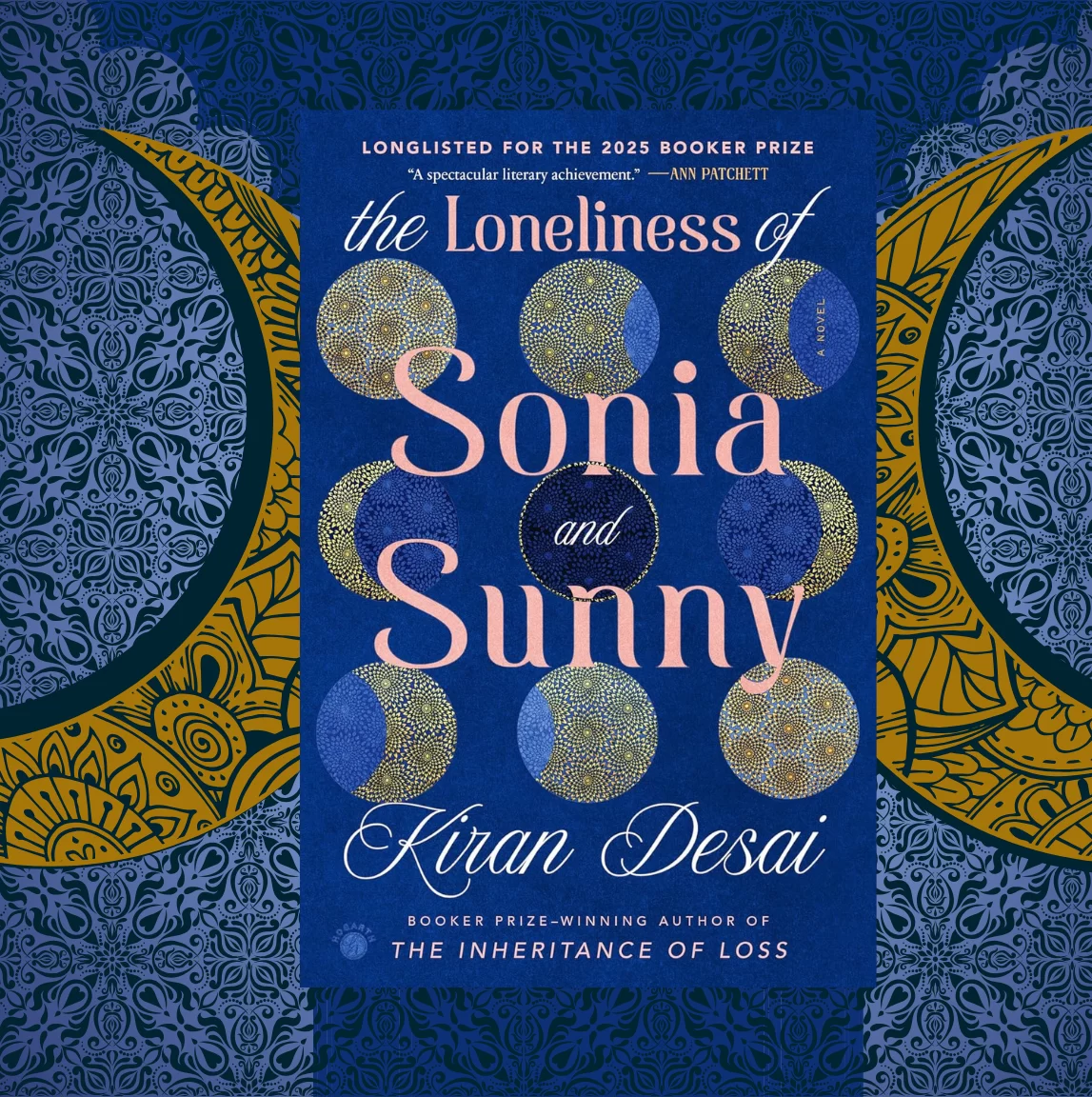



When Sonia and Sunny first glimpse each other on an overnight train, they are immediately captivated, yet also embarrassed by the fact that their grandparents had once tried to matchmake them, a clumsy meddling that only served to drive Sonia and Sunny apart.
The Loneliness of Sonia and Sunny is shortlisted for the Booker Prize 2025. Read an extract here
The sun was still submerged in the wintry murk of dawn when Ba, Dadaji, and their daughter, Mina Foi, wrapping shawls closely about themselves, emerged upon the veranda to sip their tea and decide, through vigorous process of elimination, their meals for the rest of the day. Orders must be given to the cook at breakfast so that he could go directly to market. It was Mina’s fifty-fifth birthday, the first of December in the year 1996, and the mutton for the dinner kebabs had been marinating overnight in the kitchen.
“Rice?” Ba shouted. “Roti?” She was growing deaf, but she knew she must raise her voice over the morning traffic thundering past the front gate and the cawing of hundreds of crows – their racket and the sun’s struggle so closely linked, it was as if each morning the crows gave birth to the light. “Pilau?” she suggested. “Paratha?”
Perched above them, at the entrance portico, sat a plaster bust of a portly gentleman in a cravat, perhaps inspired by a drawing made by the bungalow’s original owner, who had toured Europe, sketchbook in hand, in the same manner he’d observed foreigners doing in India. And perhaps it was the fault of the artist’s rendering, or the dissonant surroundings of Allahabad, or a splattering of bird droppings, but the bust resembled less a dignified nobleman than a foolish snob with an interest in the sky overhead, which had not turned vivid for a quarter of a century. Not since the national highway had been widened to accommodate the lorries that trawled cabbages, cement, goats, wheat, and – if one was to believe the newspapers or the gossip – prostitutes and venereal disease.
Unperturbed by the fancy gentleman, or the polluting lorries, or the family upon the veranda, the crows’ kava kaw rose to crescendo.
“Cauliflower?” Ba urged. “Spinach?”
She was forbidden to make telephone calls on her own because they were a useless luxury
“Potato?” Dadaji said, lifting his feet off the ground. He rubbed them together as lovingly and extravagantly as if they were soft, velvet hands. “The Gujarati loves a potato more than most,” he said, as if explaining themselves to an absent anthropologist. They were a displaced family, Gujaratis marooned in the state of Uttar Pradesh. Years ago Dadaji’s law practice had brought him to the Allahabad court. Two squat phones VVone in the living room corner, one on Dadaji’s desk – rang out like toads in a swamp, trr trr trr, and they knew it would be a birthday call from Mina Foi’s brother, Manav, Dadaji and Ba’s second child. Dadaji picked up the phone on his desk and Mina Foi the extension in the living room. Ba never spoke on the phone for she had not the habit, even if she’d had the hearing.

“Long life, Mina,” Manav wished his sister.
“It’s been too long already,” said Mina Foi. She wanted to tell her brother that she hoped the missionary couple would stop by as they had last year with cookies made with chocolate chips brought from Iowa – but then they may not remember it was her birthday, and she could not remind them. She was forbidden to make telephone calls on her own because they were a useless luxury.
Dadaji discussed the rising value of one of his investments, and then, at the end of the conversation, he inquired about the health of his daughter-in-law, Seher, and his granddaughter, Sonia.
“We are worried about Sonia,” Manav answered. Sonia attended college in Vermont. “She’s fallen into a depression. She weeps on the telephone, then when we call her back a day later, the same.”
“But why?” asked Dadaji. “She’s been there three years already. Why is she suddenly crying?”
“She says she is lonely.” The last time Sonia had traveled home was two years ago.