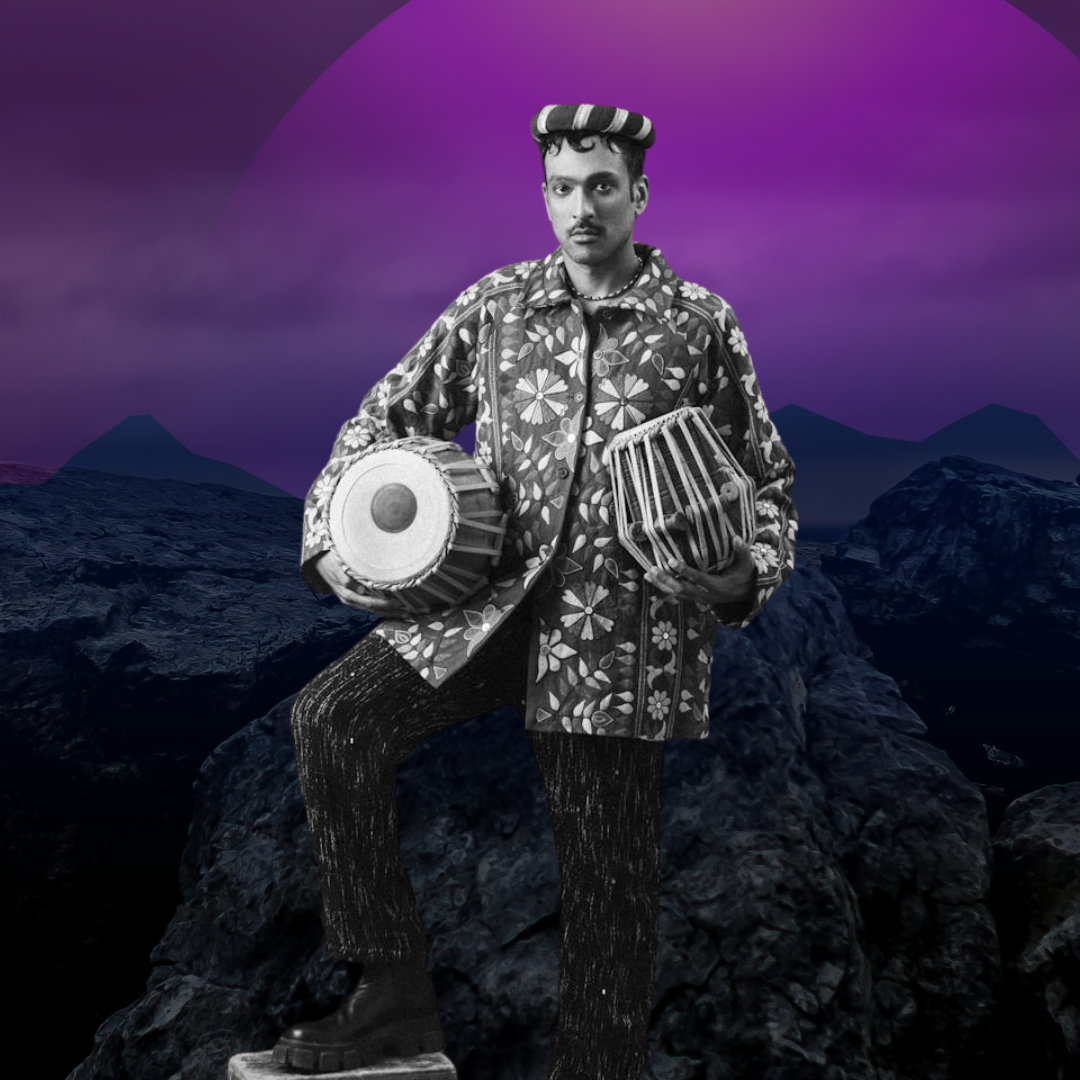



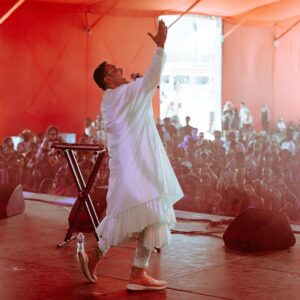
Ali Sethi’s debut solo album Love Language has arrived to rave reviews, confirming his position as one of the most daring and inventive voices in contemporary South Asian music. For a global audience that first encountered him through Pasoori, the runaway hit that became a diasporic anthem, Love Language offers something both more personal and more ambitious. Sethi calls it a “diary of displacement” and has described the accompanying tour as “a variety show for the end times.” The phrasing is characteristic, playful, melancholy, and subversive all at once.
At its core, Love Language is about how music can hold multiplicities without flattening them. Sethi has insisted that he does not want to simplify or dilute any of the traditions he draws from. Instead, the album celebrates contradiction: it is curious, joyful, bizarre, and hybrid. He has said he feels “equally rooted in Punjabi bhangra and hyperpop,” and Love Language makes that claim audible, mapping the edges where folk, ghazal, bossa nova, and club beats bleed into one another.
Escaping Jhanpal
One of Sethi’s guiding metaphors for the album is the idea of “escaping jhanpal.”
In Hindustani classical music, jhanpalrefers to the ten-beat Dadra taal, a cycle so deeply woven into ghazal and thumri that it becomes almost invisible. Generations of singers including Begum Akhtar, Iqbal Bano, and Farida Khanum leaned on jhanpal to anchor their improvisations, turning its steady heartbeat into a vessel for intimacy and longing. For listeners across South Asia, the pattern carries an unconscious familiarity.
Yet for Sethi, jhanpal has means predictability. The six-beat loop represents safety, discipline but also the risk of stagnation. To “escape jhanpal” is to choose the unexpected. In Love Language, that escape takes the form of hybrid compositions where classical motifs are constantly disrupted.
Songs of Multiplicity
The tracks on Love Language make this philosophy tangible.
“Hanera” wraps verses about forbidden love in the gentle sway of bossa nova. The song feels deceptively light, almost breezy, yet its softness carries the weight of secrecy and desire. In blending Urdu lyrics with Latin rhythm, Sethi collapses geographies, asking what happens when intimacy is voiced in borrowed idioms.
“Hymn 4 Him” plays with devotional language, set to a swing that teeters between the sacred and the sensual. The title itself refuses clarity. Is it prayer, is it romance, is it both? The ambiguity echoes the thumri tradition, where devotional metaphors often doubled as codes for human love. Sethi spins it dizzyingly toward the contemporary, layering choirs and syncopated beats that make the track shimmer with camp theatricality.
“Lovely Bukhaar” is perhaps the most startling of the set: a cross between a Brooklyn club anthem and the lament of a village girl. The juxtaposition is jarring, but that is precisely the point. The song stages the dissonance of displacement, of being caught between cultural registers, unable to resolve them into harmony yet unwilling to discard either.
Together, these tracks sketch a landscape of contradiction that feels familiar to anyone who has grown up between worlds. For third culture kids, Love Language speaks directly. It refuses to flatten identity into a single language, offering instead a chorus of in-betweenness.
Dissent Through Song
Beyond its sound, Love Language carries forward a deeper tradition: the use of music as dissent. In Pakistan, where direct speech can trigger censorship, outrage, or violence, art often speaks obliquely. Faiz Ahmed Faiz wrote poems that disguised political protest in the imagery of love. Iqbal Bano famously sang Faiz’s “Hum Dekhenge” in defiance of Zia-ul-Haq’s dictatorship, turning poetry into resistance. Even the ghazal itself, with its coded language of longing, became a vehicle for dissent against patriarchy, orthodoxy, and authority.
Sethi continues this lineage. His dissent is not shouted but sung, often through irony, dance, and play. In Love Language, he stages freedom not through slogans but through hybridity. By refusing to stay in one taal, one genre, one language, he gestures toward an alternative way of being. In a society where conformity is often enforced by the anger of the mob, Sethi’s eclecticism is quietly radical.
Pakistan’s Global Music Moment
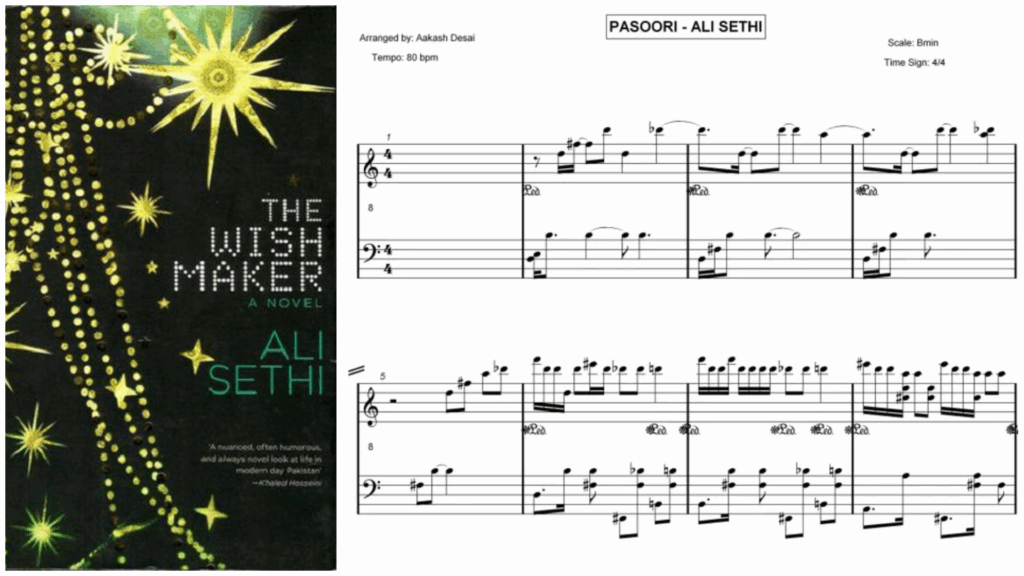
Sethi’s work also highlights how Pakistani music, arguably the country’s greatest cultural export, continues to reinvent itself for new audiences. From Nusrat Fateh Ali Khan’s qawwali in the 1990s, to Coke Studio’s fusion experiments in the 2000s, to today’s viral hits like Pasoori, Pakistani musicians have repeatedly found ways to bridge the local and the global. Each generation reinterprets tradition for its time, carrying forward a repertoire that is both rooted and cosmopolitan.
Love Language sits within this continuum but also stretches it. Where Coke Studio emphasized polished fusion, Sethi leans into dissonance and surrealism. Where earlier global icons like Abida Parveen and Rahat Fateh Ali Khan built on the spiritual gravitas of qawwali, Sethi allows play, humor, and camp to enter the frame. His art is no less serious, but its seriousness comes through the refusal to resolve contradictions neatly.
A Variety Show for the End Times
The phrase Sethi uses for his tour, “a variety show for the end times,” captures his sensibility perfectly. It suggests spectacle, chaos, and performance, but also intimacy and survival. In moments of global uncertainty, he offers music as refuge: not a return to purity, but an embrace of multiplicity.
In this sense, the album’s title, Love Language, is both literal and metaphorical. It gestures to the vocabulary of intimacy, but also to the polyglot nature of Sethi’s art. Love itself becomes a language that transcends jhanpal’s predictability, a form of communication that holds contradictions without erasing them.
With Love Language, Ali Sethi has released an album that is a statement about what music can be in the 21st century. It is a diary of displacement, a manifesto of hybridity, and a continuation of South Asia’s long tradition of dissent through art. By escaping jhanpal, he breaks free of the cycles that seek to contain him, while still carrying their echoes into new terrains.
In doing so, he affirms that Pakistani music, with all its richness and contradictions, remains one of the most vital cultural exports of our time. And he shows that in an age of fragmentation and crisis, love, in all its bizarre, joyful, and hybrid forms, may be the only language left worth speaking.